Fav Authors and Books

  • Elizabeth Gilbert
  • Chimamanda Ngozi Adichie
  • Katherine Boo
  • Vikram Seth

Monday, April 24, 2006

A Delhi Dekko

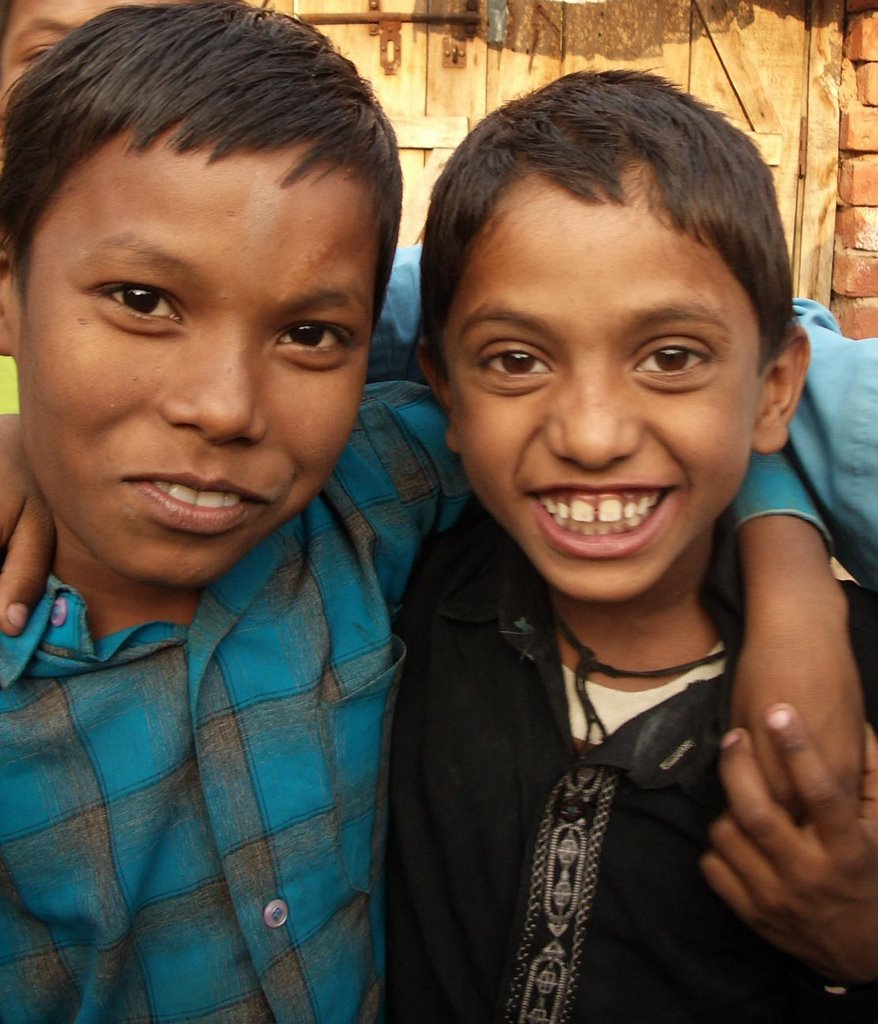
(Photo credit: Yashas Chandra)


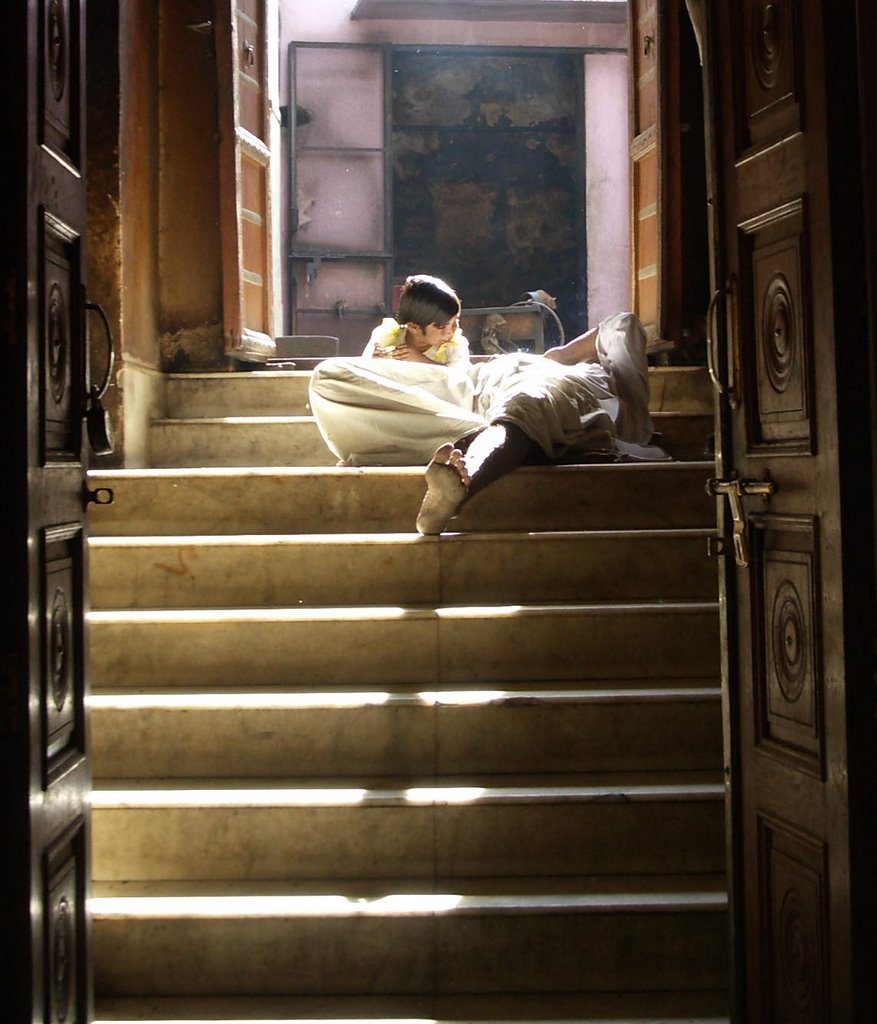
(Photo Credit: Yashas Chandra)
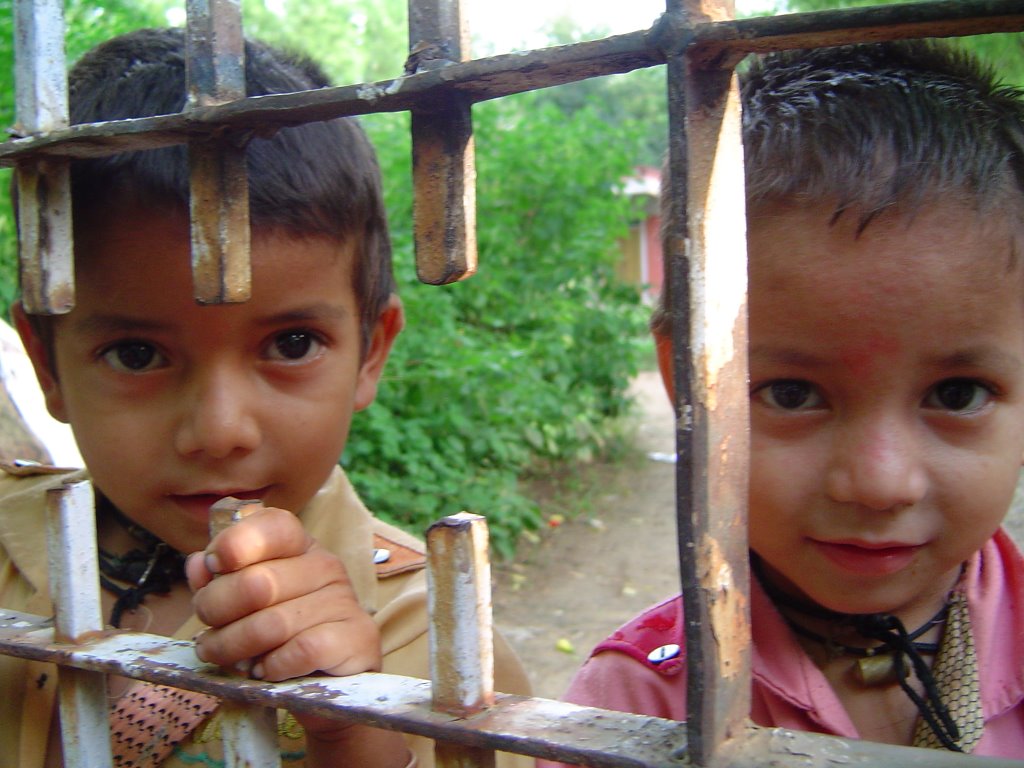

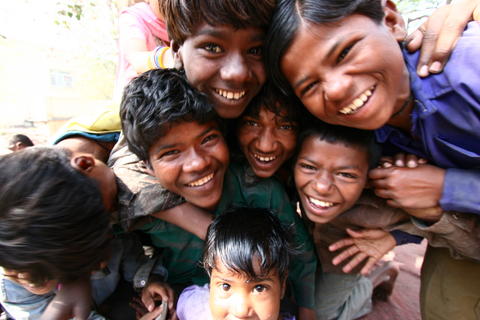
Have you ever wondered what life is like for street children who live in and around the New Delhi Railway station? If you’re anything like me, you’d probably never have even noticed them as you scrambled your way to catch the train to your vacation destination, or as you arrived, bedraggled and dreaming of your bed at home.


For most commuters, lives of the station-children strike us in brief bursts of horror and pity: the near-naked boy with no legs who slides his way through the filth of our compartment’s floors; the little girl with sun-streaked, matted hair who wafts through the compartment singing a tuneless melody. By and large, the ephemeral lives of these invisible children – who wander bereft of permanent shelter or family – remain hidden to even the most discerning of eyes.

Not for much longer, however. An innovative initiative, spearheaded by Salaam Baalak Trust, aims to demystify life on the streets in an ingenious manner: a two hour tour of the New Delhi Railway station and its environs, led by its true connoisseurs -- children who have grown up on the streets.

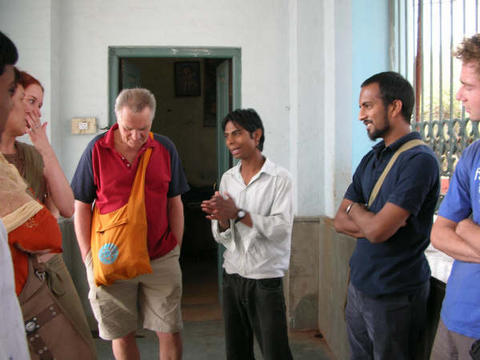
I arrived, breathless and apologetic, at the appointed hour and location, just as the tour began. Two young, smartly-dressed men addressed the group in near-perfect English and introduced themselves as the tour leaders. The first, Shekhar, described his career as a debutante actor. Javed, the second, discussed his aspirations to work with the UNDP after completing his Masters in Social Work.

The excellent oration and finesse of the leaders baffled me, and just as I opened my notebook to check whether I had misread the part about the tour being led by children from the streets, Shekhar added that he had, as a runaway child from Bihar, spent much of his adolescence on the streets we were standing on. Javed echoed his story. They had both encountered Salaam Baalak Trust in their teens, and through it, were able to slowly unravel themselves from the addictive web of street life.

The tour leaders took us - a mélange of foreigners, Indians, and foreigner-Indians - across railway platforms, through traffic-choked arteries of Paharganj, and to favorite street children-hangouts. Seemingly nondescript locations were transformed, through the eyes of these unlikely story tellers, into the animated stage upon which the budding dreams and blighted hopes of children were played out every day. Pointing to the train-washing track, Javed revealed a nugget of street-life wisdom. “Children take their showers on those tracks, usually on Fridays, as it is a special day for station-dwellers. Not for religious purposes, but because that is the day that Bollywood films are released!”

As we stopped on Platform 12, Shekhar gave us a first hand account of the Station Mafia in true Pacino-style. “Nearly 300 runaway children arrive at the Station everyday. The mafia leader of a particular platform captures some of these children and trains them in skills such as pickpocketing, singing, begging, etc. The mandir,” Shekhar explained, pointing just across the station’s boundary wall, “is where the mafia leaders stay. A mandir is actually the safest place in India for a criminal!”

Trying not to contemplate the whereabouts of the gang leader of the platform I was standing on, I walked ahead hurriedly, stopping at a fruit stand. “Railway children have a special relationship with fruit sellers and chemists,” Javed pointed out. “Immediately after a luxury train arrives, children run through them to find uneaten fruit and then give it to the fruit seller. In return, the vendor allows them to sleep on his vendor-ceiling at night, and even protects them when the Station police arrive. The police sometimes beat the children for no reason, though,” he says ruefully, “and that’s where the chemist shop comes in handy.”


The importance of these symbiotic relationships is not to be understated, the leaders emphasized. “Though there is suffering, life on the railways is also about friendship, love, and a strong feeling of community. Even in the direst of circumstances, people look out for each other.”

My admiration for the leaders piqued as they told me of their plans to publicize the tour in an effort to draw national attention to the lives of station-children. “We want more and more Indians, especially students, to join us and learn about the issues that these children face,” said Shekhar. For an inimitable insight into the courage, determination, and resilience of the human spirit – and for some fun – book your place on a tour. For more information, contact Shekhar at +919873130383.

(To be published by The Hindu)

*********

Dear Reader: I didn't mean for this to be an article, really. I thought I would it would be an interesting experience, for experience's sake. But I enjoyed the tour, thought the idea was fantastic, and figured that making an article out of it would be a great way to spread publicity about it. So, the article is to be published at some point, but I've put it up now to start spreading the word..

Tuesday, April 11, 2006

A Walk in The Clouds


The Hindu, April 16th 2006

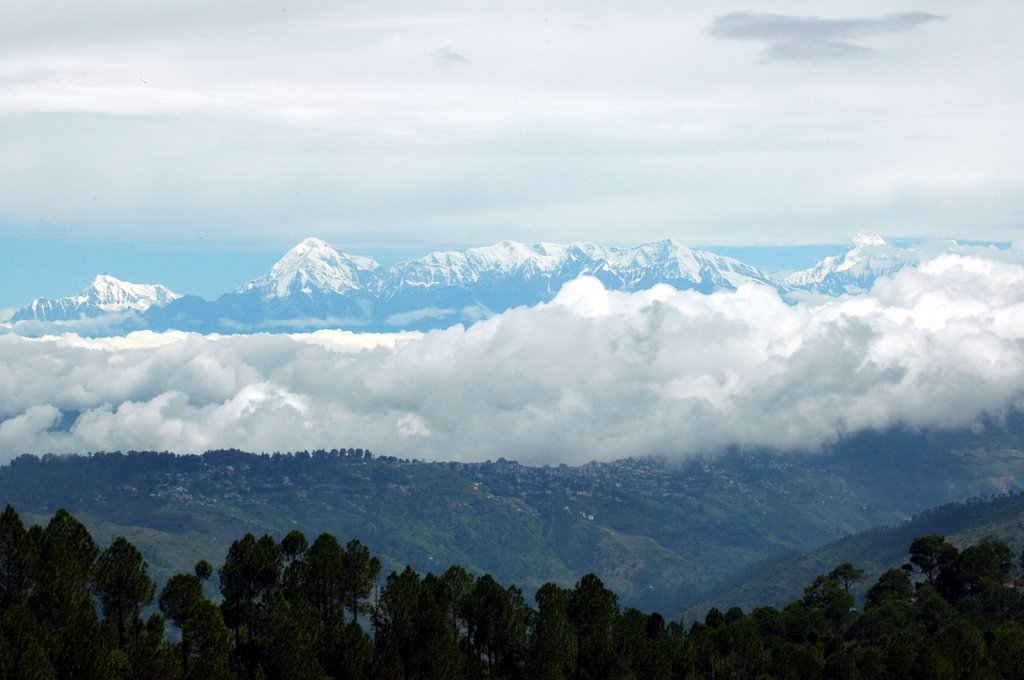
For a touch of heaven on earth this summer, head to Sonapani. While many popular hill stations have come to be synonymous with traffic, pollution, and crowds – in short, all that the wary city dweller attempts to take a break from – Sonapani, with its rare combination of rustic charm and pristine natural beauty, is a welcome respite. Nestled in a forested grove and offering a stunning view of the Himalayan ranges, Sonapani is paradise for the senses and for the spirit.


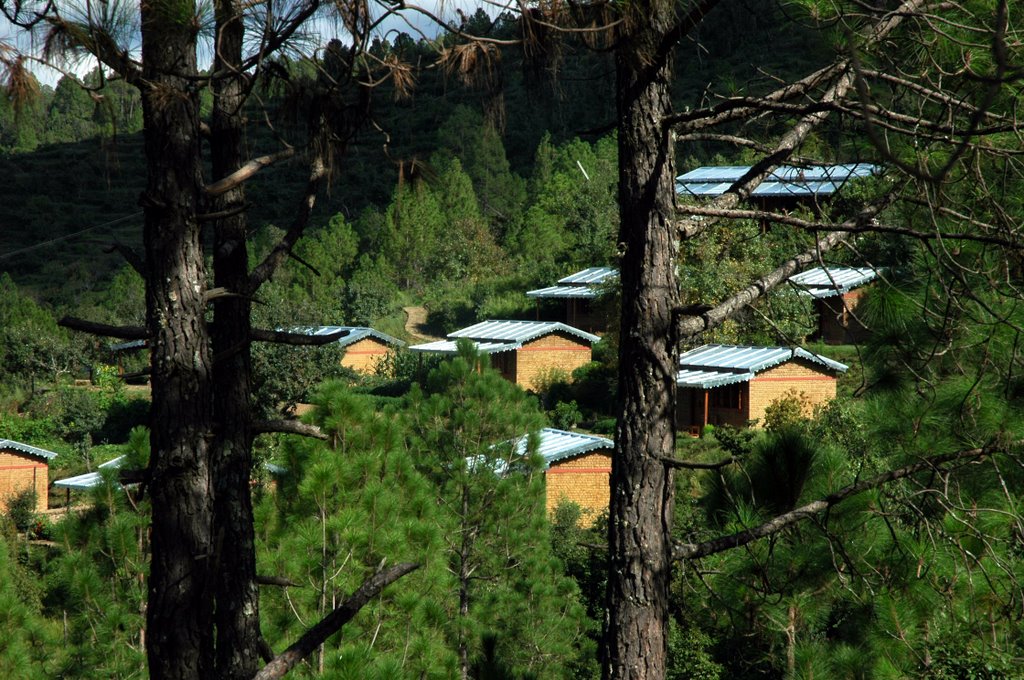
Sonapani is a two hour drive from the nearest railhead of Kathgodam, which is an overnight journey from Delhi. The estate is located a short trek away from the nearest road, “in order to begin the traveler’s immersion in nature,” explains Ashish Arora, co-founder of Sonapani. The trek to Sonapani is breathtaking: ruddy-cheeked pahadi folk stop their work to wave at me from the fields; a herd of lively goats, bells hanging around their necks, announce their arrival in front of me; the pine-studded, cottage-flecked valley below looks straight out of a Swiss postcard. Following the meandering path and crossing a short patch of pinecone-carpeted woods, I catch the first glimpse of the red-bricked cottages of Sonapani, which look like they have just sprung up from the earth.

At the entrance, a staff member of Sonapani welcomes me with a glass of steaming apple-ginger cider. Its freshness astonishes me, and I remark at the richness of its taste. Not an untimely observation for my arrival at Sonapani, as Ashish explains: “The British established themselves in these parts during the Raj, after experiencing the extraordinary medicinal properties of the water found here. They called the area Sonapani, which literally means ‘gold water’.” A 100-year old stone cottage on the estate, currently the residence of Ashish and his family, stands as silent testimony to the legend.

Creating the resort at Sonapani wasn’t easy, however, explains Ashish. “The house and estate were in shambles when I first came, but I fell in love with the place and so I built it up with my own hands.” Ashish had come to Sonapani from Delhi, where he wanted to throw off the ‘suit and tie’ mania of the corporate world. Having been born and brought up in Kathgodam, he yearned to return to the hills and begin a project that would connect city-people to the natural beauty of the mountains, and also create a source of local employment for people in the area. “For want of employment,
pahadi folk are often forced to migrate to the cities, where many end up in urban slums. Imagine having to give up this,” he says, his hands sweeping across the magnificent landscape in front of us, “for life in a slum!”

As my eye catches the iridescent sheen of a tiny hummingbird, the truth of Ashish’s words hit squarely home. The sheer abundance around me is so astonishing that it seems as if the word ‘want’ would simply not exist in the vocabulary here. Energetic wildlife – the busiest creatures on the estate – buzz, fly, sing and perch around us. Hundreds of species of birds call Sonapani home; magpies, bulbuls, and woodpeckers are just a few of its frequent visitors. Butterflies of striking design and color emerge in regular intervals to brighten the azure sky. Fruit trees abound; in front of every cottage, says Ashish, are fruit trees that are “opportunely located so that our guests can pluck fruit from them and eat them from the comfort of their cottages!” Vegetables – most grown organically - are located in neat patches between the cottages, where they find their way to the delicacies stirred up in the kitchen.

Indeed, if there were just one reason to visit Sonapani, it may be for the food. Despite being a self-proclaimed non-food aficionado, I found myself eagerly looking forward to the three mouth-watering meals -- and everything in between. The recipes are of traditional north Indian style, with the key difference from plains-food being the organic, fresh and local ingredients used. Herbs, such as rosemary, sage and thyme are grown on the estate and incorporated into the meals; garlic, being a commonly used ingredient in pahadi cooking is often used for light flavoring. Home-made fruit jams and chutneys, preservative-free and rich with local flavor, have become a Sonapani specialty. Just as I was about to ask if I could purchase a bottle of the maddeningly delicious apricot chutney, Ashish informed me that though they do not sell products now, they hope to begin an environmentally-friendly agribusiness in the future in a further effort to bolster the local economy.


The most memorable part of my visit to Sonapani was the incredible warmth of its people. Ill-prepared for a nippy evening, Ashish’s wife Deepa promptly offered me one of her sweaters. “We want our guests to feel at home,” she explained. So visit Sonapani and revel in its splendor - but beware, you may never feel like returning home. For more information on Sonapani, contact Ashish at: 9719005900 or access www.himalayanvillage.com

Tuesday, April 04, 2006

A Child's Rights, and You

Women's Feature Service, April 2006

http://www.boloji.com/wfs5/wfs594.htm

When asked what she would like to become when she grows up, Khushboo, 12, promptly responds, "A doctor." Firoze, 10, beams and adds: "I want to become a teacher so that I can teach many children." Ask Subodh why he attends school and he says, "Because I want to learn more about the world and gain knowledge. I also want to go to America!"

In the mall-infested, increasingly elitist metros of our country, it is not uncommon for children to harbour such gilt-edged aspirations. Yet, for Khushboo, Firoza and Subodh, simply imagining career trajectories requires an enormous leap of the imagination. Like slum-dwelling children across the nation, they live virtually invisible to our modern-day social structures - non-existent to the government and civil society, bereft of dependable educational and medical welfare - they live, literally, in the fly-infested, dung-splattered crevices of our society. The statistics are staggering: 17 million Indian children (the largest number in the world) are child labourers, less than 50 per cent between the ages of 6 and 14 go to school, 74 per cent below the age of three months are anaemic. And the list goes on and on.

"What is happening to India's children is constitutionally illegal, and demands immediate accountability from the State," says Ila Hakku of CRY. To draw national attention to the alarming state of child rights in India, CRY - formerly known as Child Relief and You - formally changed its name to Child Rights and You on March 30, 2005 and unveiled a Child Rights Charter. "The name change reflects the evolution of our work towards a rights-based approach over the last 27 years, and is not meant to represent any dramatic shift in our work. It is merely a formal step in the process," explains Ingrid Srinath, Chief Executive Officer, CRY.

However, the name-change represents a shift in CRY's public message, intended to bring child rights into the political arena to demand justice for children. "Every alternative to a rights-based approach is illegal, unjust and ineffective," says Srinath. "A relief-based approach can provide a 'Band Aid' type of solution, but it is not long-term or sustainable." CRY advocates a holistic approach to promoting child rights, which comprises examining the root causes of the injustice meted out to children and seeking the implementation of policies and laws that address these causes.

Critiquing the scheme-based, relief-oriented approach adopted by many governmental and non-governmental organisations, Hakku says, "We need to move from the narrow prisms of education, health and violence to the underlying causes of injustice, such as caste, gender and slum demolitions, and mobilise efforts to address these."

The name-change is also a not-so-subtle exhortation to citizenry: CRY strongly believes that ordinary citizens, especially from the middle- and upper-classes, must get involved in order for children's rights to figure on the national agenda, the corporate agenda and the media agenda. "Child rights can only become central to a country's agenda if its people choose to make it a priority by ensuring government accountability to actualise the rights of children," says a CRY press release.

Through a diverse array of newly-unleashed communication strategies - such as films, public service announcements and web-based initiatives - CRY aims to incite action from local citizens and, ultimately, the government. Referring to the apathy of citizenry and media to the enormous number of child-deaths in this country, Srinath rhetorically asks, "A 'genocide' of sorts occurs on a daily basis in this country, yet why do we not see a public outcry similar to that produced after the acquittal of the murderer of a page 3 model?"

Activists Aruna Roy and Jean Drèze were present at the press meeting to discuss the relevance of a rights-based approach based on their experiences with rights movements. Roy, who has pioneered the path-breaking Right to Information movement, noted the ways in which the various rights-movements could benefit from and support each other on a national scale.

Right to Food activist Drèze says, "India has some of the worst indicators of health in the world despite its runaway economic growth. The most astonishing aspect is that health goes virtually unnoticed and unspoken of in Indian media. Emphasising a rights-based approach is a means to challenge this silence." Putting an issue in the 'rights framework', he stresses, can create a large impact on a macro and micro-scale, as rights lend bargaining power to citizens, can be put in a legal framework to bolster the directive principles enshrined in the Constitution.

It is in this context that CRY had put forward its demands of the government's budget in February 2006 to coincide with the Union Budget Session. These demands, in brief, were:
* Increase expenditure on education to 10 per cent: Additional resources - and not just the two per cent cess and foreign loans - should be committed to ensuring quality secondary education. This would mean taking a broader, long-term view. It would translate to:
- providing quality education till the age of 18.
- ensuring that secondary schools are within a one km radius of hamlets
- employing well-trained educators on tenure , instead of hiring inadequately trained para-teachers on contract.
* Renew commitment to child protection
* Provide for a universal healthcare programme
* Prioritise child rights

The Child Rights Charter drafted by CRY "to stress its commitment to the fact that all children have equal rights, promised to them in our Constitution and in international treaties" will be presented to the President of India, in CRY's first political effort to demand State action. In a country where youth are often left out of decisions - both in the private and public spheres - CRY's message to the public is well-timed, and much needed.

(In the picture are Kapil and Nishar Ahmed. They live in the slum of Nithari in Noida, and attend evening classes run by an NGO called Saksham.)

Wednesday, March 22, 2006

A Closet Within The Closet


Women's Feature Service, March 27th 2006 (Titled "Gay, But Not Equal")

Skirted by mainstream media and general politics, discussion on homosexuality is not typical coffee-table talk in India. The government is not known to be outspoken or forthright about issues of sexuality; when a Canadian journalist recently asked for his views on same-sex marriage, Manmohan Singh replied: "I am sorry, I don't understand your question." Despite this fact, the gay rights movement has slowly been gathering support and momentum in our society. In contrast, the lesbian rights movement is yet to cover the same ground. Homosexuality is more acceptable for men than it is for women in Indian society, owing to patriarchal norms that govern the media and social attitudes.

The media has played a large role in lending legitimacy to the Indian gay rights movement. It is not uncommon to wake up on a Sunday morning to an interview with a prominent gay designer on the morning news, or to walk into a theatre and find a film featuring a gay character. Movies such as 'My Brother Nikhil', in which the life and death of an Indian gay man are sensitively portrayed, help build public empathy for the cause of the gay movement. The Canadian-British production 'A Touch of Pink' gracefully portrays the cultural challenges faced by an NRI gay man in his relationship with his partner. Humorous and moving, the film successfully drives home the point that two successful, affable men can be in a loving relationship.

Lesbians, in contrast, are less visible in mainstream media; when lesbian love is portrayed, it is often stereotyped and misrepresented. The homophobic film 'Girlfriend', for instance, both demonises lesbians - through its representation of the lesbian woman as an irrational, violent, jealous and dangerous lover - and offers lesbian lovemaking as erotica for men. By perpetuating this stereotype of lesbian relationships, the film underscores what the plethora of lesbian-porn films has indicated: lesbian relationships are perceived to be trivial, shallow and, most importantly, 'enhanced' objects of male desire.

Misrepresentations of lesbianism fuel misunderstandings and ignorance about lesbianism. "Nearly 60-70 per cent of the calls that we get on our hotline are from men," says Maya Shankar, coordinator of Sangini, a Delhi-based lesbian rights group. "Some are prank callers, and some call because they think it is a phone sex hotline." From research conducted on the calls received by the hotline, Sangini has gathered that much misperception about lesbianism can be attributed to male-centric attitudes. "Many men think that women become lesbian because they have been abused by men, or that lesbianism is just a phase that women will grow out of when they 'experience' a man. One young man called our hotline to ask us if he should have sex with his sister in order to 'cure' her of being a lesbian," she adds.

Indeed, patriarchy often lies at the heart of misunderstanding and non-acceptance of lesbian desire. In a largely patriarchal society such as India's - where a woman is often assumed to be bereft without a husband and children - lesbians are confronted by the challenge of assuming a lifestyle that is contrary to traditional societal dictates on what the role of a woman should be. "Many parents assume that their life's purpose is to 'settle' their daughters through marriage, regardless of the daughter's desire," says Shankar.

This is emotionally and psychologically taxing for lesbians, and has resulted in many adopting painful escape mechanisms: abandoning thoughts about their sexuality, running away from home, or even taking their lives. Despite the pressure, there are lesbian women who have been able to carve out spaces for themselves. "I've met several women from small towns who live together, and have been able to sensitise family and neighbours about their relationship. Some are even married to each other," says Kriti, coordinator of PRISM, a queer activist forum.

Yet, as sexual desire is largely perceived to be the prerogative of the male in our society, these instances are usually the exception rather than the rule. People are often uncomfortable with the prospect of a woman being open about her sexual desires, and even more so with women who express a preference contrary to what is assumed to be 'correct'. Tarun Khaitan of the Alternative Law Forum, a lawyers collective that uses law to address situations of marginalisation and disempowerment on the basis of sexuality, explains the double marginalisation of lesbian sexual desire as follows: "Patriarchy, in denying any sexual agency to women, makes it imperative for lesbians to first come out as sexual beings before they can articulate their alternative sexual orientation, thus making the task doubly difficult."

Even when lesbian women have come out of the closet, the search for a partner is not as easy as it is for gay men, largely due to constraints on social mobility that women face in the public sphere. Gay men in most Indian metros, like heterosexual men, can meet potential partners in cruising areas, at nightclubs, and even in parks and coffee shops. Women do not have this fluidity of movement - due to lack of safety in public spaces, lack of safe transportation, or due to family norms that regulate a woman's movement outside the home. "One of our group members had to give her parents a different excuse every week in order to attend our afternoon meetings. It is even harder for women to get out at night," says Shankar.

Financial dependence on the family also makes it difficult both for lesbian women to come out of the closet, and for the family to accept her choice. "It is hard for a lesbian woman who is financially dependent on her parents to reveal her sexuality, and refuse pressures such as marriage. Parents of the upper and middle classes are often not comfortable with the prospect of a girl taking up employment," says Shankar.

Entertainment establishments also 'penalise' women for this perceived dependence; restaurants that might cater to gay men are not necessarily lesbian-friendly. "There are very few restaurants or bars that organise 'lesbian nights' because owners believe that lesbian women don't have the money to spend at these places," says Archana, member of a queer activist group called Nigaah Media Collective. Even when spaces do exist, few lesbians attend. "Many so-called lesbian-friendly nightspots are not comfortable spaces for women as there are usually men who stand and stare," she adds.

Undoubtedly, the struggle of lesbian women against patriarchy is the struggle of all women against patriarchy. When our society begins to understand and accept that women of all sexual orientations have the right to live their lives the way they choose to, Indian lesbian women will have their day - and, one hopes, their night.

Contact Sangini's helpline at: 011-55676450, or email info@sanginii.org


Tuesday, March 07, 2006

Covered Enough?


How many metres will ever be enough?

****
For the Blank Noise Project Blogathon 2006

Thursday, February 23, 2006

I Say No


May 1999: I was on a rickshaw one evening, and I was going home. Two men on a motorcycle came right up to the rickshaw and one of them grabbed my breast and squeezed it, like it was a horn.

Like he had a right to my body.

Laughing and jeering, they zoomed off, giddy with the excitement of their momentary conquest. The old rickshaw-puller looked back at me for an instant, and then turned around and continued pedalling me home.

I was flooded by waves of rage, humiliation, hurt..and powerlessness. Biting back silent tears, I continued the journey home.

******
Say No to sexual harassment. Voice your experiences of sexual harassment - as a victim, perpetrator or bystander - at work, at home or in the public sphere. Participate in the Blank Noise Blog-a-thon, on March 7th.

Monday, February 06, 2006

Sharing Dark Silences

Women's Feature Service, February 6th 2006. (Also published at: http://www.boloji.com/wfs5/wfs548.htm)

By all indicators, she is a successful woman. Her career in the booming Delhi retail market is taking off, she enjoys her work, and she has a loving family. Like still water that runs deep, Jyoti’s scars aren’t perceivable to most; only those closest to her are aware of the violently jarring images from her past that continually shape her present. And she doesn’t like getting close to people.

Jyoti was only 5 years old when she first encountered Harish, the man who would sexually abuse her every day for the next 7 years. “It’s hard for most people to understand what it means to be a survivor of child abuse. They think that because there are no visible signs of any ‘attack’, it’s not worth bothering about. They don’t understand that though it doesn’t continue any longer, it affects everything that I do,” she says.

Jyoti isn't alone in feeling this way. “The long-term effects of sexual abuse," says Anuja Gupta of RAHI (Recovery and Healing from Incest), a Delhi-based support centre for adult women survivors of child sexual abuse,"can permeate into every area of a woman’s life and affect the ways she thinks, acts, feels and behaves.” Through a diverse array of services aimed at raising awareness about CSA, RAHI aims to break the silence surrounding incest in India and has pioneered efforts to bring this largely stigmatized and taboo subject into the mainstream. “People in our society often harbor the myth that incest is an issue of slum people or poor people. It is important for people to understand that it has nothing to do with education or wealth,” she adds.

Jyoti grew up in an upper-middle class Marwari family in a small, conservative town in Uttar Pradesh. She was sent at a young age to the first English-medium school in the region, located in a larger town nearby. In order to ensure that Jyoti adjusted well to the school, a tuition teacher called Harish, a friend of Jyoti’s cousin, was appointed to tutor Jyoti and her brother.

She soon failed the first standard.

“I still remember how, even as a young child, I dreaded waking up each morning because the first thing I could think of was, 'How can I escape from the clutches of that man today?' But I knew he would come to our tuition room that evening, as he did everyday, and sit near me to ‘teach' me. And then there was no escaping from the hand that would creep under the study-table to touch me in a way that disgusted me, from the big stick that he never failed to use to discipline my brother and I,” Jyoti recounts.

At school, she couldn’t interact normally with other children nor could she concentrate on her schoolwork. Seeing the carefree lives led by other children her age aroused in her feelings of sorrow, jealousy, and even hatred. Constantly tortured by the thought of her tuition teacher, she struggled with schoolwork and often just barely passed her exams. Though she despised Harish’s presence, Jyoti couldn’t bring herself to discuss the sexual abuse with anyone. She felt hurt, worthless, and very alone.

Jyoti recently told a few family members about the sexual abuse she faced as a child. Though it revived difficult memories of the past, she knows that speaking out about the abuse has begun to slowly unravel the layers of hurt that seemed embedded inside her.

“Since the abuse takes place in silence, for women who have been sexually abused as children, speaking out about it is a way to break the silence and begin the healing process,” says Gupta. RAHI provides counseling services for women survivors and facilitates the sharing of their experiences with others through peer interactions. “Though it is initially difficult for survivors to speak openly with others about the abuse, once they begin sharing, they come to draw great strength from each other’s experiences,” says Anuja. “Families and friends, even those with the best intentions, often wrongly believe that if the survivor stops speaking or thinking about the incidents, the pain will go away.”

Recognizing the necessity of raising awareness about the nature and extent of sexual abuse, RAHI has developed various programs to reach out to different groups within the larger community. On the preventative side, RAHI conducts workshops for NGOs designed to increase NGO workers’ knowledge about CSA and enable them to be effective interventionists within their respective populations. The trainings involve information on the detection of abuse, symptoms of an abused child, and abuser profiles.

In colleges, RAHI has been working with young women since 1997, when it introduced a basic module on CSA and information about support services available to survivors. Over the years, as awareness about the issue has grown, the program has also expanded in its reach, says Gupta. “We have found that many women now want to learn how they can support friends who are survivors and how they can get involved in preventing abuse from happening in our society.” RAHI’s Peer Education program was launched in colleges in 2004 with the intention of creating groups of ‘peer educators’ – women who could raise awareness about CSA and provide support to survivors in their colleges. Soon, RAHI plans to introduce the program in men’s colleges as well.

By encouraging women to speak out about abuse, RAHI aims to help women develop from victims to survivors, and eventually, to contributors. Yet even for those with the courage to speak out, the journey to complete recovery is often a gradual and painful one, the pace of which can be decided only by each survivor herself. Looking towards the future, Jyoti writes:

“Though the truth that I have lost my childhood will keep hurting me, optimism is my best friend. I know I have the strength to defeat my past and I have a hope that one day I will receive life with my arms wide open.”


Saturday, January 28, 2006

Forgotten Caretakers of Our Cities


The Hindu, Sunday, January 29th 2006

THEY deftly distinguish between various types of plastic, glass and paper; they charter toxic, dangerous terrain with no protection other than the clothes they wear. Daily, they increase the value of their work material multi fold; their work saves taxpayers over Rs. 10 crores each year.

Yet they are not highly paid scientists or academics involved in cutting-edge research. They are the waste picker-women of urban India, identified by their unruly, matted hair, white gunny bags slung over their bent backs, and their torn, dirty saris. Across the socio-economic spectrum, their presence is usually met with disgust, and often, scorn.

Valuable services
This is unfortunate because waste pickers, despite the inhuman conditions in which they work, perform extremely valuable services for society. Their work aids in the reduction of handling and transport costs of waste; they save municipalities lakhs of rupees each year. They recover material from places where few dare to venture and supply raw material to recycling factories, thereby saving space at the dumping ground and also helping protect the environment. They collect biodegradable waste from households and produce rich compost. Their work directly impacts our lives in ways that many fail to notice: can we imagine how dirty our streets would get if waste pickers stopped collecting trash?

However, the contribution of waste pickers — most of whom are women — to our society is not well known or appreciated, and their plight has been all but ignored by the Government. "The State Government does not take cognisance of the benefits that these women bring to society," says Jyoti Mhapsekar, founder of Mumbai-based Stree Mukti Sanghatana (SMS), that has pioneered efforts to improve the lives of waste picker-women through its programme Parisar Vikas. "Waste pickers are the poorest of the poor in our country, yet there are few avenues available to help them improve their work and life conditions," she adds.

In a study of 1,000 waste pickers conducted by SMS in Mumbai, they found that 85 per cent of the waste pickers were women, 90per cent of whom were the primary breadwinners in their families. Many were widows or had been deserted by their husbands; the majority of those married had husbands who were alcoholic and unemployed. Nearly all were illiterate, with no alternative skills. The study also found that in addition to themselves, waste pickers often had to support children, parents and extended family members.

Exploitation by middlemen is a major challenge they face. After collecting and sorting the dry waste from the dumpsite, they sell the sorted waste to middlemen who offer them only a few rupees per kg. The dry waste is then passed to the hands of various other middlemen, its value increasing multi fold every step of the chain, until it finally reaches the recycling factories where, says Mhapsekar, "it is sold at the price of gold". Waste pickers are forced to accept the low prices offered by middlemen because they have no alternatives for generating money, and are unaware of the value of the sorted waste. In addition, they are dependent on these middlemen who often act as moneylenders, accountants and advisors. "Though recycling factories operate on the hard work of these women, the women get peanuts, while the middlemen quite literally become millionaires," says Mhapsekar.

Combat exploitation
To combat the exploitation faced by waste picker-women, SMS has established various programmes to increase their bargaining power and social organisation. Microsaving schemes encourage women to build the habit of saving; micro credit schemes allow them the financial security to make business decisions to improve their situations. The provision of autorickshaws to the women enables them to cut out the `transportation middlemen' from the chain, thereby sizably increasing the women's profits. Additionally, SMS has lobbied to secure direct waste-collection contracts with residential establishments and with the Mumbai municipality, thus allowing women to have access to more valuable and less-dangerous household waste.

Though household waste is the most desirable option among different types of waste, organized networks of men usually dominate residential contracts, with most waste picker-women being relegated to the dumpsite. "At the dumpsite, every kind of waste is mixed together: medical, industrial, chemical and household waste. As a result, sorting the valuable waste is not only difficult, it is extremely dangerous," explains Mhapsekar. Injuries from glass and metal pieces, acid bottles, needles and animal bites are common. Certain kinds of chemical waste, when exposed to sunlight, give off dangerous gases, which are highly flammable and cause respiratory diseases. "Sometimes men light their bidis atop the mounds, setting miles of waste on fire," she adds.

Quality of life
Recognising the importance of health, training and education in improving the quality of life of the waste pickers, SMS regularly holds health camps for women and children along with workshops on topics such as disease, sexuality and women's special health needs. Trainings on biocomposting, vermiculture and gardening have enabled nearly 250 former waste pickers to gain alternative employment. SMS also organises awareness-raising sessions for children of waste pickers on issues such as adolescence, drug de-addiction and value-education.
They have initiated various education programmes for girl-children of the waste pickers to enable them access to employment options other than waste picking.

Despite the enormous challenges in its path — threats from middlemen, apathy of the government, extreme poverty and ignorance of women, to name a few — SMS has succeeded in building an innovative, successful model for waste treatment. "We are happy that numerous organisations from around the country have replicated our model in their localities," says Mhapsekar. Perhaps a major reason for Parisar Vikas' success has been its dogged pursuit of collaboration with the government, private sector and ordinary citizens, as a result of which they have been able to land key contracts with municipalities and waste treatment plants. Their efforts have greatly expanded the horizon of employment and learning opportunities for waste picker-women. "The work of Parisar Vikas," concludes Mhapsekar, "highlights the reality that women from marginalised groups need not be passive victims of poverty and human rights violations; they can successfully participate in the struggle to survive, to gain control over economic, social and political resources, and lead a life of dignity."
Send comments to the writer at: smitainasia.blogspot.com

Read the article at: http://www.hindu.com/mag/2006/01/29/stories/2006012900150400.htm

Tuesday, January 17, 2006

Micro No More


Women's Feature Service, January 16th 2006

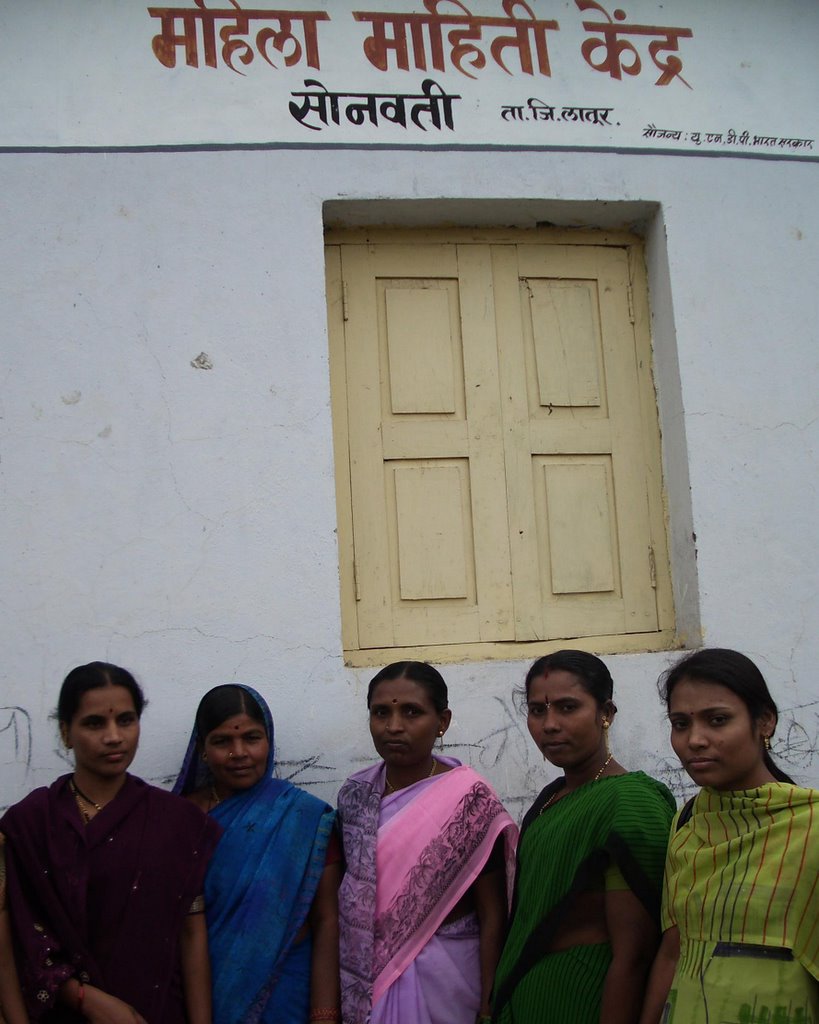
For most people, an earthquake merely connotes disaster. Yet for many women of Maharashtra's Sonvati village, it was the Latur earthquake of 1993 that heralded positive transformation in their lives. Indeed, that was when Swayam Shikshan Prayog (SSP) began its microfinance initiatives in their village and in villages across disaster-affected areas of Maharashtra.

Each woman assembled at the self-help group (SHG) meeting in Sonvati eagerly awaits her turn to describe the remarkable change that microcredit has brought into her life. Before SSP began in her village, Serekha Mude says, "I could never leave my home. Not only could I not talk to other men, I was even forbidden from speaking to other women." She began secretly
attending SHG meetings when her in-laws and husband were working in the fields. She initially applied for a loan of Rs 1000 to buy an ice-cream maker, and began a modest enterprise. Today, with a small clothing store, and more pieces of machinery - including an oil-press, mirchi grinder and atta chakki - she has a flourishing business and even employs several people. "Attitudes have changed dramatically. My husband has stopped drinking and beating me, and is proud of the work that I do," she says.

Mude is, in fact, part of a growing tribe of small-scale entrepreneurs from around the world benefiting from the growth of microfinance, a form of banking that provides financial services to those who traditionally have not had access to these services due to social, economic and geographical barriers. From Bolivia to Haiti and Congo to the Philippines, poverty-stricken people - many of whom are women - have been able to improve the quality of their lives due to improved access to financial services through socially-driven microfinance initiatives.

In India, microfinance initiatives have largely been initiated by NGOs that offer financial services - small loans and savings services are the most common - to groups of poor women. (Group models and sizes differ around the world, but in India the most common operating model is the SHG model, in which 15-20 women form a group.) The microfinance initiatives are usually packaged with a diverse array of support services aimed at improving the lives of the women. SSP, for instance, regularly holds awareness-raising workshops on issues as diverse as health, technology and water conservation for its SHG members.

Development institutions have been quick to recognise the importance of microfinance as a weapon against poverty; the United Nations had named 2005 as 'The Year of Microcredit'. Research has found that poor people not only benefit from access to affordable credit, but they also benefit from and value a diverse package of financial services. Through unique offerings -
such as savings schemes and cattle, crop and life insurance - microfinance initiatives in tandem with appropriate social interventions can help cushion the impact of a disaster that would otherwise have the effect of pushing poor people further into poverty.

Microfinance Institutions also differ from mainstream banks in that most specifically target women clientele. Grameen Bank of Bangladesh - the success of which inspired thousands of others across the world to replicate the experiment - has nearly 3.7 million borrowers, 96 per cent of whom are women.

But in a world where men constitute the majority of the labour force, why target women? In his autobiography titled 'Banker to the Poor', Grameen Bank founder Mohommed Yunus writes, "Not only do women constitute a majority of the poor, the underemployed, and the economically and socially disadvantaged, but they more readily and successfully improve the welfare of both children and men."

Indeed, not only are women more successful than men in improving their own lives and those of people around them, they also make for more creditworthy clients. Research indicates that along with being more likely to repay their loans on time, women also build social networks that encourage others to repay their loans.

Leading Indian microfinance institutions Spandana and SKS mandate that all their clients be women. The banks' low default rates and high returns on assets indicate that this is not a bad
strategy. According to Mix Market, a web-based microfinance information platform, in 2005, Spandana reported a return on asset of over 8 per cent - a rate better than that of even some of the most successful global banks.

The prospect of realising profits while providing financial services to the poor is creating a ripple among mainstream financial sectors. Though some decry what they consider to be "profiteering from the poor", more and more mainstream institutions across the world are beginning to dip their toes in the sector as they realise that the poor can be creditworthy and valuable clients who, like the wealthy, also are in need of financial services. ICICI, India's largest bank, has seen its microfinance portfolio outstanding grow from US$ 4.5 million to US$ 227 million over the last four years, and plans to increase these figures significantly over the decade. (United Nations Capital Development Fund, October 2005) Other banks, such as HSBC, Citigroup, and ABN Amro are showing interest. Private equity is also starting to trickle in; last month, private equity investor and Sun Microsystems co-founder Vinod Khosla made an equity investment of US$ .25 million in a Hyderabad-based microfinance institution called Cashpor.

A consensus is emerging that commercial interest in the sector is not only welcome, it is vital if microfinance institutions are to be sustainable, and if microfinance is to truly make a dent in global poverty. Studies indicate that the global demand for microfinance is tremendous; the
Economist magazine (November 2005) estimates there are thousands of crores worth of unmet demand in India alone. It is widely acknowledged that traditional sources of funding - from donors, development and charitable institutions - are insufficient to meet the demand.

More credit availability would certainly be welcome to women like Premila Jadhav, who would like to expand her business. She wants to open a bakery, and has approached her SHG for funds. While adjusting her pallu, she looks thoughtfully at the piece of paper in front of her and completes a profit calculation. One woman explains how she is happy because microfinance has
given her knowledge of the world around her (gyan), while another adds, "I'm grateful to microcredit; it has given me experience and courage."

Though it may not be a cure-all, the twin bottomlines offered by microfinance can only be a good thing for Mude and her sisters.

***
Published by the Deccan Herald: http://www.deccanherald.com/deccanherald/Jan202006/she1344202006120.asp


Saturday, December 17, 2005

From One Nation to Another, With Love


Housecalls magazine, December 2005

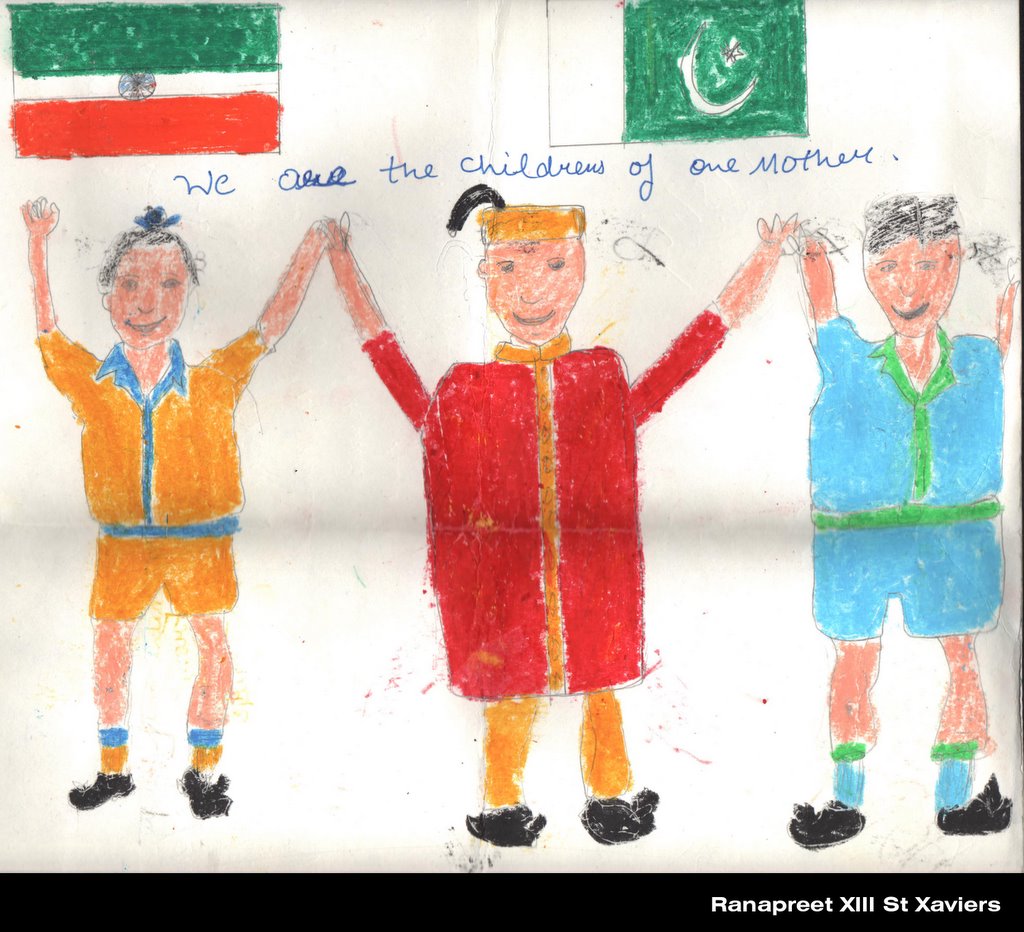
The two lanky Americans have been greeted with garlands and huge crowds upon their arrival at train stations, have addressed large gatherings to discuss the importance of amity between India and Pakistan, and have even been endearingly addressed as ‘angels of peace’. A modern day sequel to Attenborough’s Gandhi? “Not quite”, says John Silliphant with a smile, “but Gandhiji’s search for truth has certainly been an inspiration for this initative.” The initiative – taking peace letters and cards from children across India to children in Pakistan - is certainly a unique one, and has been reverberating in the hearts of children across the country, as reflected in the thousands of cards they have collected. “Where all else has not succeeded, perhaps this might work,” adds Mark Peters, John’s comrade-in-peace.

Though their aim is greater peace among peoples, the two are not diplomats or ambassadors, and neither are they in India in any formal capacity. They are here, they say, “simply to do seva, to serve.” While many non-Indians flock to India with the intention of absorbing some of the spiritual wisdom for which this country is renowned, these two are spending a year in India, living on their own savings, “to give back to a nation whose citizens abound in spirit and goodwill,” says John.

Their idea of seva does not conform to any particular religion, nor are they affiliated with any particular NGO. Their aim, John explains, “is to give all that we have, and make every moment an opportunity for service.” Their ‘giving-in-the-moment’ credo often leads to seva activities that cross the lines of social convention for many Indians. For instance, in the city of Ahmedabad, they have often left many a sweeper - and the gathered crowd - flabbergasted by their desire to sweep the streets. Despite this fact, they both stress that their acts have not met with scorn, but with heartfelt support. Says Mark, “Most have been very appreciative of our efforts, even stopping to work alongside us. Our hope is that this appreciation will extend to the hardworking folks that are doing this demanding work day in and day out, with little or no recognition.” In rain or shine, the two have continued to work assiduously and silently, without expectation of reward or personal gain; their aim is to grow internally through external action.

Despite their unassuming modus operandi, the duo has been receiving accolades from Ahmedabad city officials and citizens alike. The municipality has praised them for their work, and has agreed to their innovative proposal to install attractive dustbins throughout the city with the help of well-known architect Yatin Pandya. In an effort to highlight the importance of sanitation, Ahmedabad’s commissioner Anil Mukim, has even agreed to join the two on a day of cleaning public toilets. Anandiben, a slumdweller who was blinded when her husband threw acid on her 5 years ago, fondly refers to Mark as her ‘very good friend’. While walking through the Tekra slums one day, Mark noticed Anandiben sitting, depressed and unable to move, in an unlit room. Mark brought her to a local NGO called Manav Sadhna, a move that has transformed her life. “You can never imagine you are giving anything away - you always end up receiving so much more in return,” Mark says, “Anandi and her family have adopted me as an older brother into their family and showered me with genuine affection. I literally have a second home now.” In their 6 months in the city, the two were involved in numerous activities ranging from opening a Seva Café to tree-planting; until the government told them in early August that they had to leave the country within the next few days.

The order stunned the two. They were on 6 month tourist visas in the country, and hoped to bypass the expensive exit-and-reentry requirement by demonstrating to officials their service-intentions. Yet the government was adamant; they had to leave. While many might begrudge the government and leave the country embittered, John and Mark arrived at a Gandhian solution to their predicament: why not go to Pakistan, carrying gifts of peace messages from children in India? Within two days, they were able to collect thousands of peace-cards from children in Ahmedabad, after which they moved on to Delhi in preparation for their departure.

In Delhi, they continued their intensive campaigning in private, public and slum schools. Children embraced the idea, and took to colors and paper with a selfless ardor. Teachers and principals gave them magnanimous support. Within a few weeks, they had collected over 15,000 cards. Says John, “Whether we get 10 cards or 10000 doesn’t matter. What does matter is that for each and every child who sits down and writes from their heart to another child, an internal connection will be made, and a seed of hope for a harmonious future will be planted.” Given the success of the program, and the fortuitous receipt of a 3 month visa-extension, the two realized that they could take this program to children across the nation.

The two now plan to travel the country until October spreading messages of peace and collecting cards, after which they will carry the cards to Pakistan. Many ordinary citizens have been deeply moved by the idea; John and Mark have received cards from a group of living Gandhian freedom fighters, a communal harmony theatrical group, and many have requested that they take cards from India’s Heads of State. When asked why they have chosen kids to be peace-messengers in a politically sensitive matter, John replies: “The key to bringing change in this world is through our children. If seeds of peace are implanted in them, it is peace they will sow. They will then unleash a better, more loving world.”

(read more about the project and see more cards: www.friendswithoutborders.org)

Monday, November 28, 2005

Bringing the Virus Home

WORLD AIDS DAY: December 1

The Hindu, November 26th 2005

SMITA JAIN

Government campaigns on AIDS still target traditionally stigmatised "high-risk" populations but the truth is that the most at risk are women among the general population.


CAMPAIGN TO SENSITISE MEN: There is an urgent need to spread awareness. Photo Courtesy: Breakthrough

IT is a beautifully crafted music video that describes the love story of a happily married couple, enacted by celebrities Mandira Bedi and Samir Soni. The lilting lyrics are by award-winning lyricist Prasoon Joshi, the director is Arjun Bali of Red Ice Films, and the mesmerising voice is that of Shubha Mudgal.

Though it sounds like the perfect formula for the latest Bollywood Indi-pop single, the video couldn't be more different. The message of the video, called "Maati", is one that strikes you squarely in the face: are you the kind of man who wouldn't use a condom for the safety of your wife?

Today, India is home to the second-largest AIDS epidemic in the world (after Africa), with more than 52,00,000 people living with the disease. Of these, nearly 20,00,000 are women, and this number is rising fast. While the prevailing notion is that the majority of HIV-positive women are commercial sex workers, statistics show that they comprise only around one per cent of the total.

Grim reality

Given prevailing gender norms in Indian society, the reality that this points to is grim: the majority of women infected are married women whose husbands or primary sexual partners are engaging in high-risk sexual behaviour outside marriage and are, in effect, "bringing home" the virus.

The Economist magazine predicts that women will soon be a majority of those infected by HIV/AIDS the world over, "with male chauvinism largely to blame". Research has shown that women are more vulnerable epidemiologically, biologically and socially to contracting HIV/AIDS, and young women are particularly at risk. Indeed, it is estimated that women are nearly 2.5 times more likely to contract HIV than their male counterparts.

In a society where discussion of sex is largely taboo, there are currently few avenues for women to get reliable information about HIV/AIDS. "Far too many women do not know how AIDS is spread," notes Irfan Khan of the Naz Foundation. "There need to be more spaces where women and girls can access information about HIV/AIDS, and also engage in open discussions on sexual health and sexuality."

Alarming spread

The rate at which AIDS is spreading among women in the general population is alarming, and the Indian Government is not acting fast enough to check its spread. "I think the situation is pretty much out of hand as far as I'm concerned," says Anjali Gopalan of the Foundation. "We're seeing a tremendous rise in numbers of women who are living with HIV."

Government campaigns still mainly target traditionally stigmatised "high-risk" populations: sex workers, men who have sex with men (MSM), intravenous drug users and migrant populations. Yet the reality is that the new face of AIDS is that of a young, married woman, who may live in a home near you.

Recognising the growing risk faced by young and married women, the video "Maati" is a part of a multi-media campaign entitled "What Kind of Man Are You?" launched by human rights group Breakthrough, to promote dialogue and equality within marriage and encourage condom use among men. "The purpose of the campaign is not to place the blame on men," says assistant director Alika Khosla, "but simply to sensitise them about the issues that women face, and ask them to sit up and think about the needs of a woman."

While men usually contract the disease by engaging in high-risk sexual behaviour, for Indian women, marriage is often the biggest HIV/AIDs risk, with nearly four-fifths of new infections being amongst married women. For Indian women, who usually marry young — it is estimated that nearly 60 per cent of women in rural India marry before the age of 16 — there is an urgent need to spread awareness about AIDS and the importance of negotiating condom use with their partners. Yet AIDS is not simply an affliction only of the poor, rural Indian woman. The number of urban, affluent women afflicted by the disease is rising.

Change in attitude

"It is a misperception that all educated women in our society — married or unmarried — are aware of the disease, and are able to easily negotiate condom use with their partners," says Khosla. "When a woman asks a man to use a condom, men often perceive it as accusing them of infidelity. This attitude needs to change."

For many women, knowledge of their HIV positive status is often accompanied by violence, stigma and abandonment by their families and societies. Meena's husband threw her out of the house after learning about her HIV status, which she had discovered during a pregnancy-related check up. He refused to get himself tested, placed the entire blame of the infection on Meena, and abandoned her along with their three children. He filed for a divorce from her on the grounds that she was HIV-positive, and married another woman.

Usha, 26, found out her HIV positive status two years ago, as her husband lay dying of tuberculosis. "We sought treatment for months and months, and couldn't understand why he wasn't getting better. At a bigger hospital, they confirmed his HIV- positive condition. Immediately after, they tested me."

Her husband is the only person she has had sexual contact with, and she was unaware of his other sexual partners. She has not told her family members about her condition, as she is unsure what their reaction will be. "I don't want to burden people with my pains. Due to god's grace, I have not yet had a reason to think about my condition. I work hard every day, with the knowledge that my daughter may study and have a better life. I want to show people that even we can lead happy, positive lives."

"Women need to know more about AIDS, and myths need to be dispelled. I know that I will never marry again as I do not want to afflict anyone else with the disease. Men need to begin to think the same way."

Indeed, if India is to stem the threatening tidal wave of atrocities against its women — and prevent an epidemic of African proportions — an attitudinal change amongst men is urgent, and necessary.

E-mail the writer at: smitajain2@gmail.com

Monday, November 07, 2005

Choosing Action Over Apathy

Choosing action over apathy (The Hindu, Nov 6th 2005)

SMITA JAIN

Leaving behind the security of their homes and jobs, young non-resident Indians are working to change things in their home country. The Indicorps venture shows the way.


Exploring their relationship with India: Changing attitudes to social service.

A CROWD has gathered at Vijay Char Rasta, one of Ahmedabad's busiest intersections. Neither for a film shooting nor an accident, and neither is it a dispute. A street school, run by Ahmedabad-based NGO Indicorps, is in progress. In a land that is home to the largest number of illiterate people, it is unfortunate that the school stands as an exception in its urban setting.

Speaking of the school, an Indicorps volunteer admits, "Many of these children attend school only for the free breakfast, yet it is important that they come, as it is the closest many will ever come to a school in their lifetime."

Though the non-traditional setting is unique, what distinguishes this from other informal schools is that the teachers — despite their traditional attire and language skills — are in fact young NRIs. They have joined Indicorps, as the website states, "to leave their comfort zones, place others' interests before their own... and explore their relationship with India."

Inspiration

Young Indians can gain inspiration from the example set by Indicorps. Though the volunteers aim to kindle an interest in learning among underprivileged children, they are aware that the school also makes a powerful statement to the people around them.

By choosing action over apathy, they are sending the message that young people need to take change into their hands if India is to become a better place for its citizens.

For a country that is one of the youngest in the world — nearly 33 per cent of Indians are below the age of 15 — the apathetic attitude of many youngsters towards community service is tragic.

Indicorps co-founder, 28-year-old Anand Shah says, "One needs to awaken the spirit of young people. There has to be the attitude that change is our responsibility and not that of the corporation, the Government, the Gram Panchayat or the next door neighbour." Anand began developing Indicorps 10 years ago from his Texas hometown along with his sisters Sonal and Roopal.

The street school is just one of Indicorps' numerous initiatives in India. Its primary programme is a yearlong fellowship in which NRI youth, aged 21-35, work on pre-selected development projects across the country.

Fellows hail from the U.S., Canada and the U.K., though applications from NRIs from other nations are welcome. Now in its fourth year, Indicorps has supervised over 35 fellows who have led projects as diverse as building entrepreneurs in Kanpur's slums and promoting health insurance among rural Maharashtrian women. So that the fellows adapt quickly to their project settings, they not only live at the project site, but also they take on the lifestyle of the area's inhabitants.

Needless to say, living with basic amenities in often-remote settings and on a stipend of Rs. 1500 a month is a far cry from the lifestyle of even many resident Indians.

Does Indicorps have a difficult time convincing fellows to stick with the programme initially?

"The challenge," says co-founder Sonal Shah, who was awarded India Abroad Person of the Year in 2003, "is not in getting people to stay, it is in getting people to return from India because just as they are beginning to realise what they can do, they have to leave."

But what tempts these youngsters to leave the security of home and lucrative jobs for an austere lifestyle of development work in India? Time spent in development activities is not just about promoting change within a community, Anand explains, it is also a unique exercise in personal development. "A year with Indicorps is an investment in our abilities. One builds problem-solving capacity, communication skills, and one learns how to take a vision and turn it into something successful." In short, Indicorps is not only building a cadre of more sensitised and aware youth, but it is also building leaders who will carry these lessons into their future careers. Current Indicorps fellow Shivana Naidoo, a medical school aspirant who has spent the last year working on a musical programme to encourage Hindu-Muslim communal harmony in Ahmedabad, describes a powerful lesson the year has taught her: "It is the working children of India — the rag pickers, boot polishers, child labourers — who have shown me the meaning of selfless service."

Indicorps brands itself as a leadership programme, and firmly believes that the reflection and personal growth that accompany the experience in development will help in building better, more effective leaders who can handle the challenges of tomorrow — and today.

For the Indians

Building leaders who can better represent India in their respective nations is at the crux of the Shah trio's goal. However, they hope to get people from India involved in their programmes — and perhaps also begin an Indicorps for resident Indians. "It is not good only for NRIs to come to India and give their time to the nation. Even people from India should be joining us," notes Anand.

Currently, Indians can get involved through Volunteer Ahmedabad (VA), an initiative to involve Ahmedabadis in local community projects. In its yearlong existence, VA information stalls have been set up at many campuses in the university-city. The message that Indicorps is spreading to youngsters in India is a simple one: you don't have to give a lifetime, a year, or even a day. Give what you have of your time and skills and you can help make this country a better place.

For many Indicorps fellows, simply living in India is an once-in-a-lifetime experience that often proves to be deeply enriching. Though they do admit to feeling the pangs of homesickness at times, most come to cherish the year for the invaluable lessons they have learned.

Rupal Soni, an Indicorps fellow working in the desert regions of Kutch to preserve traditional women's handicrafts, puts it eloquently: "Before living here, I never knew how many stars actually called the sky home. The desert sat me down for a quick lesson. `Rupal, you fool,' he said, `there's a lot of the world that you have left to see. You have to leave behind what you think you know in order to see it.'"

Treating Women's Health

Treating women's health (The Hindu, Oct 23rd 2005)


SMITA JAIN

Without formal education and facing great odds, Parmaben has succeeded in her mission to bring healthcare to Kutchi women.


Pioneering work: Parmaben's activities have impacted the lives of women in her community. Photo: Gauri Gill

HER earlobes hang almost touching her neck. Thick, white bangles cover her forearms; her richly woven kanjaria and audni speak of her desert-home. She has never had any formal education, and has only recently learned to write her name.

Yet Parmaben Sava has been nominated for the Nobel Peace Prize for her pioneering work in bringing health care to Kutchi women through the collective Kutch Mahila Vikas Sangathan (KMVS).

A Dalit by birth, Parmaben married into a family in the Kutchi village of Jam Kunuriya (near Bhuj). Following the tradition of her grandmother and mother, she served the community as a dai ben (a midwife) and was well known for her skill and care.

First encounters

She first encountered KMVS when the founders — Lata Sachde, Alka Jani and Sushma Iyengar — came to her village in 1988. She was intrigued by these women from the city who were camping outside their homes under the harsh desert sun, and speaking to women about forming a collective that would work for their well being. They identified Parmaben's unique talent in health care, and encouraged her to join the collective. Parmaben sought her husband's permission to attend the meetings, but met with severe resistance from the community. Despite this, she persevered.

Today, she is one of the pillars from which KMVS derives its strength. She has been successful in training a network of over 2,000 skilled midwives and conducts regular camps on reproductive rights, health and family planning across villages in western Kutch. She has delivered over 1,000 babies, and was instrumental in beginning the first clinic for women in Khavda.

She has inspired people around her; over 40 of her own relations hold positions of leadership in KMVS. Her grandson, a coordinator with KMVS, says, "Our family has learnt how to work from my grandmother. We realise that by following our heart and working according to our principles, only good will come — good for society and good for us. But we realise that she has struggled a lot to reach this point."

Parmaben smiles wryly thinking back to those years. "I had to fight many battles, and faced many struggles. My husband would always ask why I thought I could go out alone. It was a struggle to make him understand. I also had to bear the insults of society, but I tried to pay no heed to it and thought of them as barking dogs with no bite."

What kept her going, despite the negativity around her? "I had a deep understanding of the health problems of women from my community and wanted to uplift them. I realised that it was my duty to do it, even if I had to struggle. To gain something, you also have to lose something."

Before KMVS brought in its health initiatives, Parmaben says, the condition of women in the villages of western Kutch was deplorable. The social mores of Muslims and Harijans — two communities that dominate this region — dictated restricted roles and positions for women. Healthcare for women was almost entirely neglected and not believed to be important. Women's health-related problems were treated in a crude manner or left untreated. "If a serious health complication arose, the woman would be taken by foot to the nearby town (Khavda). It was not uncommon for the woman or the baby — or both — to die during the journey."

In Khavda, there was a general government hospital, but it was always poorly equipped and under-staffed. Besides, the doctors were always male. "Women, especially from our communities, feel embarrassed to speak about gynaecological problems with the doctor. Also, the men did not even understand the conditions we faced." In those early days, a clinic only for women seemed like a far-flung hope.

Yet in early 2005, after many battles with the Government, KMVS opened a women's health clinic in Khavda. "I had always dreamed of a health clinic for women," says Parmaben, "and now I am so happy that it is a reality."

Due to the efforts of leaders such as Parmaben in educating rural women about reproductive rights and training women in health care, thousands of women avail of KMVS resources in their villages and at the clinic.

Success

She has noticed that nearly all women from the region come to the clinic for their deliveries. Women have also been showing a greater degree of awareness and confidence in voicing their right to health care. Women across the villages look up to Parmaben as their doctor; indeed, due to her wealth of experience, she has often proved to be more effective than a doctor.

The previous week, Parmaben says, a woman in the final stages of her 10th pregnancy arrived at the clinic. Her baby was lodged dangerously in the side of her stomach.

She had approached the doctor at the government hospital, but he had refused to treat her on the grounds that the situation was too complicated and had directed her to the hospital in Bhuj. The woman could neither afford the trip nor bear the long journey.

She had heard about the new women's clinic and arrived there. That day, the clinic doctor was out of town, and Parma was the only one to receive the patient. Though she has had no formal training in handling anatomical emergencies, she began the treatment based on her experience. She began administering small doses of glucose, and slowly massaged the woman's stomach to ease the baby out. After a few hours of painstaking treatment, the baby was delivered successfully.

Parmaben believes that her inspiration comes from within, and from the good family values she has learnt. Women should be allowed to develop a sense of self-respect and self-esteem, she says. She laughs as she talks of her forthcoming trip to Canada. "For many years of my life, I lived behind my long ghunghat. It was difficult to even leave my house. This seems almost unreal."

Parmaben's nomination comes as a part of a project known as "1,000 Women for Nobel Peace Prize 2005". Since its inception in 1901, the Nobel Peace Prize has been awarded to 80 men, 20 organisations and only 12 women. The award is often given to statesmen who have been instrumental in negotiating formal peace agreements between countries. Yet the role of women in promoting peace within families, communities and societies is often taken for granted, and their tireless efforts in pursuit of the well being of people around them are not considered to be peace promoting. Recognising this "1,000 Women for Nobel Peace Prize" was begun in 2003 as an effort to identify and make visible the efforts of women across the globe who have had a substantial impact on their communities due to their courageous efforts in combating violence, injustice, discrimination and violence. Among the 1,000 women who have been chosen from across the world, 91 are from India, and 157 are from South Asia. Their work ranges from working towards communal peace, social leadership training to combating gender-based violence.

E-mail the writer at smitajain2@gmail.com