Fav Authors and Books

  • Elizabeth Gilbert
  • Chimamanda Ngozi Adichie
  • Katherine Boo
  • Vikram Seth

Tuesday, September 26, 2006

Bhutan Musings

If there’s one thing that will strike you about Bhutan, it may be its picture-perfect uniformity. Approaching the city after enduring the tortuous drive from India-Bhutan border town Phunsoling to the capital, Thimphu, is almost like stepping into a childhood fairy tale: it’s as if a giant painter had - on a richly-hued landscape of mountains, waterfalls and streams - painted a person, a house, a monastery and a government building – and multiplied the image to produce the country of Bhutan.

Of course, this oversimplifies the variety of peoples and communities present in Bhutan, but government decrees to preserve Bhutan’s distinctive Tibetan Buddhist culture have brought a degree of national uniformity unlike any other part of the world. All Bhutanese nationals, irrespective of class or community, must wear the national dress every day, or face stiff fines of upwards of Rs. 600. The design and structure of all buildings must follow a specific architectural code; the decorative, painted exteriors and pagoda-like design of buildings are based on an architectural style typical of traditional Bhutanese homes.

However, don’t let the uniformity fool you into believing that there is no place for individual expression in Bhutan. A quiet revolution - not in the sense of anti-nationalist sentiment, but in the sense of a greater acceptance of individual thought - has been sweeping Bhutan since the mid-90s, and its pace is accelerating, especially as the nation makes its first steps towards democracy. In an internet café in the India-Bhutan border town of Phunsoling, I spotted a young Bhutanese school student - in stylish shorts and t-shirt – chatting away on MSN while simultaneously viewing foreign football scores. In excellent English, he asked me where I was from and gave me a few tips on traveling through Bhutan. When I ask him why he was dressed in obvious violation of the law, he grinned and said, “In the capital they are strict about the dress code, but I prefer to wear this!” As I got up to leave, he asked me nonchalantly, “Can I have your email address?”

Though in today’s world it may seem that email id’s have become inextricable from personal identities, it is remarkable in Bhutan because prior to 1998, internet and television did not (legally) exist, in a further effort to preserve the nation’s culture. Not surprisingly, it hasn’t taken Bhutanese long to get hooked on to both. “I didn’t even know what cricket was until high school,” a twenty-something Bhutanese playfully lamented. “Now, Bhutanese children as young as four are playing cricket because of cable television!”

It’s surprising to think that the television is so recent an entrant in Bhutanese life, for it is nearly ubiquitous in homes, shops and restaurants. And the Bollywood fan traveling to Bhutan will not be disappointed: Bollywood films and faces are the rage, as is Indian television. In fact, many Bhutanese – even those from remote parts of the country – have learned Hindi solely by following Hindi shows and TV serials. Pema, a hotel receptionist in the scenic town of Paro, tells me candidly that the Hindi she has learnt has been gleaned from Indian cable television’s infamous soap operas that she is glued to. “I don’t understand,” she says in her heavily-accented Hindi. “People say that in India none of these love affairs happen, but in [insert name of soap opera here], everyone is having an affair with everyone else!”

India does have strong ties with Bhutan, of which Bollywood is merely one. Nearly all consumer goods in Bhutan are produced and supplied by India; a walk into any grocery store blatantly announces this fact. At the famous Sabzi Bazaar in Thimpu – a weekend market where vegetables, clothing and trinkets are sold - I selected and purchased what seemed to me to be a traditional “kira”, the national costume for Bhutanese women. A minute later, upon learning that I was from India, the vendor casually mentioned that the skirt, like most textiles in Bhutan, was manufactured in India.

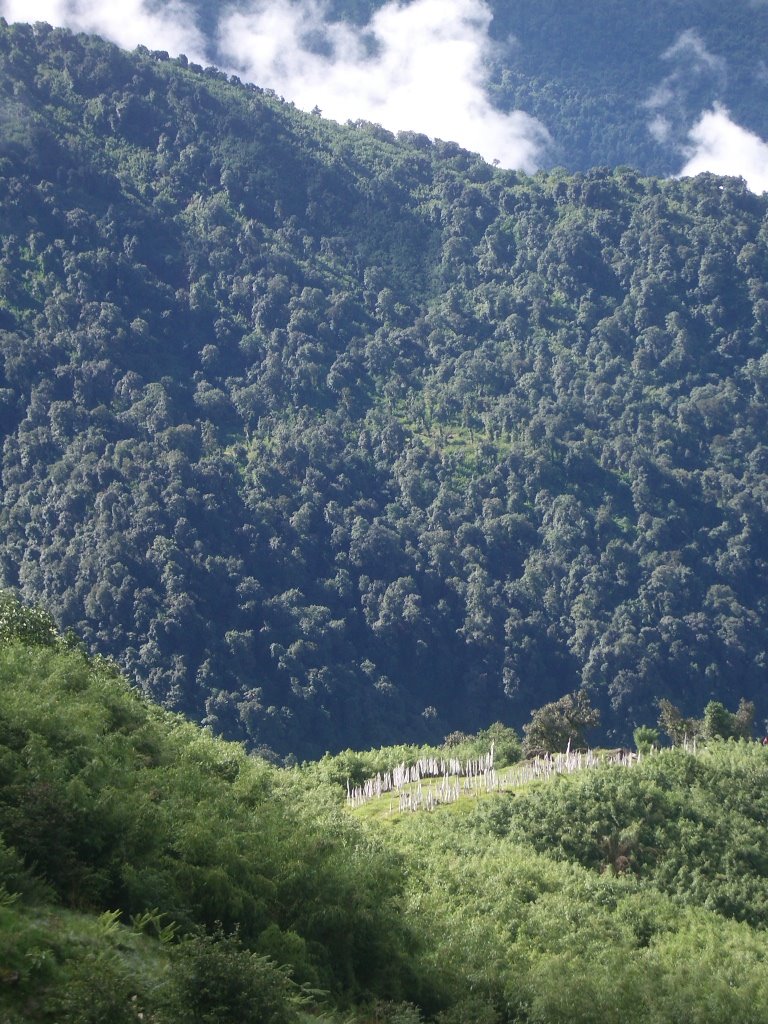
While it may seem difficult to escape India while in Bhutan, the country’s deeply Buddhist culture gives it a flavor uniquely its own. Religion forms the purpose of much Bhutanese artwork, and Buddhist art is present everywhere. Prayer wheels - cylinders with written prayers that are to be turned in a clockwise motion – are seen in monasteries, as well as in garden squares and outside homes. Stunningly beautiful, gigantic prayer wheels have even been constructed at waterfalls, where the force of the water keeps the wheels turning perennially. Multi-colored prayer flags, inscribed with auspicious symbols, prayers and mantras, dominate the green landscape, symbolizing happiness for the flag planter and those in the vicinity of the flags.

Indeed, while it is worth visiting Bhutan simply to experience the uniqueness of its culture and the beauty of its landscape, its cities are well-planned and worth visiting. The capital city of Thimphu is home to the kingdom’s administration and monarchy, and colorful buildings of both bejewel the landscape. Though the largest city in the country, its population – like Bhutan’s – is surprisingly small, roughly 50,000. The popular tourist town of Paro, 60 km from Thimphu, lies in one of Bhutan’s most scenic valleys, and as the centre of ancient trade routes to Tibet, is historically significant. The emerald-green Paro river (Pa Chu) intersects the valley, and above the river stands the 17th century Paro Dzong (fort), overlooked by a magnificent watchtower built in the same time period, which has now been converted into the National Museum of Bhutan.

Paro’s greatest attraction for me, however, was a fortuitous dinner at Red Rice Kitchen, a restaurant among the rare breed of dining establishments that a foreign tourist often seeks but rarely finds: one that conjures memories of a people, a culture and a place long after the traveler has departed. The restaurant, exquisitely decorated and with the soothing ambience of a comfortable Bhutanese home, spun finger-licking food in its culinary chambers, but the highlight of the evening – my last in Bhutan - was meeting the restaurant’s proprietor, Wangda Tobgyal. In 2005 Tobgyal and two friends became the first people in the world to cycle around Bhutan, a 2000 kilometre feat that took them 24 days. True to their “Bike for Life” motto, the trio traveled to schools across the country raising awareness about HIV/AIDS and drug abuse. Despite his humble demeanor, I discovered that Tobgyal was a keeper of many talents – he is a photographer, trekker, fly-fisher and director of a travel agency called Lakhor – and, like many other Bhutanese I’d met, deeply passionate about his country. Our conversation spilled over into the hours, and when I rose to leave he presented me with a “Khada”, a traditional Bhutanese ceremonial scarf. The restaurant’s setting, the gift, and our conversation seemed to represent the attitude towards Bhutan among the people I’d met: respectful of past traditions, hopeful of the present, and excited for the future.

*******************
An edited version of this story will appear in The Hindu in October.

Thursday, September 14, 2006

Bhutan


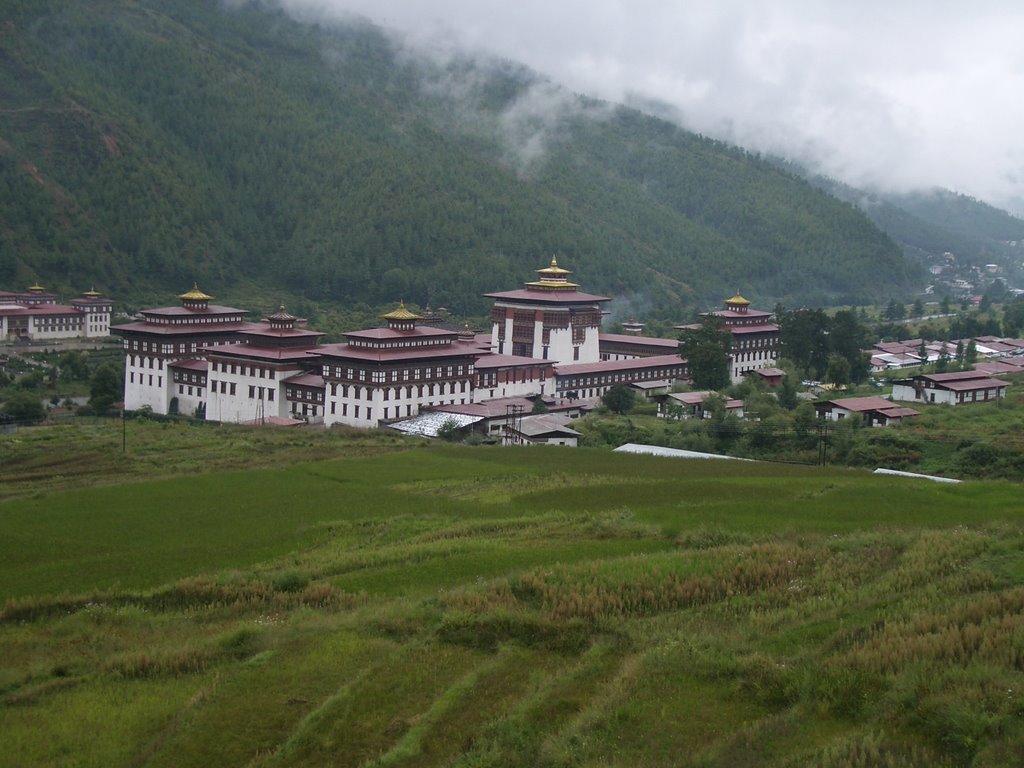
1. At Thimphu, looking at the monarchical and government headquarters

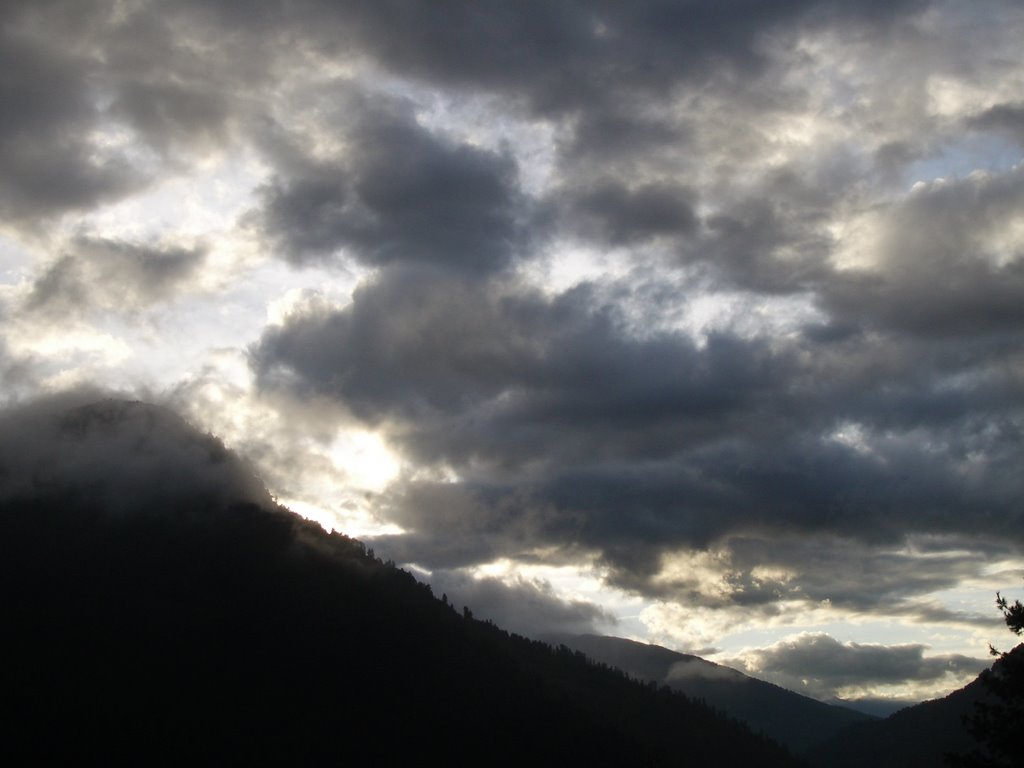
2. Bhutan sky, while driving up to Thimphu

3. A bridge over the Thimphu river, festooned with prayer flags

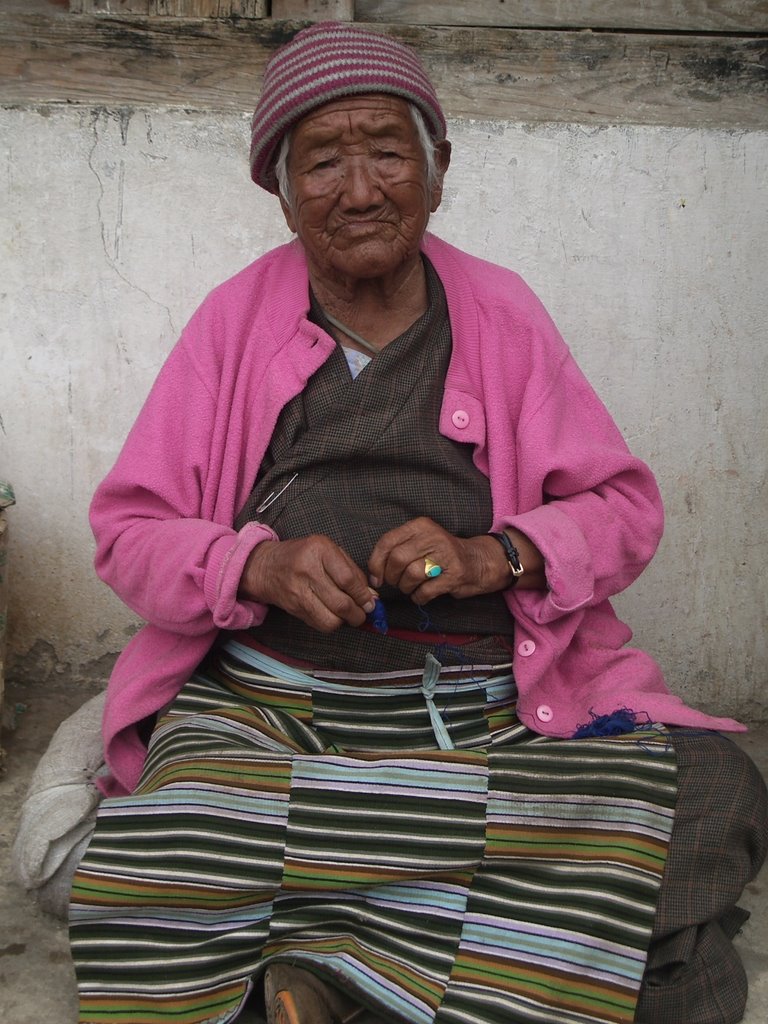
4. An old woman knitting, Paro

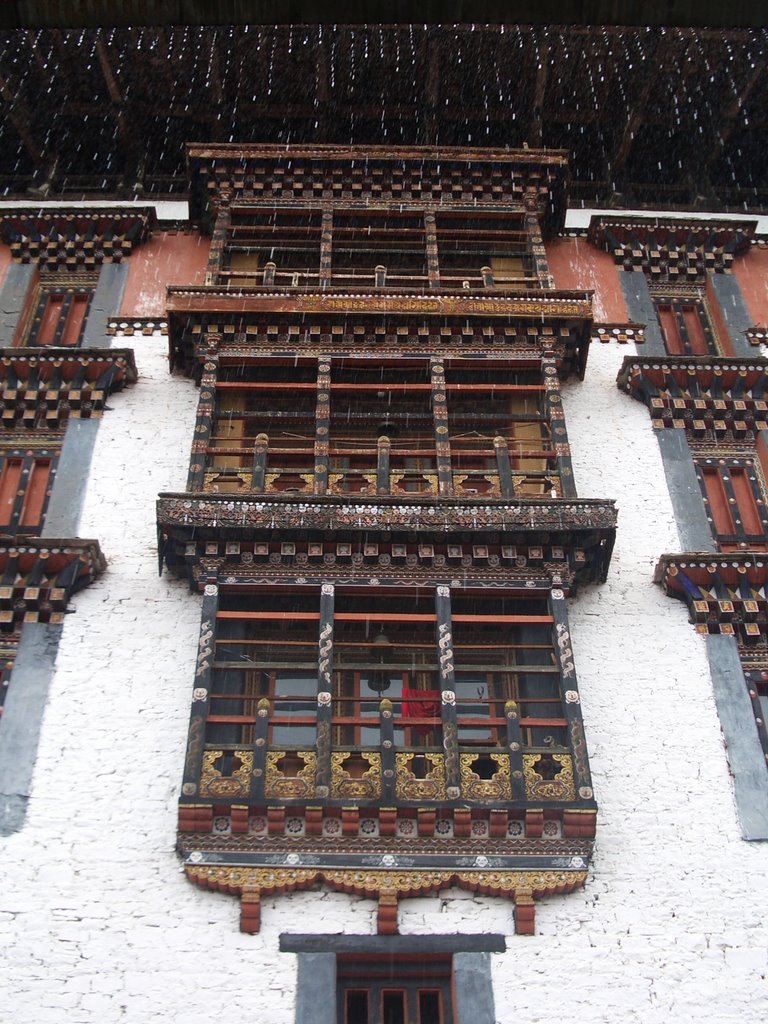
5. Falling rain at the Paro Dzong, a 17th century fort in Paro

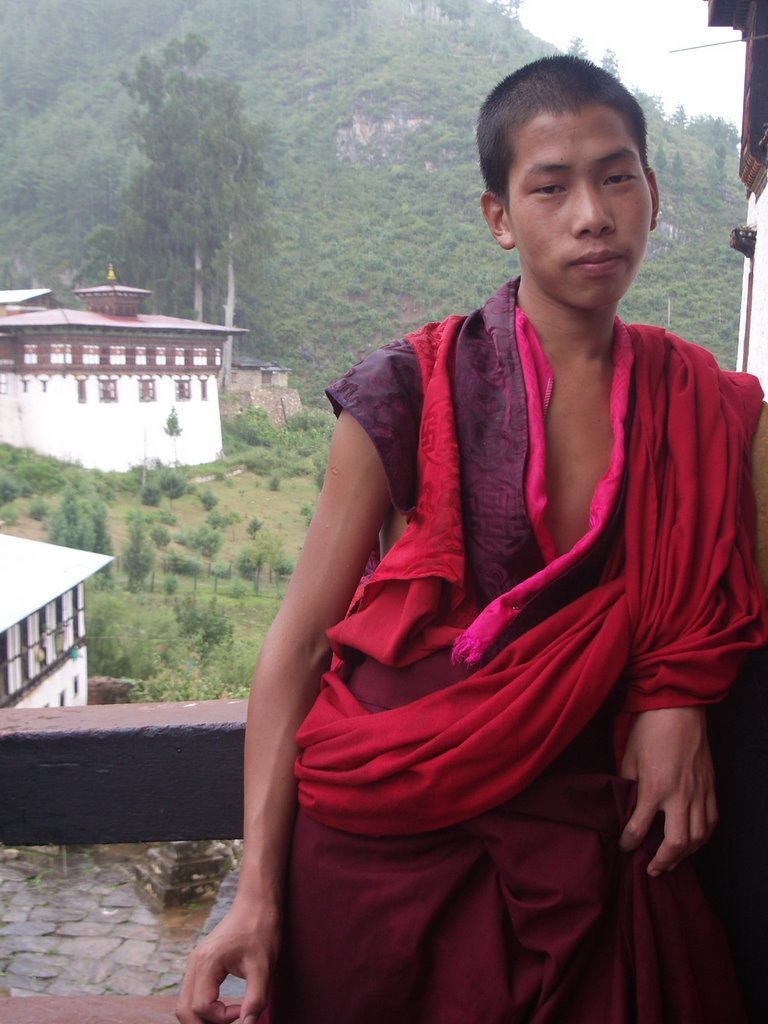
6. A monk at the Paro Dzong

Wednesday, September 13, 2006

Nathula Pass


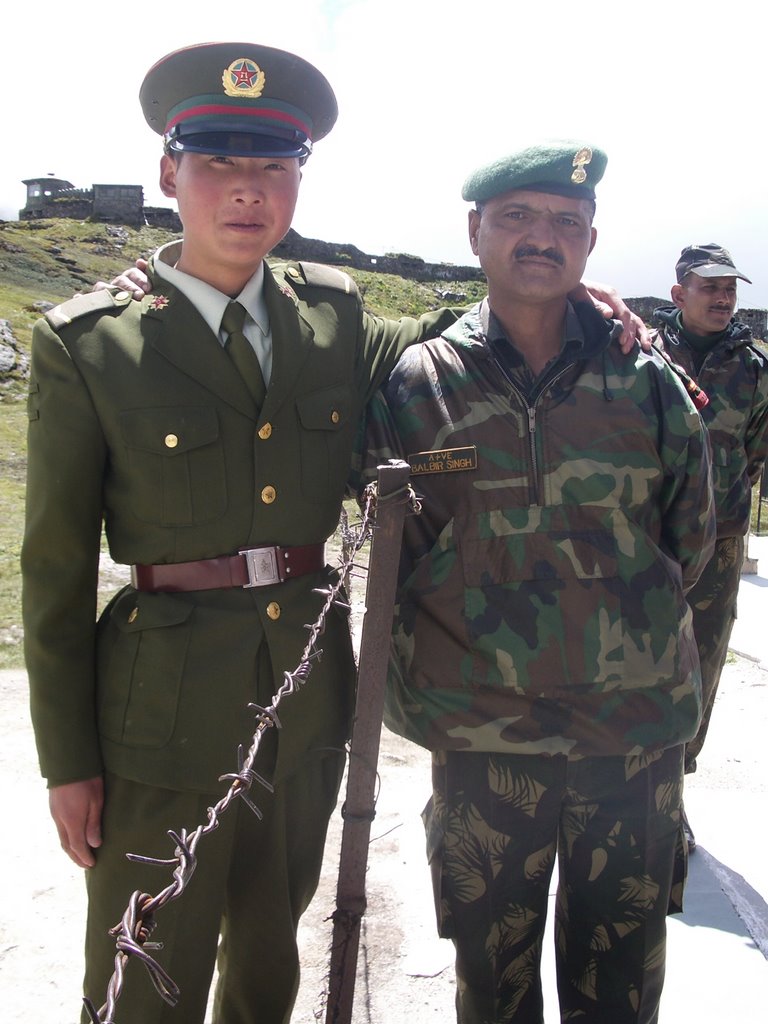
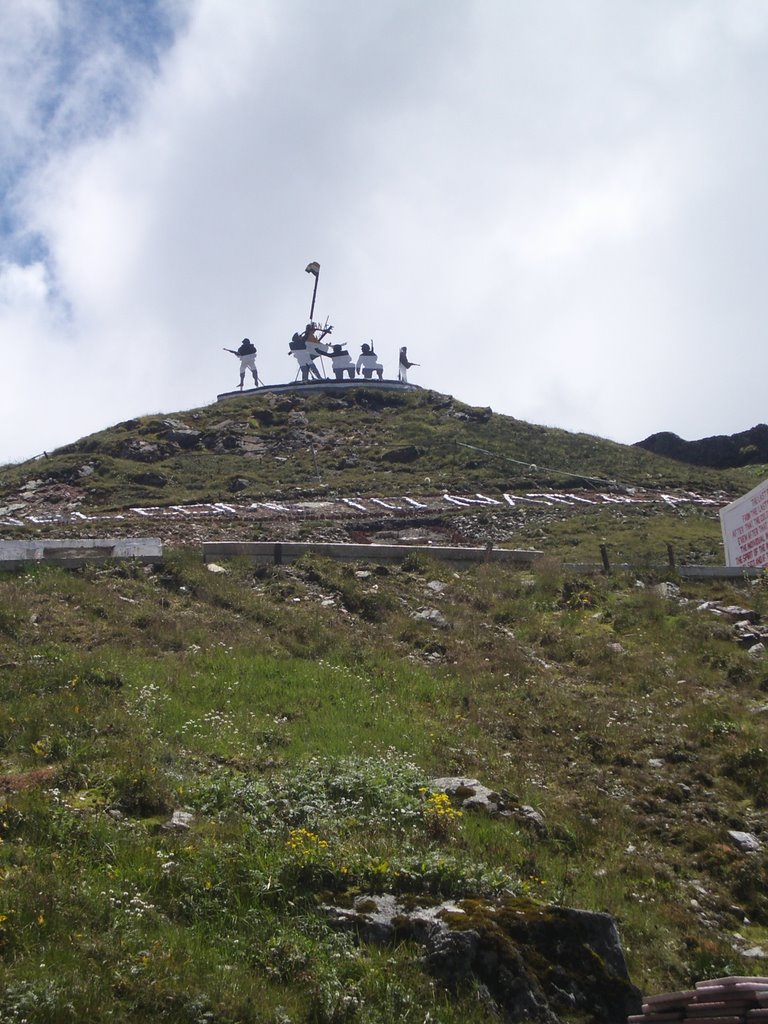
East Sikkim's Nathula Pass, at 14,000 ft, is simply stunning. Overlooking Tibet, it is the India-China bordertown and is historically significant as it was a major trading point on the Old Silk Route. The first photograph is of Changu lake, a beautiful lake that is extraordinary as it's at a height of 12,400 feet!

Tuesday, September 12, 2006

Soulitudes

Cultural tourism

Off the beaten track

SMITA JAIN

Companies like the Mumbai-based Soulitudes are trying to redefine the notion of `holidays' and `responsible' tourism.


Enabling connections: Anant Van in Bandhavgarh, Madhya Pradesh.

A TRIP through Bandhavgarh with Shyam Benegal. A trek through the Himalayas with mountaineer, actress and photographer Dipti Naval. A musical extravaganza, in the lap of the Himalayas, with eminent classical musicians from around the country.

In a world of off-the-shelf, one-size-fits-all travel packages, these tours may sound too good to be true. Yet these are just some of the tours offered by Mumbai-based Soulitudes, a company that aims to allow visitors to explore India's artistic, spiritual and cultural landscapes through travel.

Immersive travel

"Soulitudes is a vehicle for immersive travel centred around India's ecological, historical and spiritual heritage. We aim to share this land with travellers in a manner that is warm and intimate," says Soulitudes co-founder Shobana Jain. "Our endeavour is to create a travel experience that rises above the transient nature of modern travel," adds her husband and Soulitudes' co-founder, Ram Badrinath.

Having travelled extensively in different parts of the world, Ram and Shobhana were disappointed with the offerings of mainstream travel companies in India and decided to begin their own travel company with a difference. "Travelling through Europe, we realised the best holidays we had were in our friends' homes," says Ram. "In Paris, for instance, we didn't stay in a hotel but our friend's grandmother's 80-year-old house in a suburb of Paris. We were invited for meals and local celebrations. In Tuscany, we explored off the beaten path and came across art workshops in Tuscan Villas. It struck us then that India had so much to offer and we decided to return to India to set up Soulitudes. Fortunately, as we travelled across the country, we came across people who shared our view of travel and our experiments with such travel began," he adds.

Though they provide customised tours for individuals and groups, Soulitudes doesn't see itself as an ordinary travel agency, but rather as an agent of change — both internal and external. Says Ram, "Our vehicle for change is Indian culture and diversity. Through our association with eminent writers, classical musicians, musicologists, dancers, photographers and historians we will help seekers observe, absorb and connect. The programmes are set in beautiful distant places which enable self-reflection."

In many respects, companies such as Soulitudes are redefining traditional notions of "holidays" and are fulfilling the needs of a growing community of global travellers interested in "responsible tourism" — travel that promotes a deeper understanding of a place and its people and also includes a responsibility to limit the extent of the sociological and environmental impact that a holiday may cause. Christine Chardonnens, originally from Switzerland and currently residing in Delhi, says she has been grateful for the opportunity to explore India through Soulitudes. A veteran of numerous tours, she is looking forward to joining in on more Soulitudes holidays. "I find that Soulitudes offers a very refreshing concept of a holiday, one that is intellectually stimulating. It is an opportunity to learn about Indian art — music, photography, cinema, among others — from highly-respected individuals in their field."

Eco-friendly

Soulitudes also strives to situate its activities in eco-friendly lodges and resorts in order to inculcate respect for India's natural heritage. Some of their tour partners are Banjara Camps, Himalayan Village and Anant Van, each of which is run on the principles of responsible tourism. Ultimately, Soulitudes aims to provide an integrated and holistic perspective on travel to provide fun and relaxing holidays for travellers - and also fuel a deeper interest in India's rich cultural heritage. For more details, contact Shobhana and Ram at +919892692809 or +919820889808.

Monday, July 17, 2006

Theatre for Change

www.hindu.com/mag/2006/07/16/stories/2006071600050200.htm

INDIA BEATS

Multi-dimensional plots of change

SMITA JAIN

`The first and only feminist-activist' theatre group in the country, Pandies is focussing on social change through the medium of theatre.


"These workshops are a window into a different world for these children. They are normally never asked their opinion on serious issues; giving them this platform has inspired positive attitudinal shifts


RELEVANT TO THE TIMES: At a workshop with children.

EVERY alternate Saturday morning, children living in the slums of Nithari, in Noida, wake up in a state of frenzied excitement. They rush to their school, an NGO called Saksham, and wait patiently for its doors to open. The children are waiting eagerly for "Sanjay Bhaiya" who, along with his theatre troupe, has been conducting three-hour informative, entertaining and thought-provoking workshops for the children within the school.

The Delhi-based theatre troupe, `Pandies', (after a derogatory term devised by the British to refer to the Indian insurgent Mangal Pandey) is, as its name suggests, not your ordinary theatre troupe. Pandies prides itself on being the first and only feminist-activist theatre group in the country that is, says its founder Sanjay Kumar, "committed to staging plays relevant to our ethos and time".

From the margins

Speaking about the troupe's origins and ideals, he adds, "Pandies' theatre is from the margins and is a theatre of children, women, slum-dwellers, the homeless, and of vulnerable sections and subsections within those margins. The issues that we choose revolve around women because the group believes if our society is to head anywhere, it has to become more women-oriented and woman-friendly."

On this Saturday, they are performing short skits specially prepared for the children. One skit, though complex, is particularly riveting. It describes the story of a pregnant young woman who is convinced by her lover to leave their village for Delhi in order to, ostensibly, escape parental wrath and marry. After reaching Delhi, however, the man takes the woman to a park behind Jawaharlal Nehru University, rapes and subsequently throttles her. The woman survives and is cared for by residents of a nearby slum, where she delivers her baby. Uneducated and without any vocational training, she and her son are forced into a life of destitution and poverty.

Sensitive but blunt

Despite the sensitive nature of the multi-dimensional plot, Sanjay and his troupe mince no words when discussing it with the children. "Do you think the man loves the woman?" he asks. "Do you think the woman should have left her village?" And, most astonishingly to all of us present: "Did you know that this was based on a true story?"

Each question is followed by a thoughtful silence, after which both girls and boys venture replies. "I don't think the man loved the woman. I think he just wanted to use her for fun, which is not right," says Azharuddin, whose father is a tailor in a garment factory.

Soni, 15, whose parents run a roadside tea stall, raises her hand shyly, but speaks confidently and with emotion. "The woman shouldn't have left without informing her parents or discussing it with anyone. This is the reason why education is so important, especially for girls. If she was educated, she would have been able to make a more informed decision, and at least would have been able to support herself."

"These workshops are a window into a different world for these children," says Nadira Razak, co-founder of Saksham. "These children are normally never asked their opinions on serious issues; giving them this platform has inspired positive attitudinal shifts," she says. Indeed, within the short span of two months, she says, the impact is already evident in the children's increased confidence; they eagerly look forward to their first on-stage performance later this year.

Begun as a small university movement in Delhi in 1987, Pandies has grown into a robust troupe with over 70 members, many of whom are college students interested in social change through theatre. Isha, a recent graduate of Hansraj College, has been an ardent member of the troupe for two years and doesn't plan on leaving anytime soon. "Pandies gives us a space of freedom where we don't have to worry about what we're saying," she says. "Not only do we get to voice our opinions, we actually do something about them as well. And because we all volunteer our time and skills, it is truly an activist forum."

Serious issues

The troupe has one or two major performances each year and in the interim, they perform at slums, schools, and colleges. Since its founding, Pandies has tackled issues such as rape, prostitution, HIV, the Mental Health Act and its relation to women, and love and marriage.

In addition to their work in Delhi, Pandies has conducted workshops and performed in theatre festivals both nationally and internationally. In 2005, when they had adopted the theme of "Anti-Communalism", the troupe conducted a seven-day workshop in Gulmarg, Kashmir involving 55 Kashmiri Pundit and Kashmiri Muslim girls and boys between 10 and 16 years. Says Sanjay, "It was a challenge to put together a production in seven days with children from these two volatile communities. In addition to their different religious backgrounds, many were poor, some were orphaned, and most were traumatised by the violence they had witnessed. However, our methodology of individual and collective exercises, short story writing, creating 20-minute skits, and the final 90-minute production turned out to be extremely successful."

At the moment, the troupe is rehearsing for their next performance at the Sri Ram Centre in Delhi, a montage of three individual pieces, each critiquing modern-day constructions of masculinity and the state from the perspective of a female protagonist. With elements from real-life stories and absorbing themes, the mid-August performance is not to be missed.

For more information about Pandies, contact Sanjay at pandies@netscape.net

E-mail the writer at smitajain2@gmail.com

Thursday, July 13, 2006

Auto Epiphany - 2

Haggling with auto drivers is not something I look forward to most mornings, and today was no exception. After multiple no-gos – one guy’s auto didn’t start after we’d finally agreed on a price, another didn’t know the way and so couldn’t agree on a price – I finally found one who was willing to take me at a sum that I thought reasonable. He had an extraordinary smile that he unabashedly flashed every so often, and a cheerful demeanor. After getting in the auto, I asked him if he could turn on the meter (for personal research purposes); like his brothers around the city, he insisted that it wasn’t working. It somehow struck me a tad improbable that, by some supernatural coincidence, every single auto meter in the city refused to work.

“How is it that in other cities auto-meters work, yet in Delhi none of them ever do?” I asked him, almost rhetorically. He launched into a passionate argument – half of which was lost to the wind - about the injustice of the Delhi government’s meter rates. “Each of us has to pay around 150 rupees simply as rent every day to the people who own the autos. How can we recover that, and deal with inflated CNG prices, on the meter rates?” For auto-drivers whose daily earnings are, if they’re lucky, around 500 rupees a day, 150 rupees is, literally, highway robbery. “Doesn’t it make most sense for auto-drivers to buy their own autos?” I asked, a bit naively. “Of course it is, madame, but who has the money for it? This auto is itself around 1.5 lakhs,” he informed me. “I guess very few auto-drivers own their own autos,” I replied slightly ruefully, thinking of the avaricious money-lenders sitting on their a**s earning millions taking advantage of the dearth of financing options for auto drivers. “Well, out of 100, you’d find maybe 10 who’ve bought their own. So 90% have to pay this rent everyday,” he said.

We drove on a bit, and curious to learn more about this cheerful savant, I began asking him about himself. His accent indicated that he wasn’t from the area; guessing that was from Bengal, I asked him about it.

“I am actually from Hyderabad, madame.”

“And what are you doing here?”

“I’ve been in these parts since I was 7 years old, so now this feels like home.”

“What brought you to these parts?”

He turned around briefly, looked me in the eye, flashed his beautiful smile, and said sincerely, “There’s nobody in this city that I can call my own. I have nobody here.” After a pause, he said, “You know, if you heard my story, madame, you would not believe it.”

He continued his story.

“I was 7 years old, and I was playing in a park near my parents home in Hyderabad. A Sardarji who was at the park picked me up and took me on a train to his home in Punjab, where he raised me as his son.”

Aghast, I asked if his parents ever found out what happened to him. “My parents still probably don’t know what happened to me. You see, I was too young to remember our address or phone number or anything. ”

Surprisingly, he didn’t seem to harbor any ill-will against the Sardar. Instead, he explained the Sardar’s position. “You see, he didn’t have a son, so he raised me as his own. However, when I was in my teens, one of his friends got into a fight with him and dropped me in Chandni Chowk all by myself, with no money. Then I was truly alone.

Did he ever try to get back in touch with the Sardar? “I did, a few years ago. I found out that he was dead. He used to do a lot of drugs, like opium and weed.

“Since then, I’ve worked in chai-stalls, in dhabas, trying to scrape together a living here. Finally, I was able to get this auto and earned enough money to stay someplace and take care of myself. I can finally stand on my own two feet.”

At this juncture, we had reached my destination. I stepped out, still absorbed in the story. He stepped out as well, smiled proudly, and said, “You know, madame, I didn’t tell you this before, but this is my own auto!”

As if in addendum to our conversation about meter-prices, he added with a grin, “I still have to give 150 rupees every day, but that’s to the bank that helped me finance this.”

I looked at him, moved by the vast reservoir of fortitude, good humor and determination that he maintained, despite devastating odds. I blustered a few words of congratulatory nature for his success, but for the most part, I was speechless.

Handing him a 100 rupee note, I said, “Good luck, bhaiya.”

I caught his eye for a brief second, and turned to walk toward my office. As my throat tightened involuntarily, I thought of the unspoken exchange that had just taken place. The tears that glistened in my eyes, I realized, had mirrored his own.

Wednesday, June 21, 2006

Go West

On the train from Itarsi to Delhi last week, my seat happened to be comfortably nestled amongst a throng of Mongoloid-featured folk. Mostly in order to distract myself from the dizzying 40-something-degrees heat, I decided to spend the morning observing them to try and figure out where they were from. Reminiscing my China days, I absorbed with amusement the orange-dye of many of the young men’s hairstyles, the multiple ear piercings, pumped muscles, and their decidedly un-Indian basketball jerseys. I came to the conclusion that they were probably Bhutanese, or Nepali. Yet the fact that their foreign-tongue talks would sporadically be interspersed with loud, heartfelt Hindi tunes perplexed me, and seemed to rule out any non-Indian lineage. I decided to observe the eldest amongst the group, a red-robed, bespectacled old man who would only pause his beaded-incantations to enquire about the price of a cold Coke or bottle of milk. He was too religious to be Chinese, I thought to myself, and the fact that they were traveling from Bangalore didn’t make it seem likely that he was Bhutanese.

After a while, one of the young men came and sat down next to me. He asked where I was going, what I did, why I got in at a godforsaken hour from a no-name station (only to have to kick one of them out of their seats). Next, it was my turn to ask questions, and I learned that they were Tibetans, traveling from their home (near Bangalore) to their schools (in Dehradun).

Tibetans? It had briefly crossed my mind that they could have been Tibetan, but I had quickly ruled it out, thinking that Tibetans would not behave or dress in the manner of these youth. His admission, to my surprise, shocked me. I realized that my perception of Tibetans had hitherto been completely shaped by Seven Years in Tibet, a biography of the Dalai Lama, and a random Tibetan-themed restaurant in Varkala. In seeming contrast to my co-passengers, the Tibetans of my imagination were all peace-loving, non-materialistic, deeply spiritual, traditional people. I turned to the red-robed elder, thinking that, like all cultural communities these days, it’s probably the elders that are the repositories of the age-old traditions recorded in history books.

Just as I turned, the elder picked up a half-empty bottle of water, felt that it was warm, and threw it out of the train window.

I thought about the fact that there was no running water left on the train. How the sweltering heat outside was only magnified by the hot air billowing through the coal-fired train. How I had slowly drank the warm water of my bottle, careful not to spill lest any drops be wasted.

How times change.

**************
From China, to Chennai, to Noida, I’ve creeped my way out west again. Though I would never have thought that Ahemedabad -- this land of sugaredeverythings -- would ever be ‘home’, that’s what it is right now.

I’m working here with Indicorps, an organization that aims to bring back people of Indian origin to India for service, for connecting back with a place that plays a large role in their identity. So far, it’s been a lot of fun. Last week found me at an Indicorps retreat in the hill station of Panchmarhi, Madhya Pradesh (the nearest train stop being Itarsi), taking a plunge in a not-so-clear lake, discovering the joys of eating freshly plucked sweetandsour mangoes, and learning from Indicorps fellows about the trials and travails of building entrepreneurs among slum youth in Kanpur, and building self-esteem of orphaned youth in rural Andhra Pradesh.

I don’t know for how long I will be here, or whether any of my crazy plans will materialize (the entrepreneurial bug still hasn’t left me). I do know that I have much to learn about the world around me, and about myself.

Hope you all are well, and am hoping that this magnet-spot will allow me to see many of you soon ;)

Tuesday, June 20, 2006

Sting

Don't believe in miracles? Believe this.

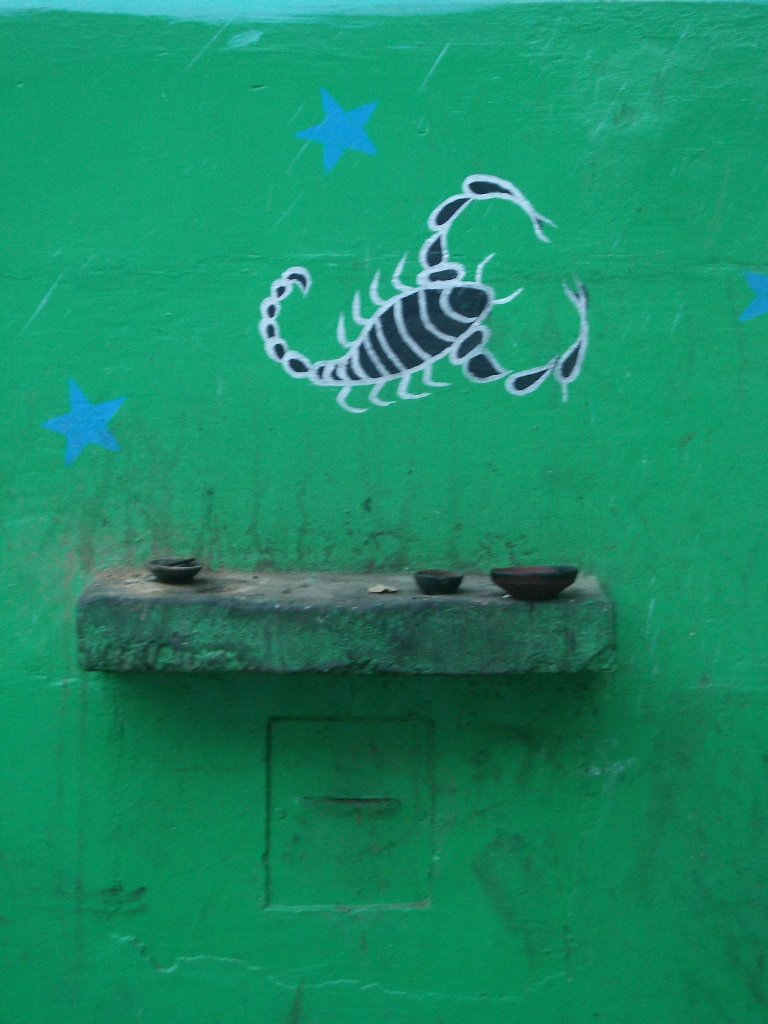
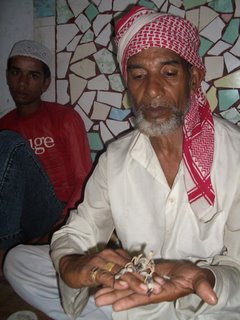
On a visit to a small town in Western UP called Amroha, my sister and I decided to re-visit the dargah of Shah Sharafuddin (also called Saheb Vilayat Saheb for reasons that I can't remember). Anyway, the place is famous for its 'ahimsa' scorpions: they don't sting people within the premises of the dargah.

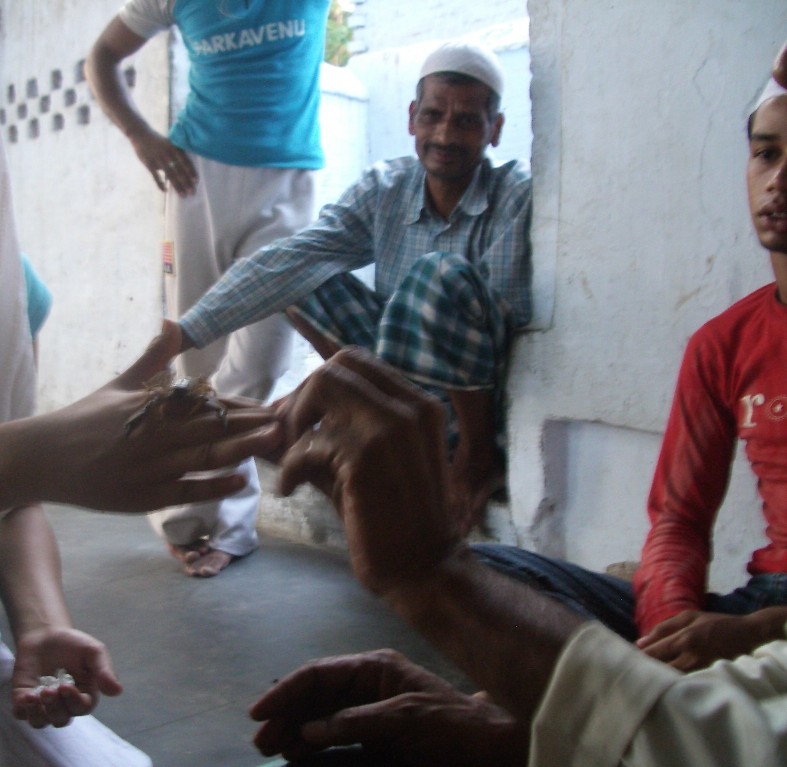
Naturally, I was skeptical of the whole thing and wanted to try it out for myself. The pictures are proof! (The hand coming out of nowhere in the badly lit picture, yup, that's me). I held a big scorpion on my hand for about half a minute, and it just crawled a bit over my hand.

The story goes that two brothers got into a fight, and one brother put a curse on the other which held that scorpions and snakes would infest his home (now the site of the dargah, I assume). The cursed brother then apparently went to a holy person for reprieve, who then 'undid' the curse by saying that though scorpions and snakes would infest the place, they wouldn't bite.

Tuesday, June 13, 2006

Theatre for Change


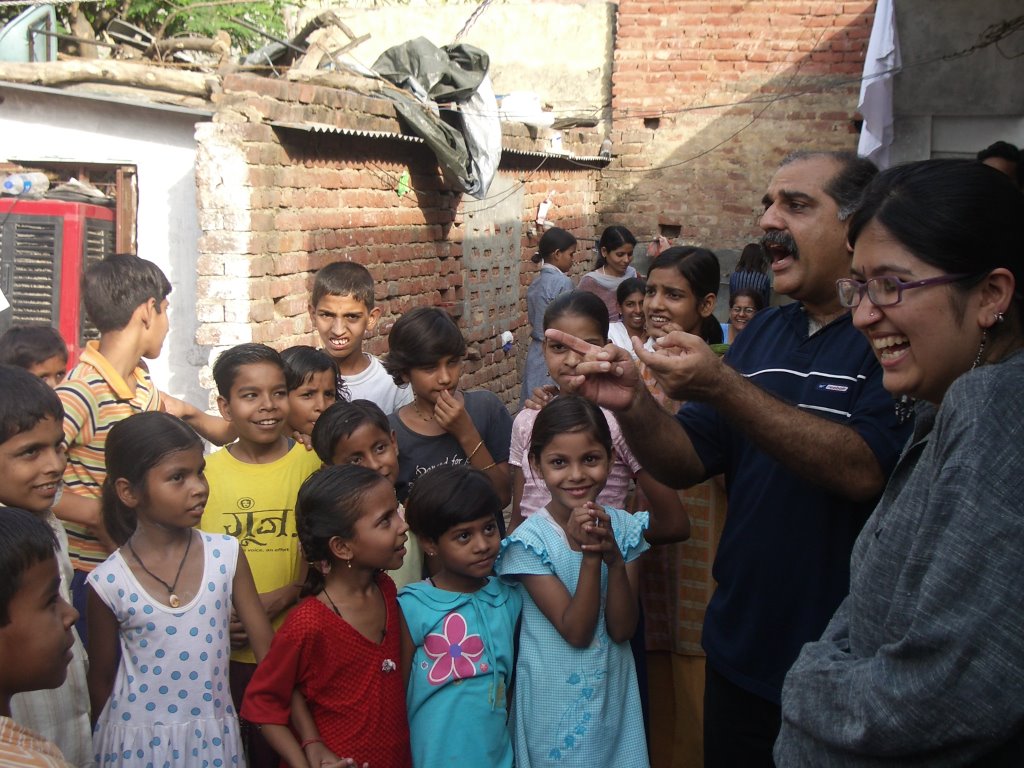
Pandies, a theatre troupe that uses theatre as a medium of social change, recently held a theatre workshop at a slum school called Saksham in Noida. Started in the 1980s, Pandies has evolved into an activist and possibly the only feminist theatre group in North India.

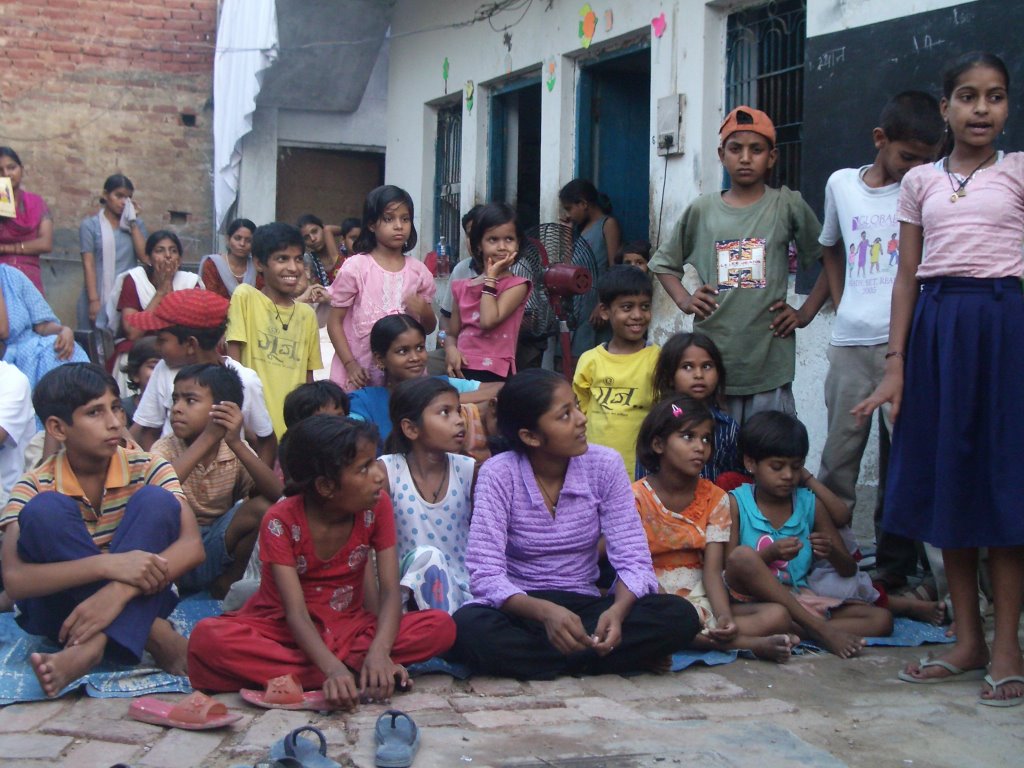
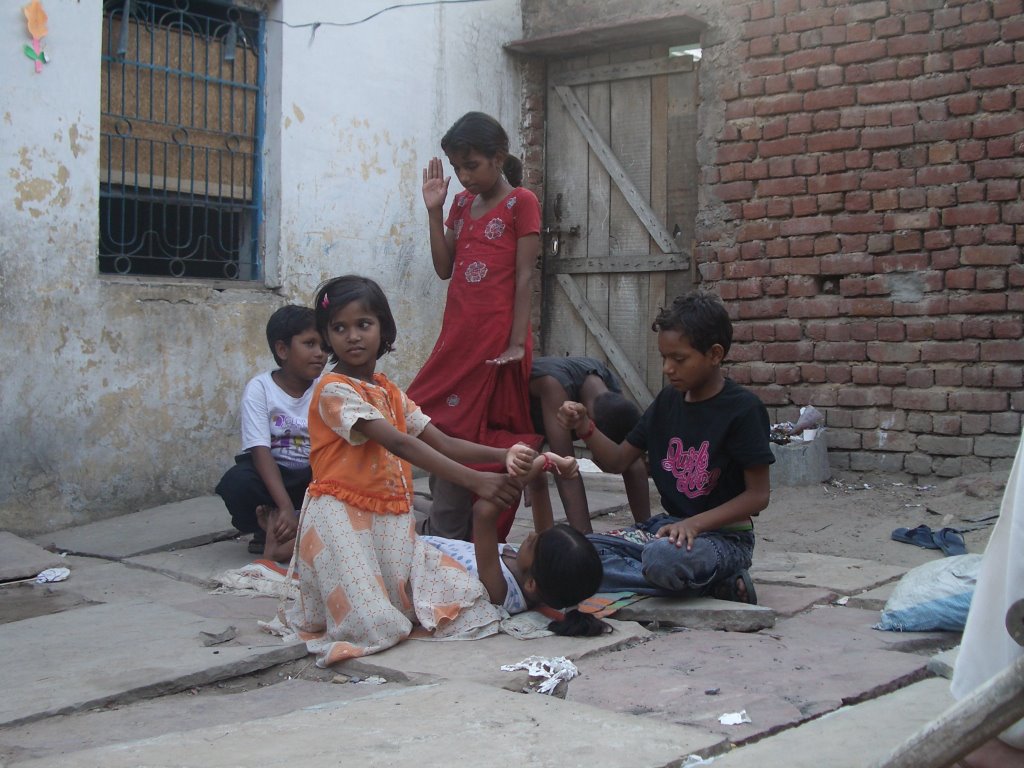
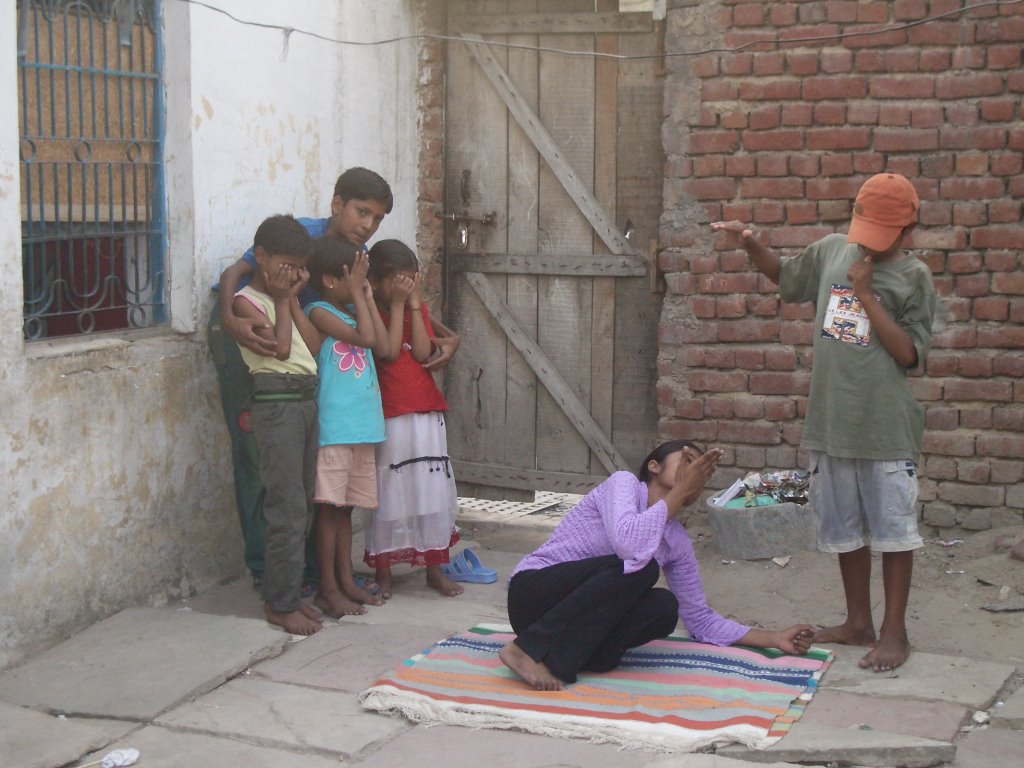
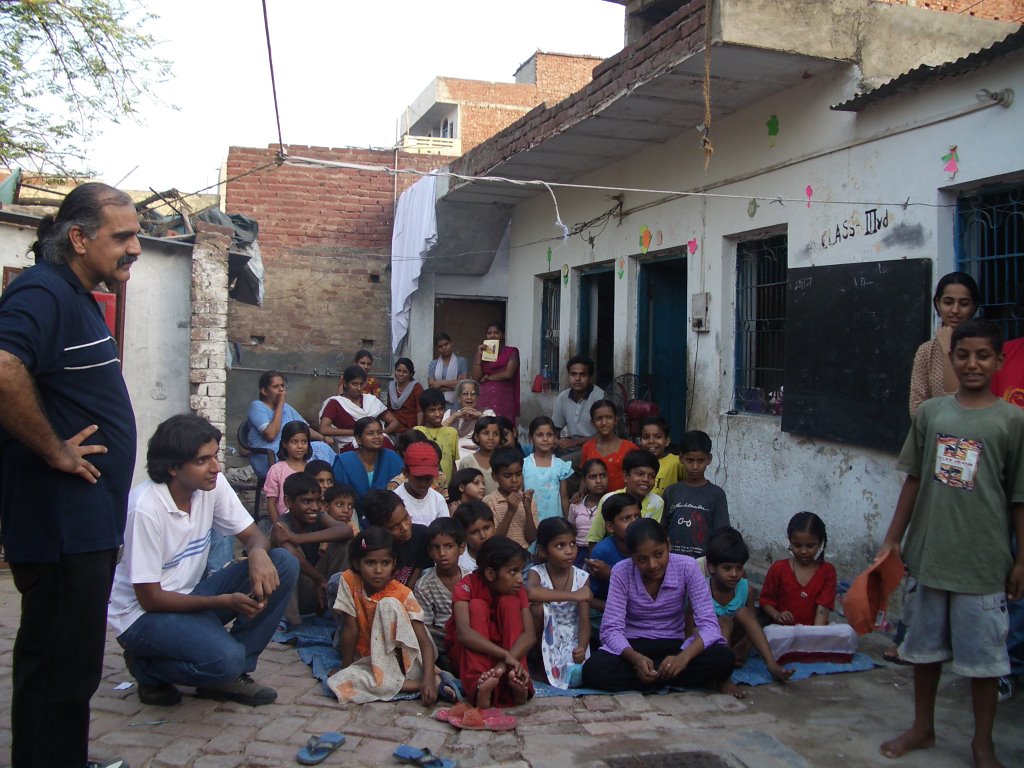
After a few warm-up activities at the school, they arranged children in groups of 5. Each group was to depict a gender-based scenario, and the audience was supposed to guess the scenario being portrayed. Following each performance were debates and discussions on the theme portrayed. The second picture shows the kids in the audience, while in the first you can see Sanjay (founder of Pandies) and Ishaa (a member of the troupe) talking to the kids. In the third picture, the group depicts a girl being sacrificed so that the mother can have a boy-child. In the last picture, the team depicts a drunken man beating up his wife, while the wife's brother looks on and comforts the children.

The discussion sessions after each performance were eye-opening. One team had depicted a cricket match in which 2 boys were playing. In the background, 2 girls were begging to play but were being refused entry by the boys; another girl was cooking for the boys, preparing for their arrival at home. Interesting questions were being tossed around. "Can girls play cricket?" asked Sanjay. One boy confidently stood up to answer. "Girls can play but they shouldn't play, especially near the boys. They should play in separate areas." Another girl, with tears of defiance glimmering in her eyes, stood up to say, "Girls should be allowed to play if they want to!" After another performance, in which a typical Indian dinner-table scene (mother cooking, boys being served) was being depicted, Sanjay asked, "Is it only a mother's duty to cook?" After a few girls and boys nodded in assent, Yogesh stood up and said, "Mother should cook roti-sabzi while the father should be responsible for chai-paani. Everyone should have a role." Upon asking if it was right that the mother should always eat last, a boy stood up and said, "No, no, everybody should eat together. The mother should cook and keep everything ready for the father's arrival so that everyone can eat together."

Interesting stuff, no doubt. Definitely got me thinking about gender and society in a different way.

I intend to write about both groups for the Hindu sometime soon since they both do specacular work, but this will have to do until then!

Theatre for Change


Every alternate Saturday morning, children living in the slums of Nithari, in Noida, wake up in a state of frenzied excitement. They rush to their school, an NGO called Saksham, and wait patiently for its doors to open. While a curious bystander might attribute the children’s extraordinary zeal to a large coffer of ice-cream behind the school’s closed door, the truth is more surprising. The children are in eager anticipation of “Sanjay Bhaiya”, who, along with the rest of his theatre troupe, has been conducting three-hour informative, entertaining and thought-provoking workshops for the children within the school premises.

The Delhi-based theatre troupe, which calls itself ‘Pandies’ - after a derogatory term devised by the British to refer to the Indian insurgent Mangal Pandey – is, as its name suggests, not your ordinary theatre troupe. Pandies prides itself on being the first and only feminist- activist theatre group in the country that is, says its founder Sanjay Kumar, “committed to staging plays relevant to our ethos and time.” Speaking about the troupe’s origins and ideals, he adds, “Pandies’ theatre is from the margins and is a theatre of children, women, slum-dwellers, the homeless, and of vulnerable sections and subsections within those margins. We are feminist and proud of being so. The issues that we choose revolve around women because the group believes if our society is to head anywhere, it has to become more women-oriented and woman-friendly.”

On this particular Saturday, Pandies members are performing short skits specially prepared for the children. One of the skits, though complex, is particularly riveting. It describes the story of a young, pregnant woman who is convinced by her lover to leave their village for Delhi in order to, ostensibly, escape parental wrath and marry. After reaching Delhi, however, the man takes the woman to a park behind Jawaharlal Nehru University, rapes and subsequently throttles her. Fortuitously, the woman survives and is cared for by residents of a slum nearby, where she delivers her baby. Uneducated and without any vocational training, she and her son are forced into a life of destitution and poverty.

Despite the sensitive nature of the multi-dimensional plot, Sanjay and his troupe mince no words when discussing it with the children. “Do you think the man loves the woman?” he asks. “What do you think of love?” “Do you think the woman should have left her village?” And, most astonishingly to all of us present: “Did you know that this was based on a true story?”
Each question is followed by a thoughtful silence, after which both girls and boys venture replies. “I don’t think the man loved the woman. I think he just wanted to use her for fun, which is not right,” says Azharuddin, whose father is a tailor in a garment factory. 15 year old Soni, whose parents run a roadside tea stall, raises her hand shyly, but speaks confidently and with emotion. “The woman shouldn’t have left without informing her parents or discussing it with anyone. This is the reason why education is so important, especially for girls. If she was educated, she would have been able to make a more informed decision, and at least would have been able to support herself.”

“These workshops are a window into a different world for these children,” says Nadira Razak, co-founder of Saksham. “Simply encouraging them to think and giving them the opportunity to express themselves contributes tremendously to their personality and self-esteem. These children are normally never asked their opinions on serious issues; giving them this platform has inspired positive attitudinal shifts,” she says. Indeed, within the short span of two months, she says, the impact is already evident in the children’s increased confidence; they eagerly look forward to their first on-stage performance later this year.

Begun as a small university movement in Delhi in 1987, Pandies has since grown into a robust troupe with over 70 members, many of whom are college students interested in social change through theatre. Isha, a recent graduate of Hansraj College, has been an ardent member of the troupe for two years – and doesn’t plan on leaving anytime soon. “Pandies gives us a space of freedom where we don’t have to worry about what we’re saying,” she says. “Not only do we get to voice our opinions, we actually do something about them as well. And because we all volunteer our time and skills, it is truly an activist forum.” The troupe has one or two major performances each year and in the interim, they perform at slums, schools, and colleges. They choose a topic and work on it over the course of a year; since its founding, Pandies has tackled issues such as rape, prostitution, HIV, the Mental Health Act and its relation to women, and the institutions of love and marriage.

In addition to their work in Delhi, Pandies has conducted workshops and performed in theatre festivals both nationally and internationally. In 2005, a year in which they had adopted the theme of “Anti-Communalism”, the troupe conducted a seven-day workshop in Gulmarg, Kashmir involving fifty-five children – Kashmiri Pundit and Kashmiri Muslim girls and boys - between ten and sixteen years of age. Says Sanjay, “It was a daunting challenge to put together a production in 7 days with children from these two volatile communities; in addition to their different religious backgrounds, many of the children were poor, some were orphaned, and most were traumatized by the violence they had witnessed. However, our methodology of individual and collective exercises, short story writing, creating twenty minute skits, and the final 90 minute production turned out to be extremely successful.”

At the moment, the troupe is rehearsing for their next performance at the Sri Ram Centre in Delhi, a montage of 3 individual pieces, each critiquing modern-day constructions of masculinity and the state from the perspective of a female protagonist. With elements from real-life stories and absorbing themes, the mid-August performance is not to be missed. For more information about Pandies, contact Sanjay at pandies@netscape.net

Sunday, May 28, 2006

Dial 1091


I got onto a DTC bus this morning, number 392. Bringing a dash of color into the largely male-populated bus, a flock of ladies accompanied me inside. For those of you unaware of the government's attempt to 'provide for' the city's women, there are - correct me if I am misataken - 4 rows (8 seats) in every DTC bus marked for ladies, while the rest are, by default, for men.

Three of the rows inside my bus were occupied by men; four of these men dutifully cleared their seats for the ladies who stepped inside. Two however, sat put, avoiding all eye contact with the ladies around them.

Noticing that few ladies were actually asking them to stand up, and in need of a seat myself, I stood next to them and requested them to stand up, pointing to the sign that clearly stated that it was a seat for ladies. One of them looked down and pretended he couldn't hear me, while the other continued staring outside the window with an adamant look in his eyes, muttering some nonsense about "cleaning the seat with his own handkerchief", and thus, presumably, being entitled to the seat. WTF?

I called out to the conductor and asked him to get the guys up. A few feeble gesticulations later, he gave up. He glanced at me evasively and said that he tried, and went back to collecting money.

I stood there, silently seething. Sure, I could stand the whole way, but if I didn't do anything about it, wouldn't it encourage other men to refuse to give ladies their due? My eye caught a sign printed in archaic block-letter type:

Ladies Helpline Dial 1091.
Students Helpline Dial ***
Senior Citizens Helpline Dial ***

I got out my phone in the now-crowded bus and started dialing the Ladies Helpline number. I hesitated a moment: everybody around me would be able to hear my conversation; what if the helpline just laughed at me and hung up? Wouldn’t that only further embolden men to take over ladies’ seats, and discourage women from standing up for their rights even more?

Deciding that it was worth learning what the helpline did anyway, I called. The woman who answered sounded earnest and encouraging, and I briefly described the situation. She asked if I had asked the conductor or bus driver to get them up, and when I answered in the affirmative, she said that the next best thing that she could do was to file a complaint. When I questioned the usefulness of filing a complaint, she answered, “Madame, at least we will get the number of the bus and the name of the conductor on record for the future, so that when they park their bus for the night, some action can be taken.” This woman rocked!

She asked me to get the name of the conductor and the bus number for the complaint. Holding the phone, I informed the conductor that I was on the line with the Ladies Department of the police department, and that they wanted his name and address. Immediately, I noticed a sea-change in the attitude of the men who refused to stand up and in the bus conductor. Fear flitting across his face, the conductor began to motion to the men more vigorously and commanded them to stand up.

More importantly, however, people around me started rallying for the cause. A man sitting in a row behind where I was standing gently tapped my shoulder. “Tell the conductor that he must stop the bus at the police barrier if the men don’t stand up.” A young man sitting next to the conductor began accosting him to get the men to stand up. Pretty soon, men and women from across the bus were lambasting the men.

In a feeble attempt to salvage their dignity, they grumbled their misgivings but soon stood up and vacated the seats.

In the midst of all this, the woman from the Helpline was still holding the line. Breathlessly, my heart pounding from the confrontation, I thanked her as I sat down in my seat. As enthusiastically as she had answered the phone, she answered that it was no problem -"call us if you have any more trouble!”

So Ladies, don’t hold back – Dial 1091!

Sunday, May 21, 2006

INDIA BEATS

Tales of resilience

SMITA JAIN

A tour organised by street children offers rare insights into their place in the micro community of a railway station.

Photo: Yashas Chandra

New beginnings: Street children in the Salaam Baalak classroom.

HAVE you ever wondered what life is like for street children who live in and around the New Delhi railway station? If you're anything like me, you'd probably never have even noticed them as you scrambled your way to catch the train to your vacation destination, or as you arrived, bedraggled and dreaming of your bed at home.

For most commuters, the lives of the station-children strike in brief bursts of horror and pity: the near-naked boy with no legs who slides his way through the filth of our compartment's floors; the little girl with sun-streaked, matted hair who wafts through the compartment singing a tuneless melody. By and large, the ephemeral lives of these invisible children — who wander bereft of permanent shelter or family — remain hidden to even the most discerning of eyes.

Innovative initiative

Not for much longer, however. An innovative initiative, spearheaded by Salaam Baalak Trust, aims to demystify life on the streets in an ingenious manner: a two hour tour of the New Delhi Railway station and its environs, led by its true connoisseurs — children who have grown up on the streets.

I arrived, breathless and apologetic, at the appointed hour and location, just as the tour began. Two young, smartly dressed men addressed the group in near-perfect English and introduced themselves as the tour leaders. The first, Shekhar, described his career as a debutante actor. Javed, the second, discussed his aspirations to work with the UNDP after completing his Masters in Social Work.

The excellent oration and the finesse of the leaders baffled me, and just as I opened my notebook to check whether I had misread the part about the tour being led by children from the streets, Shekhar added that he had, as a runaway child from Bihar, spent much of his adolescence on the streets we were standing on. Javed echoed his story. They had both encountered Salaam Baalak Trust in their teens, and through it, were able to slowly unravel themselves from the addictive web of street life.

The tour leaders took us across railway platforms, through traffic-choked arteries of Paharganj, and to favourite street children-hangouts. Seemingly nondescript locations were transformed, through the eyes of these unlikely storytellers, into an animated stage upon which the budding dreams and blighted hopes of children were played out every day. Pointing to the train-washing track, Javed revealed a nugget of street-life wisdom. "Children take their showers on those tracks, usually on Fridays, as it is a special day for station-dwellers. Not for religious purposes, but because that is the day that Bollywood films are released!"

As we stopped on Platform 12, Shekhar gave us a first-hand account of the station mafia in true Pacino style. "Nearly 300 runaway children arrive at the station every day. The mafia leader of a particular platform captures some of these children and trains them in "skills" such as picking pockets, singing and begging.

Symbiotic relationships

I walked ahead hurriedly, stopping at a fruit stand. "Railway children have a special relationship with fruit sellers and chemists," Javed pointed out. "Immediately after a luxury train arrives, children run through them to find uneaten fruit and then give it to the fruit seller. In return, the vendor allows them to sleep on his vendor ceiling at night, and even protects them when the station police arrive. The police sometimes beat the children for no reason, though," he said ruefully, "and that's where the chemist shop comes in handy."

The importance of these symbiotic relationships is not to be understated, the leaders emphasised. "Though there is suffering, life on the railways is also about friendship, love, and a strong feeling of community. Even in the direst of circumstances, people look out for each other."

My admiration for the leaders peaked as they told me of their plans to publicise the tour in an effort to draw national attention to the lives of station-children. "We want more Indians, especially students, to join us and learn about the issues that these children face," said Shekhar. For an inimitable insight into the courage, determination, and resilience of the human spirit — and for some fun — book your place on a tour. For more information, contact Shekhar at: +919873130383.

Saturday, May 06, 2006

Voices


Do you know of inspiring people, places, or ideas that could use some publicity? Leave a comment or send me an email with the idea and I'd be happy to follow it up and write about it if possible.

Friday, May 05, 2006

Everything Is Possible

INDIA BEATS

Everything is possible

SMITA JAIN

Walk on fire? Why not? A novel approach to corporate training and organisational solutions.

HANDS-ON APPROACH: Making change possible in organisations.

IN the corporate world, it may not be uncommon to overhear an employee describing her weekly presentations as "walking on fire", or describing himself "hypnotised" during an especially boring talk. But for Training Alternatives, an organisational development training consultancy, fire-walk and hypnosis are just some of the unconventional weapons used in its corporate trainings. "The biggest challenge in personal and organisation change is the lack of individual conviction that change is possible," says Santhosh Babu, founding director of Training Alternatives. "Most of us think that we cannot walk on fire. In a similar manner, we believe that we cannot achieve a certain target, or reach a personal goal. The tools that we use help us challenge these deep-set beliefs and unlock our potential, and through this, the potential of the organisation."

Changing beliefs
In a typical fire-walk, a thick board of firewood is lit up and set on fire. Immediately after the fire has died out, the red-hot, burning remains are spread out into an eight-foot bed. One by one, participants walk across it — though not without a measure of trepidation. "When it was announced before the session that our team would be walking on fire, a lot of employees said they wouldn't do it, reasoning that `it wasn't a part of their QRA'," admits Shankar Prasad, COO of Airtel UP East. "But not only did everyone participate, the most hesitant ones walked over the bed repeatedly because they were so excited they could do it!" Over 5,000 people — including the management of top-tier blue chip companies such as Electrolux and LGE — have undergone the trainings. "At one workshop, we had asked the senior management of LG to put a snake around their necks," says Santhosh. "Though they were reluctant at first, they were amazed at what they had done. In fact, after our `changing beliefs' sessions, people are astounded at their achievement." Indeed, Training Alternatives has found that unleashing the power of the individual is the magic mantra of successful change within organisations. "Our workshops are geared at building the power of the individual. Tools such as hypnosis help show employees what the human mind is capable of, and help us step out of our comfort zones," says Santhosh, who is a trained hypnotist. At a hypnosis show recently conducted at IIT-Roorkee, Santhosh turned normally meek, well-mannered IIT-ans into crying babies, drunken wanderers and Brad Pitts. Not your typical day at IIT, for sure.
In fact, Santhosh stands as a testament to the immense potential latent within us. A self-taught hypnotist, magician, amateur actor and palmist, he has consistently sought new ways to understand himself and the world. "Experience is the best teacher," says Santhosh, "so our focus has been on providing memorable and meaningful experiences."

Specific solutions
Training Alternatives' hands-on approach to training — emphasising an "experiential" versus the traditional lecture-demonstration approach — sets it apart from others in the training sector. While many training companies offer standardised trainings, Training Alternatives' workshops are built on the assumption that, like human beings, organisations are dynamic entities that require specific solutions to their challenges. "We stay away from a `one size fits all' approach to organisational solutions. We develop customised training to tackle specific challenges," says Santhosh.

And of course, an element of fun is always a part of the equation. Santhosh and his team are constantly experimenting to add to their stock of unusual training techniques. They are soon going to introduce a theatre component to their trainings, "as it helps to break inhibitions, opens one to criticism and opens new communication channels," says Santhosh. So don't be surprised if, at your next corporate meeting, your boss is "acting" more baboon-like than usual; you just may have Training Alternatives to thank for.

India Beats features stories on the unusual, the exotic and the extraordinary.

Monday, April 24, 2006

A Delhi Dekko

(Photo credit: Yashas Chandra)


(Photo Credit: Yashas Chandra)


Have you ever wondered what life is like for street children who live in and around the New Delhi Railway station? If you’re anything like me, you’d probably never have even noticed them as you scrambled your way to catch the train to your vacation destination, or as you arrived, bedraggled and dreaming of your bed at home.


For most commuters, lives of the station-children strike us in brief bursts of horror and pity: the near-naked boy with no legs who slides his way through the filth of our compartment’s floors; the little girl with sun-streaked, matted hair who wafts through the compartment singing a tuneless melody. By and large, the ephemeral lives of these invisible children – who wander bereft of permanent shelter or family – remain hidden to even the most discerning of eyes.

Not for much longer, however. An innovative initiative, spearheaded by Salaam Baalak Trust, aims to demystify life on the streets in an ingenious manner: a two hour tour of the New Delhi Railway station and its environs, led by its true connoisseurs -- children who have grown up on the streets.

I arrived, breathless and apologetic, at the appointed hour and location, just as the tour began. Two young, smartly-dressed men addressed the group in near-perfect English and introduced themselves as the tour leaders. The first, Shekhar, described his career as a debutante actor. Javed, the second, discussed his aspirations to work with the UNDP after completing his Masters in Social Work.

The excellent oration and finesse of the leaders baffled me, and just as I opened my notebook to check whether I had misread the part about the tour being led by children from the streets, Shekhar added that he had, as a runaway child from Bihar, spent much of his adolescence on the streets we were standing on. Javed echoed his story. They had both encountered Salaam Baalak Trust in their teens, and through it, were able to slowly unravel themselves from the addictive web of street life.

The tour leaders took us - a mélange of foreigners, Indians, and foreigner-Indians - across railway platforms, through traffic-choked arteries of Paharganj, and to favorite street children-hangouts. Seemingly nondescript locations were transformed, through the eyes of these unlikely story tellers, into the animated stage upon which the budding dreams and blighted hopes of children were played out every day. Pointing to the train-washing track, Javed revealed a nugget of street-life wisdom. “Children take their showers on those tracks, usually on Fridays, as it is a special day for station-dwellers. Not for religious purposes, but because that is the day that Bollywood films are released!”

As we stopped on Platform 12, Shekhar gave us a first hand account of the Station Mafia in true Pacino-style. “Nearly 300 runaway children arrive at the Station everyday. The mafia leader of a particular platform captures some of these children and trains them in skills such as pickpocketing, singing, begging, etc. The mandir,” Shekhar explained, pointing just across the station’s boundary wall, “is where the mafia leaders stay. A mandir is actually the safest place in India for a criminal!”

Trying not to contemplate the whereabouts of the gang leader of the platform I was standing on, I walked ahead hurriedly, stopping at a fruit stand. “Railway children have a special relationship with fruit sellers and chemists,” Javed pointed out. “Immediately after a luxury train arrives, children run through them to find uneaten fruit and then give it to the fruit seller. In return, the vendor allows them to sleep on his vendor-ceiling at night, and even protects them when the Station police arrive. The police sometimes beat the children for no reason, though,” he says ruefully, “and that’s where the chemist shop comes in handy.”


The importance of these symbiotic relationships is not to be understated, the leaders emphasized. “Though there is suffering, life on the railways is also about friendship, love, and a strong feeling of community. Even in the direst of circumstances, people look out for each other.”

My admiration for the leaders piqued as they told me of their plans to publicize the tour in an effort to draw national attention to the lives of station-children. “We want more and more Indians, especially students, to join us and learn about the issues that these children face,” said Shekhar. For an inimitable insight into the courage, determination, and resilience of the human spirit – and for some fun – book your place on a tour. For more information, contact Shekhar at +919873130383.

(To be published by The Hindu)

*********

Dear Reader: I didn't mean for this to be an article, really. I thought I would it would be an interesting experience, for experience's sake. But I enjoyed the tour, thought the idea was fantastic, and figured that making an article out of it would be a great way to spread publicity about it. So, the article is to be published at some point, but I've put it up now to start spreading the word..

Tuesday, April 11, 2006

A Walk in The Clouds


The Hindu, April 16th 2006

For a touch of heaven on earth this summer, head to Sonapani. While many popular hill stations have come to be synonymous with traffic, pollution, and crowds – in short, all that the wary city dweller attempts to take a break from – Sonapani, with its rare combination of rustic charm and pristine natural beauty, is a welcome respite. Nestled in a forested grove and offering a stunning view of the Himalayan ranges, Sonapani is paradise for the senses and for the spirit.


Sonapani is a two hour drive from the nearest railhead of Kathgodam, which is an overnight journey from Delhi. The estate is located a short trek away from the nearest road, “in order to begin the traveler’s immersion in nature,” explains Ashish Arora, co-founder of Sonapani. The trek to Sonapani is breathtaking: ruddy-cheeked pahadi folk stop their work to wave at me from the fields; a herd of lively goats, bells hanging around their necks, announce their arrival in front of me; the pine-studded, cottage-flecked valley below looks straight out of a Swiss postcard. Following the meandering path and crossing a short patch of pinecone-carpeted woods, I catch the first glimpse of the red-bricked cottages of Sonapani, which look like they have just sprung up from the earth.

At the entrance, a staff member of Sonapani welcomes me with a glass of steaming apple-ginger cider. Its freshness astonishes me, and I remark at the richness of its taste. Not an untimely observation for my arrival at Sonapani, as Ashish explains: “The British established themselves in these parts during the Raj, after experiencing the extraordinary medicinal properties of the water found here. They called the area Sonapani, which literally means ‘gold water’.” A 100-year old stone cottage on the estate, currently the residence of Ashish and his family, stands as silent testimony to the legend.

Creating the resort at Sonapani wasn’t easy, however, explains Ashish. “The house and estate were in shambles when I first came, but I fell in love with the place and so I built it up with my own hands.” Ashish had come to Sonapani from Delhi, where he wanted to throw off the ‘suit and tie’ mania of the corporate world. Having been born and brought up in Kathgodam, he yearned to return to the hills and begin a project that would connect city-people to the natural beauty of the mountains, and also create a source of local employment for people in the area. “For want of employment,
pahadi folk are often forced to migrate to the cities, where many end up in urban slums. Imagine having to give up this,” he says, his hands sweeping across the magnificent landscape in front of us, “for life in a slum!”

As my eye catches the iridescent sheen of a tiny hummingbird, the truth of Ashish’s words hit squarely home. The sheer abundance around me is so astonishing that it seems as if the word ‘want’ would simply not exist in the vocabulary here. Energetic wildlife – the busiest creatures on the estate – buzz, fly, sing and perch around us. Hundreds of species of birds call Sonapani home; magpies, bulbuls, and woodpeckers are just a few of its frequent visitors. Butterflies of striking design and color emerge in regular intervals to brighten the azure sky. Fruit trees abound; in front of every cottage, says Ashish, are fruit trees that are “opportunely located so that our guests can pluck fruit from them and eat them from the comfort of their cottages!” Vegetables – most grown organically - are located in neat patches between the cottages, where they find their way to the delicacies stirred up in the kitchen.

Indeed, if there were just one reason to visit Sonapani, it may be for the food. Despite being a self-proclaimed non-food aficionado, I found myself eagerly looking forward to the three mouth-watering meals -- and everything in between. The recipes are of traditional north Indian style, with the key difference from plains-food being the organic, fresh and local ingredients used. Herbs, such as rosemary, sage and thyme are grown on the estate and incorporated into the meals; garlic, being a commonly used ingredient in pahadi cooking is often used for light flavoring. Home-made fruit jams and chutneys, preservative-free and rich with local flavor, have become a Sonapani specialty. Just as I was about to ask if I could purchase a bottle of the maddeningly delicious apricot chutney, Ashish informed me that though they do not sell products now, they hope to begin an environmentally-friendly agribusiness in the future in a further effort to bolster the local economy.


The most memorable part of my visit to Sonapani was the incredible warmth of its people. Ill-prepared for a nippy evening, Ashish’s wife Deepa promptly offered me one of her sweaters. “We want our guests to feel at home,” she explained. So visit Sonapani and revel in its splendor - but beware, you may never feel like returning home. For more information on Sonapani, contact Ashish at: 9719005900 or access www.himalayanvillage.com

Tuesday, April 04, 2006

A Child's Rights, and You

Women's Feature Service, April 2006

http://www.boloji.com/wfs5/wfs594.htm

When asked what she would like to become when she grows up, Khushboo, 12, promptly responds, "A doctor." Firoze, 10, beams and adds: "I want to become a teacher so that I can teach many children." Ask Subodh why he attends school and he says, "Because I want to learn more about the world and gain knowledge. I also want to go to America!"

In the mall-infested, increasingly elitist metros of our country, it is not uncommon for children to harbour such gilt-edged aspirations. Yet, for Khushboo, Firoza and Subodh, simply imagining career trajectories requires an enormous leap of the imagination. Like slum-dwelling children across the nation, they live virtually invisible to our modern-day social structures - non-existent to the government and civil society, bereft of dependable educational and medical welfare - they live, literally, in the fly-infested, dung-splattered crevices of our society. The statistics are staggering: 17 million Indian children (the largest number in the world) are child labourers, less than 50 per cent between the ages of 6 and 14 go to school, 74 per cent below the age of three months are anaemic. And the list goes on and on.

"What is happening to India's children is constitutionally illegal, and demands immediate accountability from the State," says Ila Hakku of CRY. To draw national attention to the alarming state of child rights in India, CRY - formerly known as Child Relief and You - formally changed its name to Child Rights and You on March 30, 2005 and unveiled a Child Rights Charter. "The name change reflects the evolution of our work towards a rights-based approach over the last 27 years, and is not meant to represent any dramatic shift in our work. It is merely a formal step in the process," explains Ingrid Srinath, Chief Executive Officer, CRY.

However, the name-change represents a shift in CRY's public message, intended to bring child rights into the political arena to demand justice for children. "Every alternative to a rights-based approach is illegal, unjust and ineffective," says Srinath. "A relief-based approach can provide a 'Band Aid' type of solution, but it is not long-term or sustainable." CRY advocates a holistic approach to promoting child rights, which comprises examining the root causes of the injustice meted out to children and seeking the implementation of policies and laws that address these causes.

Critiquing the scheme-based, relief-oriented approach adopted by many governmental and non-governmental organisations, Hakku says, "We need to move from the narrow prisms of education, health and violence to the underlying causes of injustice, such as caste, gender and slum demolitions, and mobilise efforts to address these."

The name-change is also a not-so-subtle exhortation to citizenry: CRY strongly believes that ordinary citizens, especially from the middle- and upper-classes, must get involved in order for children's rights to figure on the national agenda, the corporate agenda and the media agenda. "Child rights can only become central to a country's agenda if its people choose to make it a priority by ensuring government accountability to actualise the rights of children," says a CRY press release.

Through a diverse array of newly-unleashed communication strategies - such as films, public service announcements and web-based initiatives - CRY aims to incite action from local citizens and, ultimately, the government. Referring to the apathy of citizenry and media to the enormous number of child-deaths in this country, Srinath rhetorically asks, "A 'genocide' of sorts occurs on a daily basis in this country, yet why do we not see a public outcry similar to that produced after the acquittal of the murderer of a page 3 model?"

Activists Aruna Roy and Jean Drèze were present at the press meeting to discuss the relevance of a rights-based approach based on their experiences with rights movements. Roy, who has pioneered the path-breaking Right to Information movement, noted the ways in which the various rights-movements could benefit from and support each other on a national scale.

Right to Food activist Drèze says, "India has some of the worst indicators of health in the world despite its runaway economic growth. The most astonishing aspect is that health goes virtually unnoticed and unspoken of in Indian media. Emphasising a rights-based approach is a means to challenge this silence." Putting an issue in the 'rights framework', he stresses, can create a large impact on a macro and micro-scale, as rights lend bargaining power to citizens, can be put in a legal framework to bolster the directive principles enshrined in the Constitution.

It is in this context that CRY had put forward its demands of the government's budget in February 2006 to coincide with the Union Budget Session. These demands, in brief, were:
* Increase expenditure on education to 10 per cent: Additional resources - and not just the two per cent cess and foreign loans - should be committed to ensuring quality secondary education. This would mean taking a broader, long-term view. It would translate to:
- providing quality education till the age of 18.
- ensuring that secondary schools are within a one km radius of hamlets
- employing well-trained educators on tenure , instead of hiring inadequately trained para-teachers on contract.
* Renew commitment to child protection
* Provide for a universal healthcare programme
* Prioritise child rights

The Child Rights Charter drafted by CRY "to stress its commitment to the fact that all children have equal rights, promised to them in our Constitution and in international treaties" will be presented to the President of India, in CRY's first political effort to demand State action. In a country where youth are often left out of decisions - both in the private and public spheres - CRY's message to the public is well-timed, and much needed.

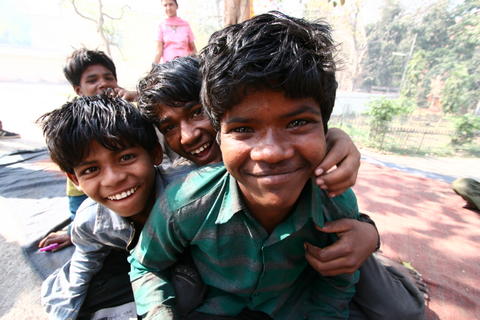
(In the picture are Kapil and Nishar Ahmed. They live in the slum of Nithari in Noida, and attend evening classes run by an NGO called Saksham.)

Wednesday, March 22, 2006

A Closet Within The Closet


Women's Feature Service, March 27th 2006 (Titled "Gay, But Not Equal")

Skirted by mainstream media and general politics, discussion on homosexuality is not typical coffee-table talk in India. The government is not known to be outspoken or forthright about issues of sexuality; when a Canadian journalist recently asked for his views on same-sex marriage, Manmohan Singh replied: "I am sorry, I don't understand your question." Despite this fact, the gay rights movement has slowly been gathering support and momentum in our society. In contrast, the lesbian rights movement is yet to cover the same ground. Homosexuality is more acceptable for men than it is for women in Indian society, owing to patriarchal norms that govern the media and social attitudes.

The media has played a large role in lending legitimacy to the Indian gay rights movement. It is not uncommon to wake up on a Sunday morning to an interview with a prominent gay designer on the morning news, or to walk into a theatre and find a film featuring a gay character. Movies such as 'My Brother Nikhil', in which the life and death of an Indian gay man are sensitively portrayed, help build public empathy for the cause of the gay movement. The Canadian-British production 'A Touch of Pink' gracefully portrays the cultural challenges faced by an NRI gay man in his relationship with his partner. Humorous and moving, the film successfully drives home the point that two successful, affable men can be in a loving relationship.

Lesbians, in contrast, are less visible in mainstream media; when lesbian love is portrayed, it is often stereotyped and misrepresented. The homophobic film 'Girlfriend', for instance, both demonises lesbians - through its representation of the lesbian woman as an irrational, violent, jealous and dangerous lover - and offers lesbian lovemaking as erotica for men. By perpetuating this stereotype of lesbian relationships, the film underscores what the plethora of lesbian-porn films has indicated: lesbian relationships are perceived to be trivial, shallow and, most importantly, 'enhanced' objects of male desire.

Misrepresentations of lesbianism fuel misunderstandings and ignorance about lesbianism. "Nearly 60-70 per cent of the calls that we get on our hotline are from men," says Maya Shankar, coordinator of Sangini, a Delhi-based lesbian rights group. "Some are prank callers, and some call because they think it is a phone sex hotline." From research conducted on the calls received by the hotline, Sangini has gathered that much misperception about lesbianism can be attributed to male-centric attitudes. "Many men think that women become lesbian because they have been abused by men, or that lesbianism is just a phase that women will grow out of when they 'experience' a man. One young man called our hotline to ask us if he should have sex with his sister in order to 'cure' her of being a lesbian," she adds.

Indeed, patriarchy often lies at the heart of misunderstanding and non-acceptance of lesbian desire. In a largely patriarchal society such as India's - where a woman is often assumed to be bereft without a husband and children - lesbians are confronted by the challenge of assuming a lifestyle that is contrary to traditional societal dictates on what the role of a woman should be. "Many parents assume that their life's purpose is to 'settle' their daughters through marriage, regardless of the daughter's desire," says Shankar.

This is emotionally and psychologically taxing for lesbians, and has resulted in many adopting painful escape mechanisms: abandoning thoughts about their sexuality, running away from home, or even taking their lives. Despite the pressure, there are lesbian women who have been able to carve out spaces for themselves. "I've met several women from small towns who live together, and have been able to sensitise family and neighbours about their relationship. Some are even married to each other," says Kriti, coordinator of PRISM, a queer activist forum.

Yet, as sexual desire is largely perceived to be the prerogative of the male in our society, these instances are usually the exception rather than the rule. People are often uncomfortable with the prospect of a woman being open about her sexual desires, and even more so with women who express a preference contrary to what is assumed to be 'correct'. Tarun Khaitan of the Alternative Law Forum, a lawyers collective that uses law to address situations of marginalisation and disempowerment on the basis of sexuality, explains the double marginalisation of lesbian sexual desire as follows: "Patriarchy, in denying any sexual agency to women, makes it imperative for lesbians to first come out as sexual beings before they can articulate their alternative sexual orientation, thus making the task doubly difficult."

Even when lesbian women have come out of the closet, the search for a partner is not as easy as it is for gay men, largely due to constraints on social mobility that women face in the public sphere. Gay men in most Indian metros, like heterosexual men, can meet potential partners in cruising areas, at nightclubs, and even in parks and coffee shops. Women do not have this fluidity of movement - due to lack of safety in public spaces, lack of safe transportation, or due to family norms that regulate a woman's movement outside the home. "One of our group members had to give her parents a different excuse every week in order to attend our afternoon meetings. It is even harder for women to get out at night," says Shankar.

Financial dependence on the family also makes it difficult both for lesbian women to come out of the closet, and for the family to accept her choice. "It is hard for a lesbian woman who is financially dependent on her parents to reveal her sexuality, and refuse pressures such as marriage. Parents of the upper and middle classes are often not comfortable with the prospect of a girl taking up employment," says Shankar.

Entertainment establishments also 'penalise' women for this perceived dependence; restaurants that might cater to gay men are not necessarily lesbian-friendly. "There are very few restaurants or bars that organise 'lesbian nights' because owners believe that lesbian women don't have the money to spend at these places," says Archana, member of a queer activist group called Nigaah Media Collective. Even when spaces do exist, few lesbians attend. "Many so-called lesbian-friendly nightspots are not comfortable spaces for women as there are usually men who stand and stare," she adds.

Undoubtedly, the struggle of lesbian women against patriarchy is the struggle of all women against patriarchy. When our society begins to understand and accept that women of all sexual orientations have the right to live their lives the way they choose to, Indian lesbian women will have their day - and, one hopes, their night.

Contact Sangini's helpline at: 011-55676450, or email info@sanginii.org