Fav Authors and Books

  • Elizabeth Gilbert
  • Chimamanda Ngozi Adichie
  • Katherine Boo
  • Vikram Seth

Sunday, June 14, 2015

Learning to Write Again


It's been nearly a decade since I've been an active blogger. I "re-discovered" my online trove of writings yesterday, and was amazed at the openness with which I approached the world in my early 20s. Now, in my early 30s, I look back at that young woman blogger with envy. I am amazed that I was able to find so many things that fascinated me, that kept me up at night, writing fervently to capture emotions, characters, situations. Now, I'm not sure what to write about anymore.


Around the time of my last blog post, I headed to grad school to study international affairs and business. I hopped around cities in the US, gained 1.5 degrees and a mountain-load of debt. After graduating in 2010, I spent the next five years working in finance in NYC. I met my husband, we had a fairy-tale wedding in India, and now we have a 1 year old baby and call the Upper West Side home.

So there it is...the next chapter of my life, encapsulated in 4 lines. A world of stability and comfort, very different from my itinerant days. So ordinary, that I'm not sure I'm worthy of a voice anymore. Just so ordinary.

Or is it?

Saturday, June 13, 2015

3 sisters, 6 Penn Degrees

This article was originally published in Penn's Red and Blue magazine, and was the winning entry for the 2012 "You are Penn" story contest.


***************


3 sisters, 6 Penn Degrees
- by Smita Jain

Brunches at White Dog.  Saturday morning runs along the Schuylkill.  First Fridays in Old City.  Pub.

There are so many memories that my sisters and I share of Penn. It was the place where we forged our deepest friendships, expanded our sense of self, and learned new ways of being and thinking. Among all the experiences we’ve shared together so far, our collective Penn experiences -- spanning 15 years, 6 degrees and 3 schools – have perhaps left the deepest imprint on us.
Penn has had an invisible pull on my family since my older sister Sarika (Eng’02, WG’08) first stepped onto campus as a bright-eyed Engineering student in 1998. I couldn’t believe her stories when she came back home to India for vacations: she had friends from all around the world, participated in marathon computer programming sessions with brilliant minds, and had taken her love for salsa to new levels.

When it came my turn to pick colleges, it wasn’t hard for her to convince me that Penn was the place to be. Having attended high school in urban India, I dreamed of a liberal arts education in a beautiful American college campus that had a small town-meets-big city feel. With its unique blend of West Philly character, hip downtown scene and verdant parks, she was sure that I would love Philadelphia.

Looking back, I can’t imagine having had such an amazing college experience anywhere else. I kicked off my Penn experience with PennQuest, hiking through the beautiful Appalachian mountains with a handful of my new classmates, some of whom would remain my closest friends years later. PennQuest almost seems a metaphor for my Penn experience: a shared journey with an unknown destination, with rich learnings, challenges, laughter, and close friendships along the way.

My younger sister, Monica (C’07, WG‘13), needed a little more convincing. She started her undergraduate career at a liberal arts college in the South, but the lack of diversity proved difficult to adapt to. During her first year, when she reported her concern to her sisters that her fellow classmates always confused “India” with “Indiana”, Sarika and I knew that the Penn pull was needed. Not surprisingly, she started up at Penn the following year! She immediately found a comfortable home at Penn, sharing a particularly close bond with fellow transfer students from around the world.

We had each cherished our Penn undergraduate experiences. So when the time came for us to pick our graduate schools, after several years in the professional world, we each independently decided that MBAs were right for us. And what better school than our beloved alma mater, with the number one business school program in the world!

So soon enough, Penn had wielded its inexorable pull on us again. Sarika went to Wharton to study strategy, while Monica (who is currently in her second year at Wharton) and I went to study finance. Our Wharton experiences have been completely different from our undergraduate experiences, in new and exciting ways. With its emphasis on global learning and professional development, Wharton taught us lessons in leadership and management that went far beyond the classroom, indeed even to the far corners of the world. With the support of an 800-strong class of tremendously talented classmates, we learned how to design strategies, build financial models and lead campus organizations to address complex global problems. My sisters and I have each had our unique experiences at Penn, but the synergies that have emanated from our shared network of friends, professors and classmates have been unparalleled.
My parents, who are all too familiar with Philly by now, are scheduled to attend Monica’s graduation in 2013.
As much as they love Penn, they are wondering if we’ve had enough Penn degrees for a while…at least until the next generation of the Jain family!

We are a Proud Penn family!
 

Wednesday, June 13, 2007

Women's History Month at Span

Celebrating Women's History Month this March, I have profiled Mallika Dutt, the charismatic visionary behind Breakthrough. You can read the article on Span's website here.

I had written about Breakthrough earlier, way back in November 2005. I had just seen 'Maati', the beautiful video about an upper-class woman infected with HIV by her husband, and was totally blown away by the video's electric combination of stunning visuals, evocative lyrics and hard-hitting message. Can't find that video online, but another one worth watching is Mann Ke Manjeere (title song of the album and nominated for MTVs Best Indipop Music Video), and is here.

I remember getting some interesting comments from readers on the article, mostly from men. Probably not coincidental, since the article talked about getting men to well, be more sensitive to women by using condoms when requested to do so (and when not requested), and by being open about their previous sexual partners. Have posted some comments below:

From I. Ghosh, Chandigarh
It is true the men should keep there male chauvinisim at bay and realise there reponssibilites towards his life partner , his family and above all the society in which he lives.Like food ,shelter and education, after a certain age sex too plays an important part in a man's life.And I belive that it is the right of every human being to get the best knowledge about safe sex. At school children are taught about various deseases that spread through contaminated water and the precaution they should take. In the same way deseases relating to sex for example STD and AIDS must be a part of school syllaby after a certatin class, maybe in 11th and 12th grade.It should not be a taboo issue any more as AIDS is labelled as an epidemic with no cure yet. All we can do is act reponssibly and prevent it from spreading by first ,taking proper precaution on personal front and secondly by spreading the awareness.Since charity begins at home parents should feel free to take up the issue with their wards.Even elder siblings with proper knowledge can be a big help.Family physcian to can do his part....All we need now is to act ..

From Sanjay:
I have noticed a conspicuous evolution of themes especially related to advertisements, rather social messages built around curbing the spread of AIDS. If I recall correctly, the earlier campaigns were talking about the importance of having only one sexual partner. However now, we seemed to have accepted the reality that our initial plank was not strong and hence the promotion of condoms as a means to prevent the spread of virus.

I have also seen the commercial, if I can call it that way, asking the men to be more sensitive. But, from a target audience point of view, I wonder whether it will strike the right tone with the 'insensitive' men. I would say that it would have been better if they promoted something like with that advertisement. Also, I really doubt that if a condom can prevent the virus being spread – 100%. But of course it might be near 100%.

As your article suggests, the bigger challenge for India is to spread the awareness. I have read some years ago (should be at least 4 years) about prostitutes insisting their clients to wear condoms, and it was even reported that one prostitute even asked her clients to wear 2 condoms preferably. If awareness can reach groups like prostitutes who are considered inaccessible then why not the masses? Speaking about sex openly has been very un-Indian. However, if I have to go by the surveys done, at least in cities, doing sex is not. So in-addition to spreading the awareness among the people, one has to simultaneously concentrate on the younger generation – especially teenagers.

Thursday, March 15, 2007

Sculpting in Sugar and Stone

On a recent trip through Punjab, I had the opportunity to witness the production of gur (unprocessed sugar), which I found to be fascinating. Here's how the process goes: a crusher presses raw sugar cane to squeeze out its juice. The yellowish juice is then 'piped' into a huge vat, where it is boiled until it thickens. The thickened, coagulated juice floating on top is then scooped into a boiling vat next door, where it is further thickened. By this time, the juice is a dark green and is thick and syrupy. The process is again repeated in a final vat, where the coagulated syrup turns brown and thick. The thick, caramel-like paste is then scooped onto a gigantic flat-pan, where it is cooled, and beaten with a shovel-like instrument. The cooled mass of gur is then packed like blocks of stones into squares of cloth.

It was almost like being in an Indian-village version of Willy Wonka's chocoloate factory. The gooey mess looked so good I felt like jumping into it. Seriously.


Also en route was a Jain mandir in the making. Interestingly, alot of modern-day religious sculptors - like the ones in these pictures - are hired laborers from poor states like Orissa, where the backbreaking job of stone-cutting is the only kind of work they can get. Well, on the brighter side, they are probably raking in good karma.


Monday, February 19, 2007

Saksham

Close encounters

SMITA JAIN

Thanks to awareness created by Saksham, some children in Nithari were able to escape the clutches of the Noida killers.


KNOWLEDGE TO THE RESCUE: The children with the teachers in a Saksham classroom.

NOIDA'S serial killers have exposed the extreme inequity — and lawlessness — that exists in one of the most prosperous suburbs in India. The media has covered, in minute detail, the lives of the killers and other sensationalist aspects of the gruesome murders. However, little attention has been paid to the perspectives of children who inhabit the slum, many of whom escaped, just barely, from the unyielding hands of the killers. Children who didn't directly encounter the duo had nonetheless been affected by the happenings in D-5, due to their close proximity.

Saksham, an NGO located in the slum of Nithari, has been conducting free educational classes for children of Nithari since 2002. Currently, the school caters to around 350 children in the 4-15 age group, and operates from a small premises located just a few hundred meters from D-5. Around 13 children from Saksham fortuitously escaped the clutches of the murderers, and their stories reveal an extraordinary presence of mind and courage.

Resisting strangers

Rashmi, 15, was returning to her home in Nithari with her younger brother and an older male neighbour one evening. She was holding her brother's hand as they walked, and she recalls a white car driving up beside them as they proceeded on the road. The man in the car — now identified as Satish — asked her if she wanted to come to his house, where he promised her some enticing sweets. She refused, and they continued walking. Satish then picked up speed, caught her unawares from behind, opened the passenger door, and tried to pull her in. As Rashmi tried to wriggle free from his grasp, the older boy accompanying her ran away, fearful for his life. In those moments, as she struggled for her life, she quickly let go of her brother's hand. "I knew my life was at stake. However, I thought that I should at least save my brother, because his life — as the only son in our family — is more valuable than mine," she recalls. As she let go of her brother, she bit Satish's hand as hard as she could and managed to wrest free. She then ran as fast as she could to the nearest adult, a paanwaala, and alerted him to the man in the car. Satish had, meanwhile, driven away.

Rashmi has been attending classes at Saksham for the last year, and strongly believes that what she has learned at Saksham contributed greatly to her presence of mind during those crucial moments. "The teachers at Saksham have always impressed upon us the importance of saying no to strangers, no matter what they offer," she says. "Through Saksham, I have gained a lot of confidence and am more aware of how to handle myself."

Personal safety

Priya, an eight-year old child who studies at a local school in Nithari and also attends evening classes at Saksham, was startled during class one morning when the school Principal called her to his room one day to inform her that her uncle was there to pick her up. She went to the Principal's room, only to discover that she had never seen this "uncle" before. "He said that my mother was ill, and that he had come to take me home to see her. He even knew my mother's name and my brother's name," she remembers. The Principal urged her to go, but she refused on the grounds that she didn't know who the man was. The man — now identified as Satish — urged her to come, and grabbed her hand. The Principal exhorted her to go too, but she broke free from Satish's grasp, and bolted from the room. Still shaken by the incident, Priya says that the lessons in personal safety that teachers at Saksham have constantly emphasised were with her on that fateful morning.

Vital skills

"At Saksham, above all, we try to instil confidence in the children and impart life-skills, two things which are never taught in their homes or schools. From the beginning, we have constantly impressed upon the children the danger of roaming around unattended," says Nadira Razak, the founder of Saksham. "We also discuss sensitive issues such as molestation, particularly among the girls. We discuss with them openly how they can protect themselves in the face of abnormal behaviour from men, whether the men are acquaintances or strangers." Razak, a former Railways Officer, founded Saksham with the intention of providing the children of Nithari's slums with an education that was well-grounded, compassionate and sensitive to their needs. The battle to encourage families to send their children — especially their daughters — was an uphill one at the beginning, and she recalls making daily trips from jhuggi to jhuggi urging parents to send their children to the classes. "Parents often argued that children would be better off earning money for the family or taking care of their siblings at home," she recalls. Within a short while, however, the roles were reversed as the positive change within the children became noticeable: parents were lining up in front of the school in the hopes of getting their child admitted into the school. Even today, there is a long "waiting list" for admission into the school, as the school is unable to expand to accommodate all children who would like to attend.

Passing the knowledge


Within the school and outside, the torch of knowledge continues to be passed on. Some of Razak's older students now teach the younger ones, in addition to furthering their own education. These student-teachers have decided to go to a nearby village, Morna, to teach children there. "We would like to help children gain access to education, the way Saksham has given us education," says Soni, a senior student at Saksham.

However, Saksham isn't a large, institutionally-funded institution; it is a small community effort begun by concerned citizens. Its expenses are thrown together on an ad hoc basis from month to month, and its budget is being met by donations from individuals. The school runs on a small, rented ground strewn with pencil shavings and bits of paper, and a perpetual layer of grime remains complacently stuck to its floors. Teachers of the school, though competent, hail from the area.

Enormous impact

Despite its unassuming modus operandi, Saksham has undoubtedly had an enormous impact on the community around it. "I don't think many girls would have been able to escape from the duo had it not been for what they learned at Saksham," says Pinky, a 15-year-old girl who has been attending classes at Saksham for the last five years and now teaches younger children. "I have self-confidence now, and feel that I can protect myself in the face of any danger, even though I am a girl," she adds. With lawlessness proving to be the rule rather than the exception, community efforts like Saksham are more in need today than ever before.

Email Saksham at: nadirarazak@rediffmail.com

Wednesday, January 24, 2007

Going to School


Span Magazine, January/February 2007

Lisa Heydlauff’s office is no ordinary workplace: an endearing pug pup bounds over to greet me as I step inside; its colorfully-painted walls are festooned with artwork. Hundreds of storybooks from around the world, as diverse in language as in design, line the bookshelves. Creatively designed posters, T-shirts and calendars can be spotted in different parts of the room.

Creativity and color are, in fact, catchwords for the ‘business’ that Heydlauff is engaged in: that of encouraging underprivileged Indian children to go to school through her New Delhi-based not-for-profit organization, ‘Going to School’ (GTS). 31-year old Lisa - whose parents live in Scottsdale, Arizona - moved to India in 1998 with a little money, a few contacts, and the dream to do something for the welfare of women and children. After a brief stint with a bridal magazine in New Delhi, Lisa was hired by UNICEF as a Communications Consultant to document success stories of UNICEF projects in government schools in states across India, including Orissa, Bihar, Madhya Pradesh, Andhra Pradesh, Karnataka, Gujarat and Haryana.

These travels were to change the direction of Lisa’s life. It was during these travels, meeting children who traveled through diverse geographical and cultural terrain to attend school, that Lisa conceptualized GTS, a multimedia campaign that, she says, “celebrates every child's right to go to school and participate in an inspiring education that is relevant to their lives.” Her idea was to create imaginative and inspiring media that captured the real-life stories of everyday children going to school across India. Though she admits that it was initially difficult to find seed funding for GTS, she found generous support from the Bharti Foundation (the charitable arm of Indian conglomerate Bharti Group) in 2001 for the creation of ‘Going to School in India’, a children’s book featuring 25 ways of going to school. For GTS, there has been no looking back since.

Today, ‘Going to School in India’ has found widespread success among children and education practitioners alike: 10 mini-books have been translated into Telegu, Tamil, Oriya, Kannada and Hindi, to be given to children free of cost in Government schools; 500,000 mini-books will be distributed to 45,000 primary schools in Orissa, reaching over 5 million children. In addition to the books are 9 mini-films - each of which recounts a day in the life of a child going to school somewhere in India - that are aired twice a day by the popular children’s channels POGO, Cartoon Network and National Geographic. Since its founding, Going to School has received support from a number of US-based funding agencies, including the Global Fund for Children in Washington, D.C, Global Giving, and Ashoka Innovators for the Public who have nominated her as an Ashoka Fellow.

Lisa firmly believes that inspiration is a key element in a child’s life, and GTS’ programs – which focus on telling positive stories of children who succeed in going to school despite geographical, physical or social challenges - reflect this. “I realized there was lots of media coverage about what did not work. But what about that which did work? I believe inspiration can change the world. And, as I traveled more, I felt positive stories about education could be told in a celebratory, transcendent way that showed schools could be fun, relevant to children’s lives. And that communities, organizations, and individuals could change the way children go to school, if they believe in possibilities – if they try,” she says.

GTS is currently in its second phase with ‘Girl Stars’, a project that creates icons of everyday women and girls who have, by going to school, changed their lives and the lives of people in their communities. For the project, Lisa and 6 of her Delhi-based colleagues traveled thousands of kilometers through the Hindi-speaking belt of Uttar Pradesh, Bihar, Rajasthan, Jharkhand and Madhya Pradesh, interacting with people in cities, towns and villages, to find 15 women icons who could be icons for other girls, encouraging them to stay in school.

A few Girl Stars include Madhuri Kumari, a woman who defied social convention to become the leader of her village in Uttar Pradesh; and Anita Khushwaha, a 17 year old woman who became the first woman-beekeeper in Bihar. Each woman succeeded in completing her schooling despite challenging circumstances, and their stories advocate education as a platform to achieving life and career aspirations. “Girl Stars are extraordinary tales of ordinary girls,” explains Lisa. “It’s about what one million girls do, not one in a million. A Girl Star is a young girl or woman who able to do what she does because she is a part of a larger community where everyone has to work together to help things change; she had the courage to begin it, and the strength to take everyone with her.” ‘Girl Stars’ will be rolled out on TV channels and radio stations by UNICEF in 2007.

Next, Lisa and her Delhi-based team of 6 are looking forward to GTS’ latest and perhaps most ambitious project, ‘Be an Entrepreneur’ (BE!). This 50-book, 13-part movie, and 30-part radio series will tell 50 entrepreneurial stories to underprivileged children in India, to enable them to change their lives, their communities’ lives and participate in change in India as a whole. In particular, BE! aims to empower children from underprivileged backgrounds with skills that they can use to generate income and participate in positive community change -- once they have finished their education.

Indeed, although GTS communicates in colour and fun, it is being seen as a powerful force for positive change in children’s lives. And GTS only looks set to accomplish more in the years to come: Lisa hopes that BE! will potentially be a model that can be taken to scale across India, and around the world. Going global, perhaps, may be next on the cards for Lisa and Going to School. Except that Lisa, for now, has no plans of “going home”.

“Everyday I wake up feeling that what we have to do today is important. It may not be changing the way children see their lives everyday, but on a broader scale, for a moment, it is,” she says about GTS. “Inspiration comes in a second and changes the direction of your life. That is what we do, we inspire children and inspire change, as many days out of the week that we possibly can.”

Check out Going To School at www.goingtoschool.com

Wednesday, November 15, 2006

Asha for Education


Published in Span Magazine, November-December 2006


Every Wednesday, Monica Jain and a few of her friends gather for a discussion session. For a few minutes, their talk revolves around social and family events, their 50-hour workweeks, their career plans. Then they move to the subject of their meeting: what they can do to improve educational access for India’s underprivileged children. “I think we should organize a community cultural festival as a fundraiser,” one says. Another brings up an education project in Bihar that needs aid. They discuss project proposals they have received from Indian NGOs, and create a plan of action.

While the conversation is commendable in itself, what makes it remarkable is the fact that that Monica and her fellow Philadelphians do not live anywhere near India, many are not Indian and most have rarely, if ever, visited India. Most are neither well-settled professionals nor employees of an NGO. They are primarily university students attending academically rigorous American universities.

Yet despite their demanding schedules, what brings them together is the desire to make a difference in the lives of underprivileged children through Asha for Education, an international collective of individual chapters dedicated to “catalyzing socio-economic change in India through education of underprivileged children” as its Web site states (www.ashanet.org). With 74 chapters spread across the United States, Canada, Europe, Australia, India and Singapore, and disbursement of more than $ 6 million from 1995 to 2004, Asha’s global army of more than 1000 active volunteers is crossing geographical and socio-cultural barriers to make a significant difference in the lives of millions of Indian children.


The success of this non-hierarchical, decentralized, volunteer-run and zero-overhead charity has not gone unnoticed. In 2004, Charity Navigator, an independent charity evaluator with a database of more than 3,000 organizations, ranked Asha for Education as the top charity operating on less than $2 million a year in the field of international relief and development.

For volunteers like Ravi Kandikonda, a memory chip designer in Allen, Texas, stumbling across Asha for the first time was almost like a dream come true. “A few months into my masters (degree program) at Louisiana State University, I realized a great difference between India and the U.S. in terms of having an opportunity to have basic education. I felt like doing something about it and when I saw the Asha Web site, I realized that this organization is exactly what I was looking for to act on my ideas.” Kandikonda is now the Asha Dallas chapter coordinator, spending more than 12 hours a week on Asha-related volunteer activities. Last year, the chapter raised more than $3000 through a concert featuring the Indian contemporary fusion music band Indian Ocean. “It gives me immense satisfaction, that through the organization, I am able to make a difference in the life of at least one child who otherwise would not have been able to go to school,” he says.

Like Kandikonda, many volunteers of Asha’s American chapters get involved while in university. In fact, more than half of the chapters are student-run. Jain, a senior at the University of Pennsylvania and the awareness coordinator for Asha Philadelphia, says, “Being on a college campus where people spend a lot of money on parties and alcohol, I think initiatives like Asha are a good way to channel some of this money for good use. Also, because of the non-hierarchical nature of the organization, we are able to choose projects that we would like to fund and contact them directly about any questions that we have,” she says.

Indeed, the absence of organizational red tape, coupled with Asha’s non-hierarchical structure has enabled a diversity of project types and an extensive geographical outreach within India. There are currently 385 projects spread across 24 states. Some recently funded projects highlight this diversity: In Jharkhand, Asha Stanford funded a science laboratory for Jagriti Vidyalaya, an NGO dedicated to rural reconstruction; in Madhya Pradesh, Asha Seattle funded research on child disabilities in partnership with Sambhavna Clinic, which provides medical support to survivors of the Bhopal gas tragedy.

Seed funding from Asha has often proven critical for the success of unique educational programs that may have been overlooked by mainstream funding agencies. “For our Government School Adoption Program, funding from Asha helped in providing additional teachers to the schools, which was a critical need. Though the schools had an enrollment of 250 students, they only had four teachers appointed by the government,” said Ram Krishnamurthy, coordinator of the program to strengthen government schools in Karnataka.

The ease of joining Asha is part of its appeal. Volunteers can join a chapter close to them, or if none exists, they can start one after a period of affiliation with an established chapter. The prerequisite for being a volunteer is a desire to do something for underprivileged children in India by raising funds for NGOs in India that are working to improve their plight. A chapter is free to decide what projects to fund, as long as the programs are secular and have an education component. The volunteers in each chapter democratically select a proposal to support in each funding cycle, and these must be reviewed through the main Asha data base—monitored by volunteers—before funds can be disbursed.

Volunteers in Asha’s chapters outside India recognize the limitations of monitoring projects from thousands of miles away. That’s where Asha’s large Indian volunteer base proves helpful. “Asha chapters in different partsof the world often contact our volunteers for information on projects in our vicinity. We also help them conduct site visits, monitor projects and file site reports,” says Sharad Jaiswal, chapter coordinator of Asha Bangalore.

“What attracts me to Asha is that, due to its decentralized structure, there is 100 percent transparency of funding, 100 percent efficiency as all the money is spent in India, and total oversight over projects because of the mandatory auditing requirements,” says James Minter, fundraising coordinator for the Asha chapter in Washington, D.C.

Though raising funds for education-related projects in India is central to Asha’s work, volunteers see raising awareness within their own countries as an equally important focus. “Asha has been a useful avenue for me to act on my interest in helping underprivileged children in India. In addition, it has greatly increased my own awareness about social issues in developing countries like India,” says Minter, who spends four months each year conducting site visits for projects funded by his and other Asha chapters. On his most recent trip in 2006, he spent three months viewing projects and learning about the socio-economic conditions of people living in Uttaranchal, Bihar, Jharkhand and West Bengal. He’s excited about his chapter’s upcoming awareness and fundraising events: an Indian documentary film festival, a marathon, and a concert.

“I had to risk losing my job to volunteer, and my family is against the unpaid work and use of personal resources,” he says. “The most rewarding part of my work has been visiting project sites and seeing the faces of children light up. Volunteering doesn’t seem like work to me, but is something that springs out of my soul.”


****************
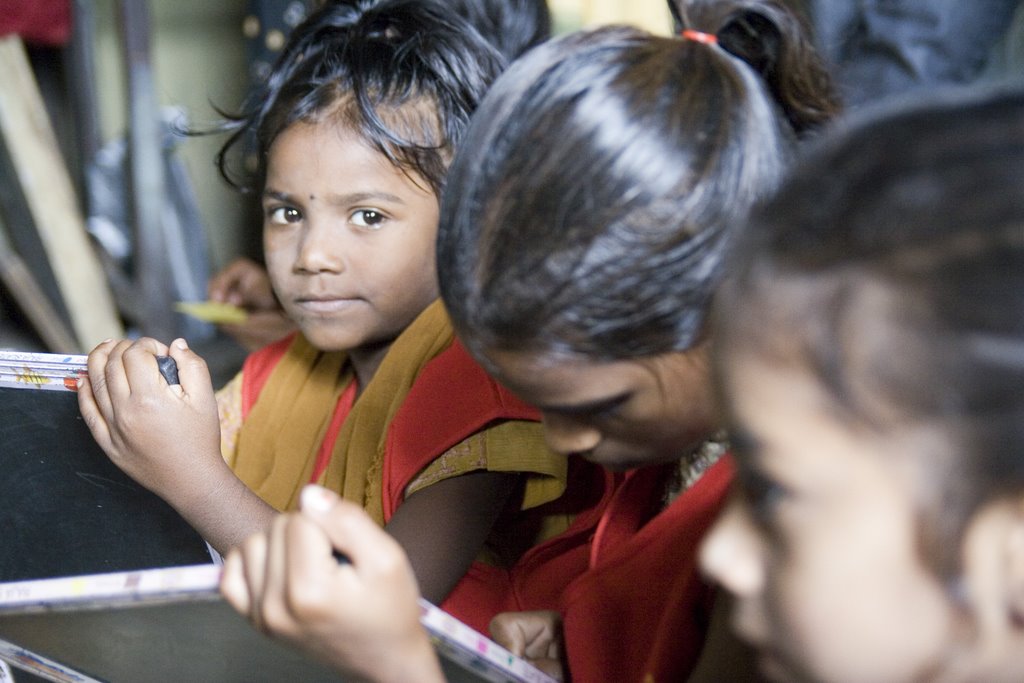
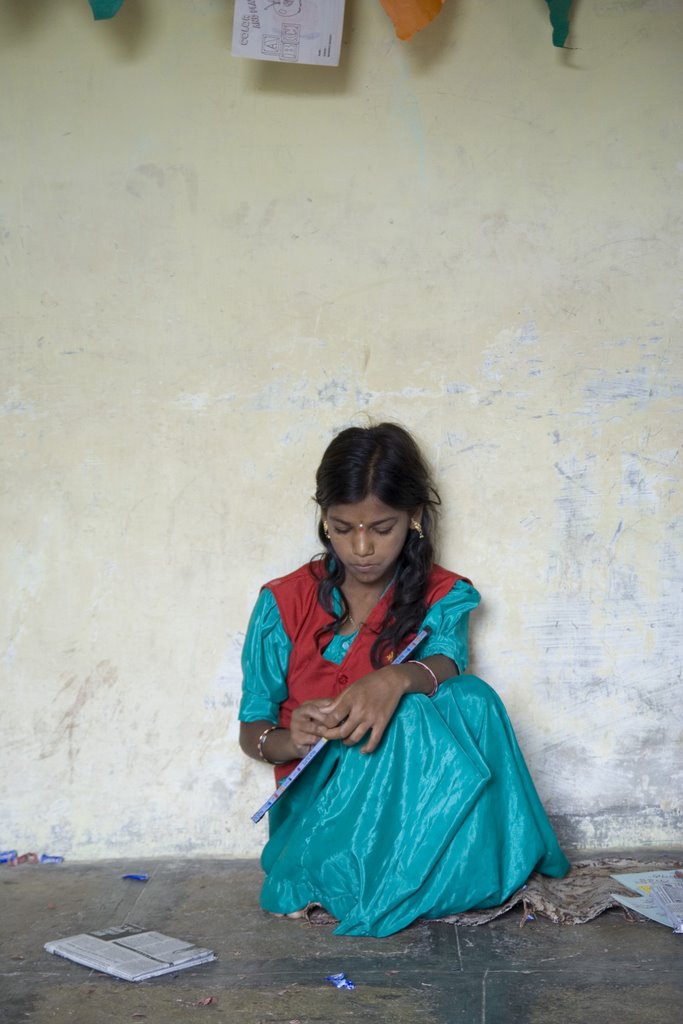
The beautiful photos are courtesy Asha Zurich.


About the photos:

Two semi-professional photographers, André Urech (24) and Elia Marinucci (23) traveled in Autumn 2005 to India, in order to document development projects in the area of education. They focused on projects supported by Asha Zurich. Their intention was to document the
projects' contribution for the development of India and to present the information to Switzerland graphically and artistically.

The three photos were taken during classes at Akshardeep, which is an alternative school program initated by the NGO Swadhar in June 1998. This project is specially meant for children of sex workers and migrant labor in the age group of 6-12. They run 10 NFE (Non Formal
Education) schools in Pune Municipal Corporation (PMC) area and 10 in Pune Chinchwad Municipal Corporation (PCMC) area. Asha Zurich is funding the running of the 10 classes.

Friday, November 03, 2006

Bandhavgarh

“There is one point on which I am convinced that all sportsmen will agree with me – and that is, that a tiger is a large-hearted gentleman with boundless courage and that when he is exterminated, India will be the poorer by having lost the finest of her fauna.” Corbett, 1944, Man Eaters of Kuamaon

For wildlife enthusiasts not as optimistic as Corbett on the judgment of modern-day ‘sportsmen’ (aka, poachers), all hope is not lost for India’s tigers. Anant Van, a wildlife camp spread over 21 acres of the Bandhavgarh Tiger Reserve, is unique in that it encourages its guests to witness the drama of the jungle -- and participate in its rejuvenation as well. Organic farming, teaching at the local school, planting saplings at a botanical garden are just some of the activities in which Anant Van’s guests can partake, when not rendezvous-ing with the majestic beasts of the forest.

Admittedly, with the richness of wildlife on offer at Bandhavgarh, the call of the jungle is hard to ignore. While the National Park boasts the highest density of tigers in the world - tiger sightings are often daily occurrences for visitors to Anant Van - the park is home to hundreds of other rare species of wildlife that makes a trip to Bandhavgarh bang for the wildlife enthusiast’s buck.

And if the two-dimensional version of the big cat is more your cup of tea, Anant Van has something for you too. Its extensive gallery of wildlife and tribal photographs is a treat for art and history buffs, and its rare collection of wildlife art chronicling the history of Bandhavgarh's tigers over the last 15 years can leave you roaming its chambers contentedly for hours.

So if you thought that wildlife tourism was just about wild game and safaris, think again. Anant Van, situated near a remote tribal village, aims to provide travelers with a wildlife experience that is participatory, experiential and even spiritual. Its founder, wildlife conservationist Dhruv Singh – who also owns the popular Bandhavgarh Jungle Camp - began Anant Van to provide travelers with a holistic perspective on life in the forest, and local communities a chance to participate in the tourist economy of the national park. “I want people who come to Anant Van to be able to contribute to village life. Too often tourism brings no benefit to local people. I want to change that,” he tells me.

I learn that the cottages, simple yet wonderfully elegant, were built with the help of people from the local community, and Dhruv hopes that villagers will soon become an integral part of the Anant Van experience. “We are creating Anant Van as a living interpretation center of what is actually going on next door to the tigers' home," he says with his characteristic warmth, "And to learn how we can each be responsible wildlife tourists, well-informed through an enjoyable experience in the field." So for an experience that's as much about you as it is about the wildlife, it is worth a visit to Anant Van.

******************
Published in Outlook Traveller - with great photographs! - in its November 2006 issue

Sunday, October 08, 2006

Seva Cafe

To give, in humility

SMITA JAIN

The Hindu, October 8th 2006

Seva Café in Ahmedabad is a restaurant built around an ethical, not commercial, framework.


The economic model is radically different from capitalist notions that power most modern-day interactions.


NO ORDINARY EATERY: The Seva Cafe.

AN interesting experiment in the art of giving has begun in Ahmedabad in the form of a restaurant called "Seva Café". Located on the fashionable C.G. Road — literally in the "heart" of the city — the café is not your ordinary eatery. You are welcome to dine, converse and enjoy the ambience, yet are required to pay only what you wish for the meal. The restaurant is run mostly by volunteers, and there are no prices for any of the food items. Only one expectation exists of the server and the served: that acts of kindness and love be perpetuated.

The "pay it forward" economic model of Seva Café is radically different from capitalist notions that power most modern-day interactions. At the café, you can enjoy your meal, which is being offered to you as a genuine gift from a guest who has dined at the Café previously. To complete the circle of giving, you can leave a donation to pay for the meals of other guests who will come in after you. All profits made are donated to charitable causes. In a world of give and take, the "give and keep giving" ethos of the café is, to say the least, refreshing in its simplicity and purity.

Continuing customs

The founders say that the inspiration for the café springs from an age-old Indian custom that gives the highest honour to guests (Athithi Devo Bhava). The unhurried and warm atmosphere of the café is aimed at making guests feel like they are, in fact, at home. "At Seva Café, we offer greater nourishment than food alone. Here, not only will you find yourself in a unique, service-inspired environment...you will find yourself at home," says a sign at the entrance of the restaurant. Indeed, guests are encouraged to freely interact with the servers and other guests, and can even cook a meal at the café if they wish to. So moved have volunteers been that some have even washed their dishes at the end of their meal. "I remember one family that was so moved that they decided to stay back to wash all the dishes and clean up after the restaurant closed," says Jagat, a volunteer.


Indeed, the touching stories that have emerged in the Café's short existence are enough to fill a good-sized book. People from around the world have been inspired by the Café's simple yet powerful philosophy; a group of volunteers of the organisation "Be The Cause" has even opened up a Seva Café in Long Beach, California. Nipun Mehta, who volunteered as a waiter at the Café during its inauguration, says he had an inspiring story for each day that he volunteered. One day, he says, he was touched by a simple act of kindness of an unassuming 20-something-year-old girl who came up to him just as she was about to leave, and handed him a stack of folded hundred rupee bills and asked if he could do something good for someone, on her behalf, with the money. "Although my typical response would've been to rebound ideas to get her to engage in some acts, I felt like she was attempting to connect our journeys over a bridge of service," he says.

Inspiring others

One day, another volunteer remembers, a man walked in hesitantly and looked around the café in disbelief. He'd heard about the idea, he said, but he couldn't believe it was true. After a while, he asked if he could cook and serve at the café one day. "I sell chaat and golgappas at a stall across the street," he said. "Me and my friends had heard about this place, and would also like to participate in this opportunity to give," he said.

Ultimately, the café aims to ignite the spark of humanity and service in as many people as possible, irrespective of nationality, community or class. In addition to its energetic volunteer staff, guests can also draw inspiration from the Café's art gallery, its abundance of information on community service projects in Ahmedabad and the inspiring quotations that decorate the space. At the very least, a meal at the café will leave you with much food for thought. As another sign reads: "Seva Café invites you to feel at home and engage in inspiring conversation. We ask you to feed your mind and your soul by taking the idea of selfless service beyond our walls, into your daily life and into your community. Are you ready to be the change you wish to see in the world?"

http://www.hindu.com/mag/2006/10/08/stories/2006100800110400.htm

Tuesday, September 26, 2006

Bhutan Musings

If there’s one thing that will strike you about Bhutan, it may be its picture-perfect uniformity. Approaching the city after enduring the tortuous drive from India-Bhutan border town Phunsoling to the capital, Thimphu, is almost like stepping into a childhood fairy tale: it’s as if a giant painter had - on a richly-hued landscape of mountains, waterfalls and streams - painted a person, a house, a monastery and a government building – and multiplied the image to produce the country of Bhutan.

Of course, this oversimplifies the variety of peoples and communities present in Bhutan, but government decrees to preserve Bhutan’s distinctive Tibetan Buddhist culture have brought a degree of national uniformity unlike any other part of the world. All Bhutanese nationals, irrespective of class or community, must wear the national dress every day, or face stiff fines of upwards of Rs. 600. The design and structure of all buildings must follow a specific architectural code; the decorative, painted exteriors and pagoda-like design of buildings are based on an architectural style typical of traditional Bhutanese homes.

However, don’t let the uniformity fool you into believing that there is no place for individual expression in Bhutan. A quiet revolution - not in the sense of anti-nationalist sentiment, but in the sense of a greater acceptance of individual thought - has been sweeping Bhutan since the mid-90s, and its pace is accelerating, especially as the nation makes its first steps towards democracy. In an internet café in the India-Bhutan border town of Phunsoling, I spotted a young Bhutanese school student - in stylish shorts and t-shirt – chatting away on MSN while simultaneously viewing foreign football scores. In excellent English, he asked me where I was from and gave me a few tips on traveling through Bhutan. When I ask him why he was dressed in obvious violation of the law, he grinned and said, “In the capital they are strict about the dress code, but I prefer to wear this!” As I got up to leave, he asked me nonchalantly, “Can I have your email address?”

Though in today’s world it may seem that email id’s have become inextricable from personal identities, it is remarkable in Bhutan because prior to 1998, internet and television did not (legally) exist, in a further effort to preserve the nation’s culture. Not surprisingly, it hasn’t taken Bhutanese long to get hooked on to both. “I didn’t even know what cricket was until high school,” a twenty-something Bhutanese playfully lamented. “Now, Bhutanese children as young as four are playing cricket because of cable television!”

It’s surprising to think that the television is so recent an entrant in Bhutanese life, for it is nearly ubiquitous in homes, shops and restaurants. And the Bollywood fan traveling to Bhutan will not be disappointed: Bollywood films and faces are the rage, as is Indian television. In fact, many Bhutanese – even those from remote parts of the country – have learned Hindi solely by following Hindi shows and TV serials. Pema, a hotel receptionist in the scenic town of Paro, tells me candidly that the Hindi she has learnt has been gleaned from Indian cable television’s infamous soap operas that she is glued to. “I don’t understand,” she says in her heavily-accented Hindi. “People say that in India none of these love affairs happen, but in [insert name of soap opera here], everyone is having an affair with everyone else!”

India does have strong ties with Bhutan, of which Bollywood is merely one. Nearly all consumer goods in Bhutan are produced and supplied by India; a walk into any grocery store blatantly announces this fact. At the famous Sabzi Bazaar in Thimpu – a weekend market where vegetables, clothing and trinkets are sold - I selected and purchased what seemed to me to be a traditional “kira”, the national costume for Bhutanese women. A minute later, upon learning that I was from India, the vendor casually mentioned that the skirt, like most textiles in Bhutan, was manufactured in India.

While it may seem difficult to escape India while in Bhutan, the country’s deeply Buddhist culture gives it a flavor uniquely its own. Religion forms the purpose of much Bhutanese artwork, and Buddhist art is present everywhere. Prayer wheels - cylinders with written prayers that are to be turned in a clockwise motion – are seen in monasteries, as well as in garden squares and outside homes. Stunningly beautiful, gigantic prayer wheels have even been constructed at waterfalls, where the force of the water keeps the wheels turning perennially. Multi-colored prayer flags, inscribed with auspicious symbols, prayers and mantras, dominate the green landscape, symbolizing happiness for the flag planter and those in the vicinity of the flags.

Indeed, while it is worth visiting Bhutan simply to experience the uniqueness of its culture and the beauty of its landscape, its cities are well-planned and worth visiting. The capital city of Thimphu is home to the kingdom’s administration and monarchy, and colorful buildings of both bejewel the landscape. Though the largest city in the country, its population – like Bhutan’s – is surprisingly small, roughly 50,000. The popular tourist town of Paro, 60 km from Thimphu, lies in one of Bhutan’s most scenic valleys, and as the centre of ancient trade routes to Tibet, is historically significant. The emerald-green Paro river (Pa Chu) intersects the valley, and above the river stands the 17th century Paro Dzong (fort), overlooked by a magnificent watchtower built in the same time period, which has now been converted into the National Museum of Bhutan.

Paro’s greatest attraction for me, however, was a fortuitous dinner at Red Rice Kitchen, a restaurant among the rare breed of dining establishments that a foreign tourist often seeks but rarely finds: one that conjures memories of a people, a culture and a place long after the traveler has departed. The restaurant, exquisitely decorated and with the soothing ambience of a comfortable Bhutanese home, spun finger-licking food in its culinary chambers, but the highlight of the evening – my last in Bhutan - was meeting the restaurant’s proprietor, Wangda Tobgyal. In 2005 Tobgyal and two friends became the first people in the world to cycle around Bhutan, a 2000 kilometre feat that took them 24 days. True to their “Bike for Life” motto, the trio traveled to schools across the country raising awareness about HIV/AIDS and drug abuse. Despite his humble demeanor, I discovered that Tobgyal was a keeper of many talents – he is a photographer, trekker, fly-fisher and director of a travel agency called Lakhor – and, like many other Bhutanese I’d met, deeply passionate about his country. Our conversation spilled over into the hours, and when I rose to leave he presented me with a “Khada”, a traditional Bhutanese ceremonial scarf. The restaurant’s setting, the gift, and our conversation seemed to represent the attitude towards Bhutan among the people I’d met: respectful of past traditions, hopeful of the present, and excited for the future.

*******************
An edited version of this story will appear in The Hindu in October.

Thursday, September 14, 2006

Bhutan


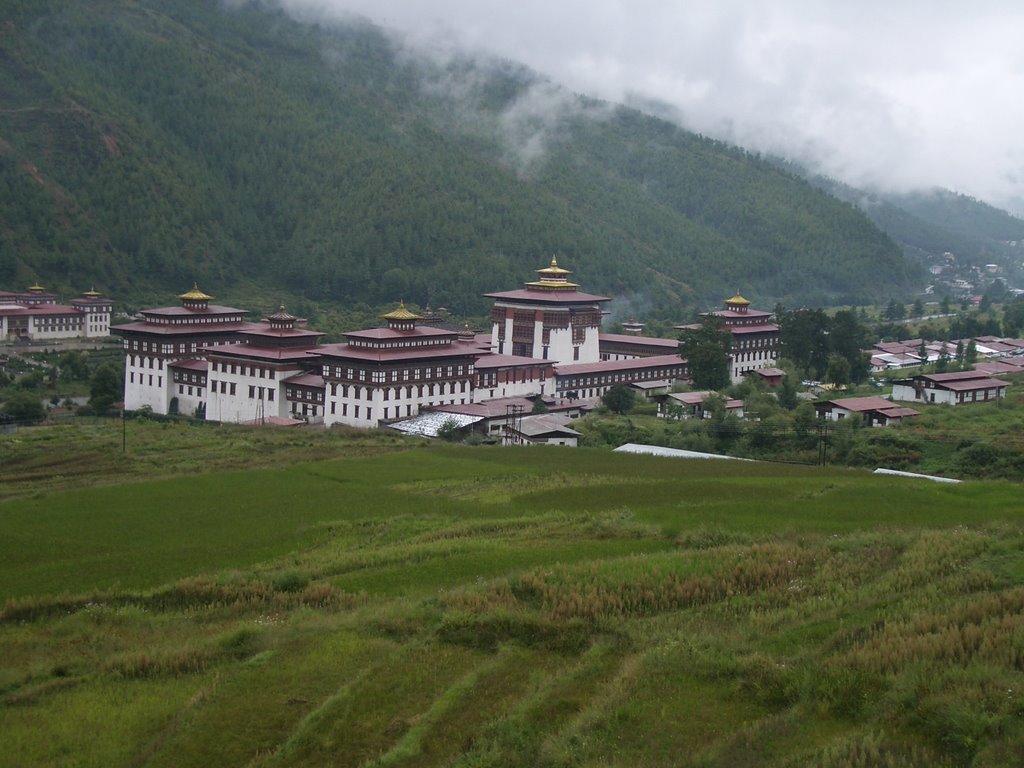
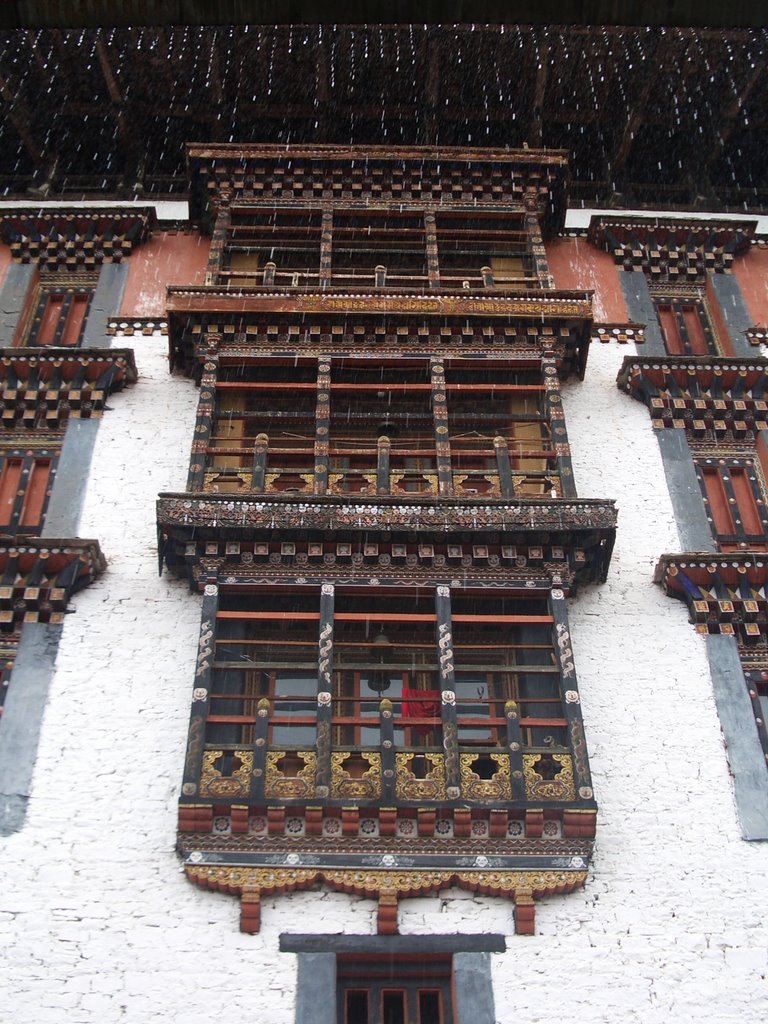
1. At Thimphu, looking at the monarchical and government headquarters

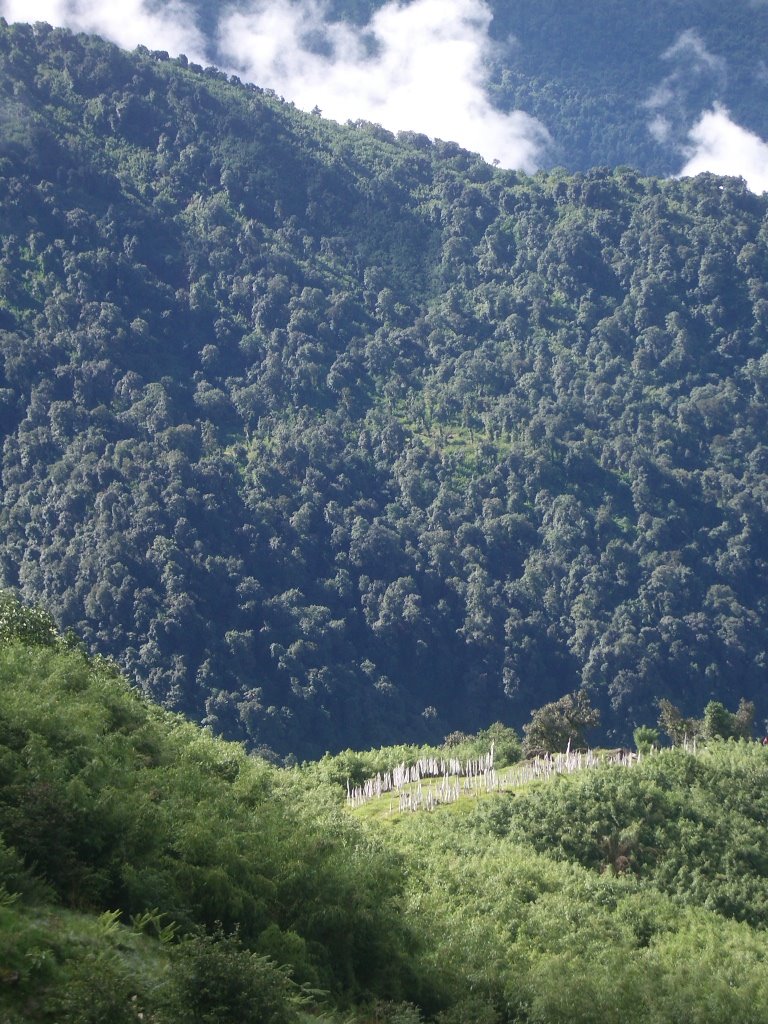
2. Bhutan sky, while driving up to Thimphu

3. A bridge over the Thimphu river, festooned with prayer flags

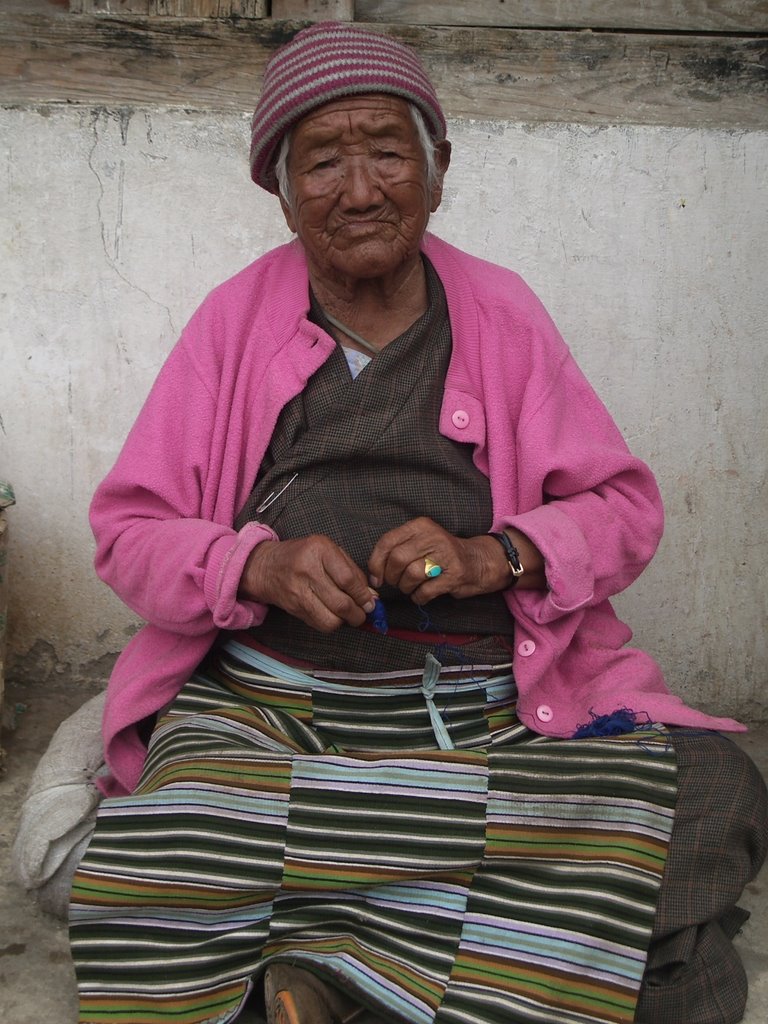
4. An old woman knitting, Paro

5. Falling rain at the Paro Dzong, a 17th century fort in Paro

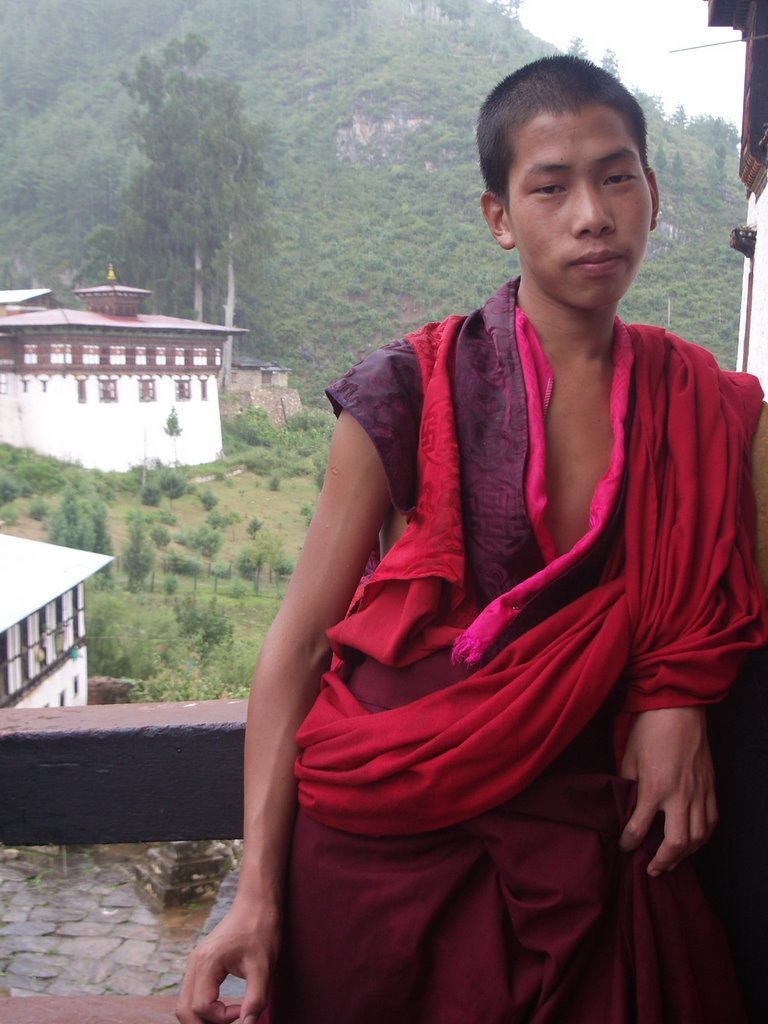
6. A monk at the Paro Dzong

Wednesday, September 13, 2006

Nathula Pass


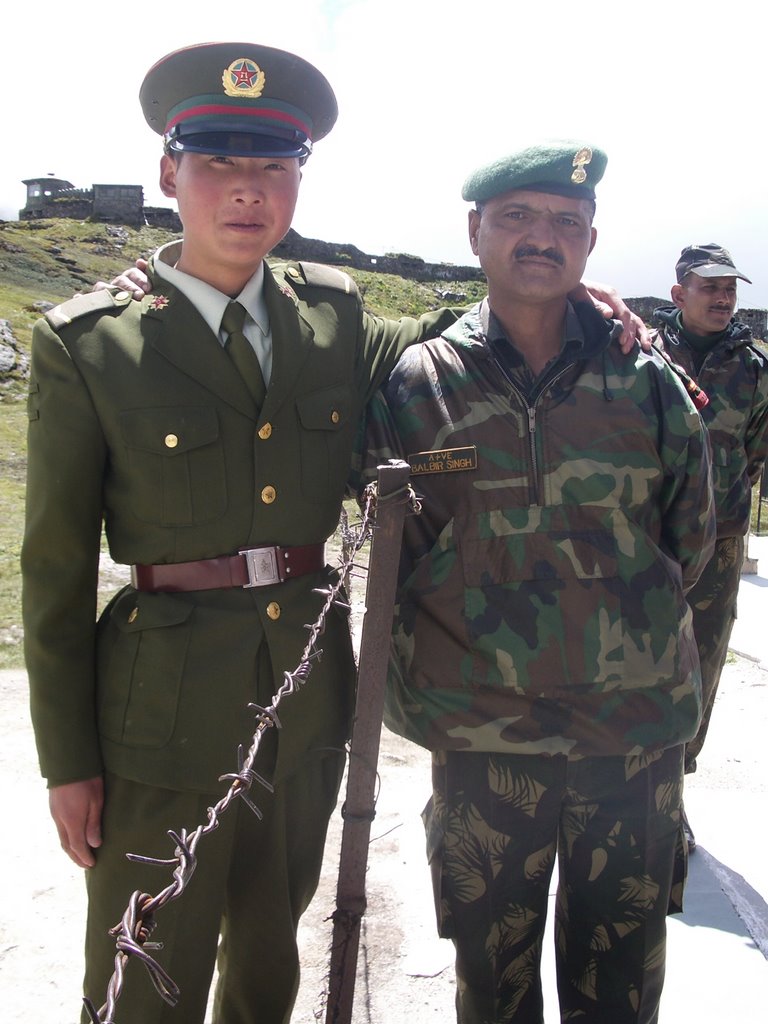
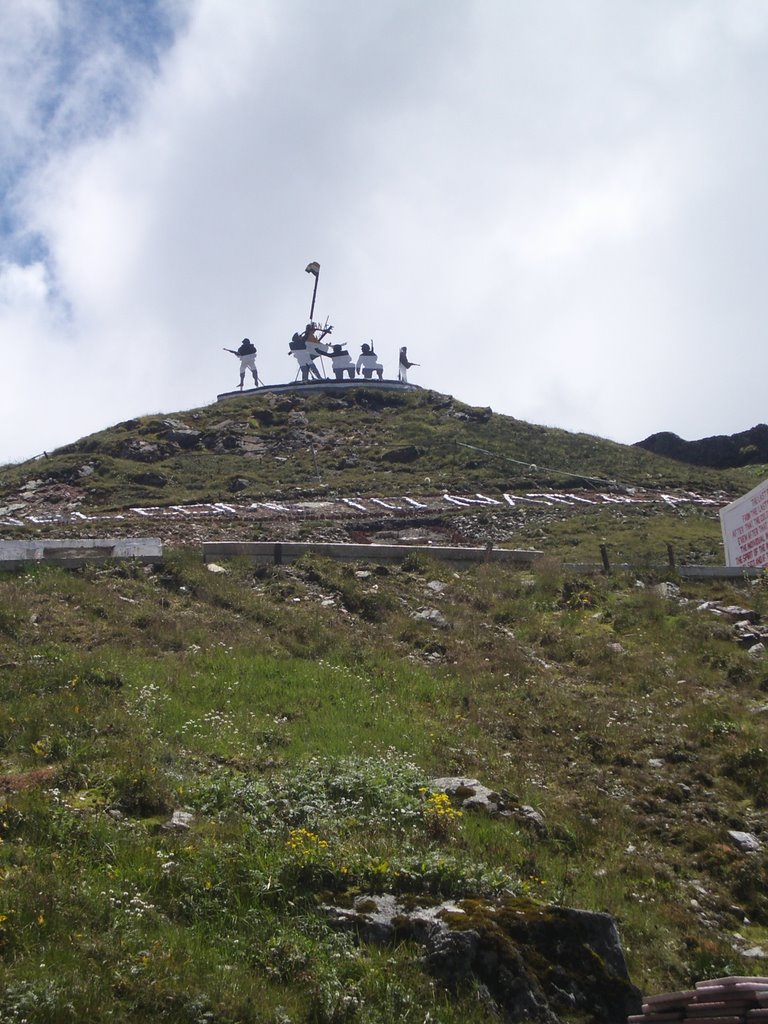
East Sikkim's Nathula Pass, at 14,000 ft, is simply stunning. Overlooking Tibet, it is the India-China bordertown and is historically significant as it was a major trading point on the Old Silk Route. The first photograph is of Changu lake, a beautiful lake that is extraordinary as it's at a height of 12,400 feet!

Tuesday, September 12, 2006

Soulitudes

Cultural tourism

Off the beaten track

SMITA JAIN

Companies like the Mumbai-based Soulitudes are trying to redefine the notion of `holidays' and `responsible' tourism.


Enabling connections: Anant Van in Bandhavgarh, Madhya Pradesh.

A TRIP through Bandhavgarh with Shyam Benegal. A trek through the Himalayas with mountaineer, actress and photographer Dipti Naval. A musical extravaganza, in the lap of the Himalayas, with eminent classical musicians from around the country.

In a world of off-the-shelf, one-size-fits-all travel packages, these tours may sound too good to be true. Yet these are just some of the tours offered by Mumbai-based Soulitudes, a company that aims to allow visitors to explore India's artistic, spiritual and cultural landscapes through travel.

Immersive travel

"Soulitudes is a vehicle for immersive travel centred around India's ecological, historical and spiritual heritage. We aim to share this land with travellers in a manner that is warm and intimate," says Soulitudes co-founder Shobana Jain. "Our endeavour is to create a travel experience that rises above the transient nature of modern travel," adds her husband and Soulitudes' co-founder, Ram Badrinath.

Having travelled extensively in different parts of the world, Ram and Shobhana were disappointed with the offerings of mainstream travel companies in India and decided to begin their own travel company with a difference. "Travelling through Europe, we realised the best holidays we had were in our friends' homes," says Ram. "In Paris, for instance, we didn't stay in a hotel but our friend's grandmother's 80-year-old house in a suburb of Paris. We were invited for meals and local celebrations. In Tuscany, we explored off the beaten path and came across art workshops in Tuscan Villas. It struck us then that India had so much to offer and we decided to return to India to set up Soulitudes. Fortunately, as we travelled across the country, we came across people who shared our view of travel and our experiments with such travel began," he adds.

Though they provide customised tours for individuals and groups, Soulitudes doesn't see itself as an ordinary travel agency, but rather as an agent of change — both internal and external. Says Ram, "Our vehicle for change is Indian culture and diversity. Through our association with eminent writers, classical musicians, musicologists, dancers, photographers and historians we will help seekers observe, absorb and connect. The programmes are set in beautiful distant places which enable self-reflection."

In many respects, companies such as Soulitudes are redefining traditional notions of "holidays" and are fulfilling the needs of a growing community of global travellers interested in "responsible tourism" — travel that promotes a deeper understanding of a place and its people and also includes a responsibility to limit the extent of the sociological and environmental impact that a holiday may cause. Christine Chardonnens, originally from Switzerland and currently residing in Delhi, says she has been grateful for the opportunity to explore India through Soulitudes. A veteran of numerous tours, she is looking forward to joining in on more Soulitudes holidays. "I find that Soulitudes offers a very refreshing concept of a holiday, one that is intellectually stimulating. It is an opportunity to learn about Indian art — music, photography, cinema, among others — from highly-respected individuals in their field."

Eco-friendly

Soulitudes also strives to situate its activities in eco-friendly lodges and resorts in order to inculcate respect for India's natural heritage. Some of their tour partners are Banjara Camps, Himalayan Village and Anant Van, each of which is run on the principles of responsible tourism. Ultimately, Soulitudes aims to provide an integrated and holistic perspective on travel to provide fun and relaxing holidays for travellers - and also fuel a deeper interest in India's rich cultural heritage. For more details, contact Shobhana and Ram at +919892692809 or +919820889808.

Monday, July 17, 2006

Theatre for Change

www.hindu.com/mag/2006/07/16/stories/2006071600050200.htm

INDIA BEATS

Multi-dimensional plots of change

SMITA JAIN

`The first and only feminist-activist' theatre group in the country, Pandies is focussing on social change through the medium of theatre.


"These workshops are a window into a different world for these children. They are normally never asked their opinion on serious issues; giving them this platform has inspired positive attitudinal shifts


RELEVANT TO THE TIMES: At a workshop with children.

EVERY alternate Saturday morning, children living in the slums of Nithari, in Noida, wake up in a state of frenzied excitement. They rush to their school, an NGO called Saksham, and wait patiently for its doors to open. The children are waiting eagerly for "Sanjay Bhaiya" who, along with his theatre troupe, has been conducting three-hour informative, entertaining and thought-provoking workshops for the children within the school.

The Delhi-based theatre troupe, `Pandies', (after a derogatory term devised by the British to refer to the Indian insurgent Mangal Pandey) is, as its name suggests, not your ordinary theatre troupe. Pandies prides itself on being the first and only feminist-activist theatre group in the country that is, says its founder Sanjay Kumar, "committed to staging plays relevant to our ethos and time".

From the margins

Speaking about the troupe's origins and ideals, he adds, "Pandies' theatre is from the margins and is a theatre of children, women, slum-dwellers, the homeless, and of vulnerable sections and subsections within those margins. The issues that we choose revolve around women because the group believes if our society is to head anywhere, it has to become more women-oriented and woman-friendly."

On this Saturday, they are performing short skits specially prepared for the children. One skit, though complex, is particularly riveting. It describes the story of a pregnant young woman who is convinced by her lover to leave their village for Delhi in order to, ostensibly, escape parental wrath and marry. After reaching Delhi, however, the man takes the woman to a park behind Jawaharlal Nehru University, rapes and subsequently throttles her. The woman survives and is cared for by residents of a nearby slum, where she delivers her baby. Uneducated and without any vocational training, she and her son are forced into a life of destitution and poverty.

Sensitive but blunt

Despite the sensitive nature of the multi-dimensional plot, Sanjay and his troupe mince no words when discussing it with the children. "Do you think the man loves the woman?" he asks. "Do you think the woman should have left her village?" And, most astonishingly to all of us present: "Did you know that this was based on a true story?"

Each question is followed by a thoughtful silence, after which both girls and boys venture replies. "I don't think the man loved the woman. I think he just wanted to use her for fun, which is not right," says Azharuddin, whose father is a tailor in a garment factory.

Soni, 15, whose parents run a roadside tea stall, raises her hand shyly, but speaks confidently and with emotion. "The woman shouldn't have left without informing her parents or discussing it with anyone. This is the reason why education is so important, especially for girls. If she was educated, she would have been able to make a more informed decision, and at least would have been able to support herself."

"These workshops are a window into a different world for these children," says Nadira Razak, co-founder of Saksham. "These children are normally never asked their opinions on serious issues; giving them this platform has inspired positive attitudinal shifts," she says. Indeed, within the short span of two months, she says, the impact is already evident in the children's increased confidence; they eagerly look forward to their first on-stage performance later this year.

Begun as a small university movement in Delhi in 1987, Pandies has grown into a robust troupe with over 70 members, many of whom are college students interested in social change through theatre. Isha, a recent graduate of Hansraj College, has been an ardent member of the troupe for two years and doesn't plan on leaving anytime soon. "Pandies gives us a space of freedom where we don't have to worry about what we're saying," she says. "Not only do we get to voice our opinions, we actually do something about them as well. And because we all volunteer our time and skills, it is truly an activist forum."

Serious issues

The troupe has one or two major performances each year and in the interim, they perform at slums, schools, and colleges. Since its founding, Pandies has tackled issues such as rape, prostitution, HIV, the Mental Health Act and its relation to women, and love and marriage.

In addition to their work in Delhi, Pandies has conducted workshops and performed in theatre festivals both nationally and internationally. In 2005, when they had adopted the theme of "Anti-Communalism", the troupe conducted a seven-day workshop in Gulmarg, Kashmir involving 55 Kashmiri Pundit and Kashmiri Muslim girls and boys between 10 and 16 years. Says Sanjay, "It was a challenge to put together a production in seven days with children from these two volatile communities. In addition to their different religious backgrounds, many were poor, some were orphaned, and most were traumatised by the violence they had witnessed. However, our methodology of individual and collective exercises, short story writing, creating 20-minute skits, and the final 90-minute production turned out to be extremely successful."

At the moment, the troupe is rehearsing for their next performance at the Sri Ram Centre in Delhi, a montage of three individual pieces, each critiquing modern-day constructions of masculinity and the state from the perspective of a female protagonist. With elements from real-life stories and absorbing themes, the mid-August performance is not to be missed.

For more information about Pandies, contact Sanjay at pandies@netscape.net

E-mail the writer at smitajain2@gmail.com

Thursday, July 13, 2006

Auto Epiphany - 2

Haggling with auto drivers is not something I look forward to most mornings, and today was no exception. After multiple no-gos – one guy’s auto didn’t start after we’d finally agreed on a price, another didn’t know the way and so couldn’t agree on a price – I finally found one who was willing to take me at a sum that I thought reasonable. He had an extraordinary smile that he unabashedly flashed every so often, and a cheerful demeanor. After getting in the auto, I asked him if he could turn on the meter (for personal research purposes); like his brothers around the city, he insisted that it wasn’t working. It somehow struck me a tad improbable that, by some supernatural coincidence, every single auto meter in the city refused to work.

“How is it that in other cities auto-meters work, yet in Delhi none of them ever do?” I asked him, almost rhetorically. He launched into a passionate argument – half of which was lost to the wind - about the injustice of the Delhi government’s meter rates. “Each of us has to pay around 150 rupees simply as rent every day to the people who own the autos. How can we recover that, and deal with inflated CNG prices, on the meter rates?” For auto-drivers whose daily earnings are, if they’re lucky, around 500 rupees a day, 150 rupees is, literally, highway robbery. “Doesn’t it make most sense for auto-drivers to buy their own autos?” I asked, a bit naively. “Of course it is, madame, but who has the money for it? This auto is itself around 1.5 lakhs,” he informed me. “I guess very few auto-drivers own their own autos,” I replied slightly ruefully, thinking of the avaricious money-lenders sitting on their a**s earning millions taking advantage of the dearth of financing options for auto drivers. “Well, out of 100, you’d find maybe 10 who’ve bought their own. So 90% have to pay this rent everyday,” he said.

We drove on a bit, and curious to learn more about this cheerful savant, I began asking him about himself. His accent indicated that he wasn’t from the area; guessing that was from Bengal, I asked him about it.

“I am actually from Hyderabad, madame.”

“And what are you doing here?”

“I’ve been in these parts since I was 7 years old, so now this feels like home.”

“What brought you to these parts?”

He turned around briefly, looked me in the eye, flashed his beautiful smile, and said sincerely, “There’s nobody in this city that I can call my own. I have nobody here.” After a pause, he said, “You know, if you heard my story, madame, you would not believe it.”

He continued his story.

“I was 7 years old, and I was playing in a park near my parents home in Hyderabad. A Sardarji who was at the park picked me up and took me on a train to his home in Punjab, where he raised me as his son.”

Aghast, I asked if his parents ever found out what happened to him. “My parents still probably don’t know what happened to me. You see, I was too young to remember our address or phone number or anything. ”

Surprisingly, he didn’t seem to harbor any ill-will against the Sardar. Instead, he explained the Sardar’s position. “You see, he didn’t have a son, so he raised me as his own. However, when I was in my teens, one of his friends got into a fight with him and dropped me in Chandni Chowk all by myself, with no money. Then I was truly alone.

Did he ever try to get back in touch with the Sardar? “I did, a few years ago. I found out that he was dead. He used to do a lot of drugs, like opium and weed.

“Since then, I’ve worked in chai-stalls, in dhabas, trying to scrape together a living here. Finally, I was able to get this auto and earned enough money to stay someplace and take care of myself. I can finally stand on my own two feet.”

At this juncture, we had reached my destination. I stepped out, still absorbed in the story. He stepped out as well, smiled proudly, and said, “You know, madame, I didn’t tell you this before, but this is my own auto!”

As if in addendum to our conversation about meter-prices, he added with a grin, “I still have to give 150 rupees every day, but that’s to the bank that helped me finance this.”

I looked at him, moved by the vast reservoir of fortitude, good humor and determination that he maintained, despite devastating odds. I blustered a few words of congratulatory nature for his success, but for the most part, I was speechless.

Handing him a 100 rupee note, I said, “Good luck, bhaiya.”

I caught his eye for a brief second, and turned to walk toward my office. As my throat tightened involuntarily, I thought of the unspoken exchange that had just taken place. The tears that glistened in my eyes, I realized, had mirrored his own.

Wednesday, June 21, 2006

Go West

On the train from Itarsi to Delhi last week, my seat happened to be comfortably nestled amongst a throng of Mongoloid-featured folk. Mostly in order to distract myself from the dizzying 40-something-degrees heat, I decided to spend the morning observing them to try and figure out where they were from. Reminiscing my China days, I absorbed with amusement the orange-dye of many of the young men’s hairstyles, the multiple ear piercings, pumped muscles, and their decidedly un-Indian basketball jerseys. I came to the conclusion that they were probably Bhutanese, or Nepali. Yet the fact that their foreign-tongue talks would sporadically be interspersed with loud, heartfelt Hindi tunes perplexed me, and seemed to rule out any non-Indian lineage. I decided to observe the eldest amongst the group, a red-robed, bespectacled old man who would only pause his beaded-incantations to enquire about the price of a cold Coke or bottle of milk. He was too religious to be Chinese, I thought to myself, and the fact that they were traveling from Bangalore didn’t make it seem likely that he was Bhutanese.

After a while, one of the young men came and sat down next to me. He asked where I was going, what I did, why I got in at a godforsaken hour from a no-name station (only to have to kick one of them out of their seats). Next, it was my turn to ask questions, and I learned that they were Tibetans, traveling from their home (near Bangalore) to their schools (in Dehradun).

Tibetans? It had briefly crossed my mind that they could have been Tibetan, but I had quickly ruled it out, thinking that Tibetans would not behave or dress in the manner of these youth. His admission, to my surprise, shocked me. I realized that my perception of Tibetans had hitherto been completely shaped by Seven Years in Tibet, a biography of the Dalai Lama, and a random Tibetan-themed restaurant in Varkala. In seeming contrast to my co-passengers, the Tibetans of my imagination were all peace-loving, non-materialistic, deeply spiritual, traditional people. I turned to the red-robed elder, thinking that, like all cultural communities these days, it’s probably the elders that are the repositories of the age-old traditions recorded in history books.

Just as I turned, the elder picked up a half-empty bottle of water, felt that it was warm, and threw it out of the train window.

I thought about the fact that there was no running water left on the train. How the sweltering heat outside was only magnified by the hot air billowing through the coal-fired train. How I had slowly drank the warm water of my bottle, careful not to spill lest any drops be wasted.

How times change.

**************
From China, to Chennai, to Noida, I’ve creeped my way out west again. Though I would never have thought that Ahemedabad -- this land of sugaredeverythings -- would ever be ‘home’, that’s what it is right now.

I’m working here with Indicorps, an organization that aims to bring back people of Indian origin to India for service, for connecting back with a place that plays a large role in their identity. So far, it’s been a lot of fun. Last week found me at an Indicorps retreat in the hill station of Panchmarhi, Madhya Pradesh (the nearest train stop being Itarsi), taking a plunge in a not-so-clear lake, discovering the joys of eating freshly plucked sweetandsour mangoes, and learning from Indicorps fellows about the trials and travails of building entrepreneurs among slum youth in Kanpur, and building self-esteem of orphaned youth in rural Andhra Pradesh.

I don’t know for how long I will be here, or whether any of my crazy plans will materialize (the entrepreneurial bug still hasn’t left me). I do know that I have much to learn about the world around me, and about myself.

Hope you all are well, and am hoping that this magnet-spot will allow me to see many of you soon ;)

Tuesday, June 20, 2006

Sting

Don't believe in miracles? Believe this.

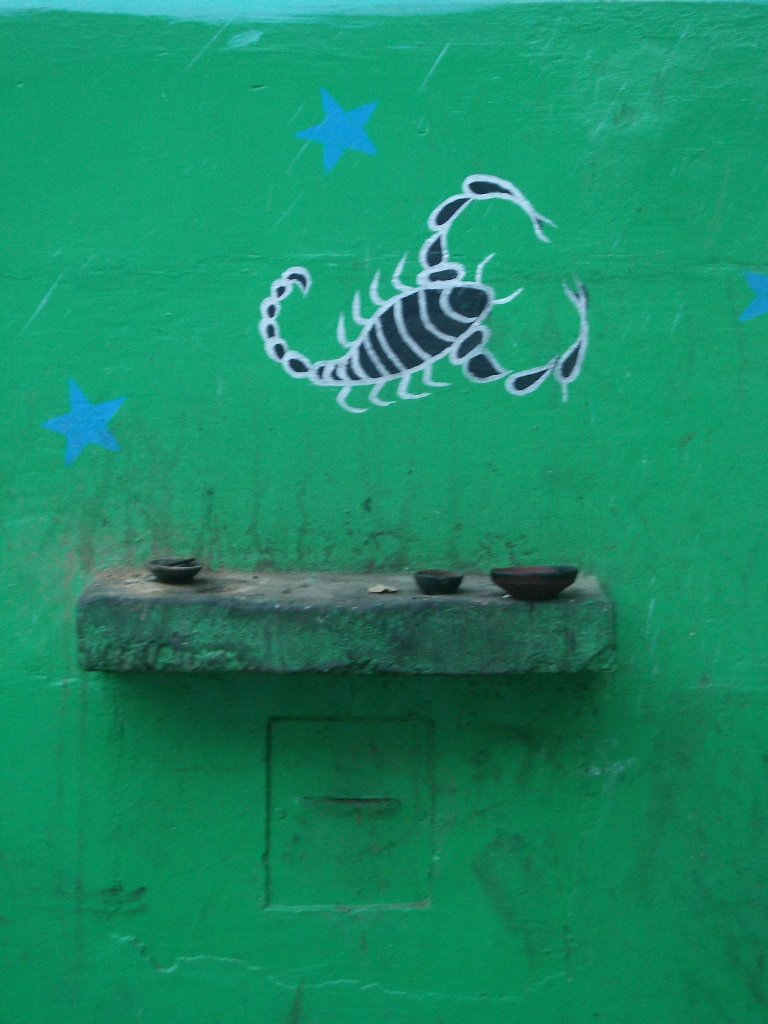
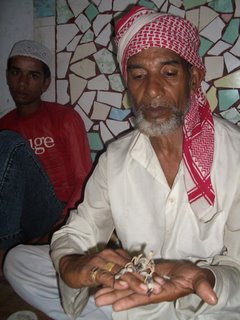
On a visit to a small town in Western UP called Amroha, my sister and I decided to re-visit the dargah of Shah Sharafuddin (also called Saheb Vilayat Saheb for reasons that I can't remember). Anyway, the place is famous for its 'ahimsa' scorpions: they don't sting people within the premises of the dargah.

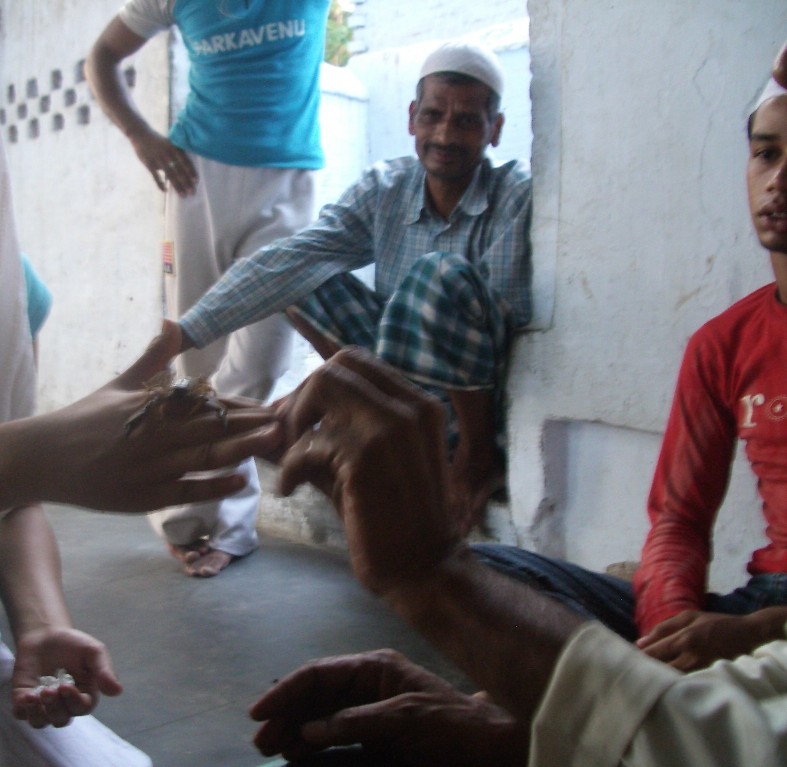
Naturally, I was skeptical of the whole thing and wanted to try it out for myself. The pictures are proof! (The hand coming out of nowhere in the badly lit picture, yup, that's me). I held a big scorpion on my hand for about half a minute, and it just crawled a bit over my hand.

The story goes that two brothers got into a fight, and one brother put a curse on the other which held that scorpions and snakes would infest his home (now the site of the dargah, I assume). The cursed brother then apparently went to a holy person for reprieve, who then 'undid' the curse by saying that though scorpions and snakes would infest the place, they wouldn't bite.